 Havapoo is originated from United States but Australian Collie is originated from Australia. Both Havapoo and Australian Collie are having almost same height. Havapoo may weigh 13 kg / 28 pounds lesser than Australian Collie. Havapoo may live 4 years less than Australian Collie. Both Havapoo and Australian Collie has same litter size. Both Havapoo and Australian Collie requires Moderate maintenance.
History
The Havapoo is usually a cross with a miniature Poodle and a Havanese but other poodle sizes such as the toy can be used. This is a fairly new cross breed just getting the attention of the American public. The result is a friendly, small dog. They have a striking appearance and lovable personality. They are easy to train and very smart. Not much is know about their heritage except that they were developed in the United States sometime in the past 30 years. Given the long history of the parental breeds, you can count on the quality and beauty of the Havapoo.
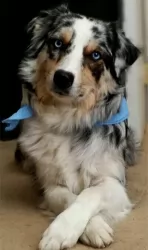 The Koolie, as a breed we know today, originates from Australia. But, before they were breed and imported, they were the mix made of Britain smooth coated blue merle Collie and the Black and Tan Collie from the Highlands of Scotland. The Koolie came to Australia to work as a kennel dog since they are known as the working, farm dog that can adapt to any weather condition. They were bred to be agile and non-aggressive quiet herding dogs, and they have kept most of those good characteristics until today.
Basic Information
Group:
Toy dog
Herding dogs
Origin:
United States
Australia
Life Span:
10 - 14 Years
12 - 18 Years
Other Names:
Poovanese, Island Mini Doodle, Havadoodle, Havanesepoo, Havanesedoodle
Australian Koolie, German Koolie, German Coolie
Colors Available:
brown, grey, tan, white, black
red or blue patterned merle; some of them are born as one colored, usually red/chocolate or black. When they have two colors, they are red and white, black and white, black and tan, red and tan. Tricolor Collie is merle, with tan points and a white chest.
Coat:
soft, hypoallergenic fur
smooth and short or short and rough; double coated or single coated. Some of them have longer coat their legs or without.
Shedding:
Moderate
Moderate
Temperament:
Affectionate, Energetic, Friendly, Gentle, Intelligent, Loving, Outgoing, Playful
Affectionate, Alert, Cheerful, Courageous, Curious, Energetic, Friendly, Independent, Intelligent, Lively, Loyal, Outgoing, Playful, Protective, Social
Grooming:
Moderate maintenance
Moderate maintenance
Trainability:
Easy
Moderate
New Owners Friendly:
Yes
Yes
Description
The look of the Havapoo is unpredictable in first generation mixes as the puppies can appear like either of the parents. Most however have carried on the facial features of the Havanese. They usually have soft coats with hypoallergenic fur that comes in brown, black, grey, white and tan.
The white dogs tend to be deaf or perhaps even blind.
They are really good looking dogs whichever parent they favor.
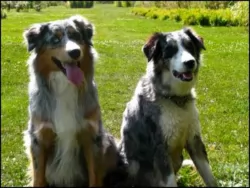
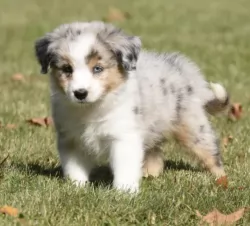 Koolie is a medium bred. Their head is small, with a pointy jaw. Ears are pricked, semi-dropped or dropped. Their coat can be smooth or rough, short or medium length, always with the undercoat. The colours can be Red or Blue Merle, solid Red or Black, sometimes with minimal white or cream speckles. They are usually two-coloured or tricoloured, but some of them are actually one-coloured.
Some Koolie have one or two blue, green or yellow eyes. Eye colour is, of course, affected by the gene that creates the coat pattern and eye colour as well.
They are athletic dogs, with fine bone structure but great stamina. Actually, they were breed to be like that – to work hard, be noticeable among the sheep, eat little and be loyal to one person.
Characteristics
1Children friendliness yes but monitor their interaction so the dog does not get hurt.
2.Special talents highly intelligent and love to run
3.Adaptability Home or apartment is fine but would love a fenced yard to run in.
4.Learning ability very high smart and loves to learn
Around children
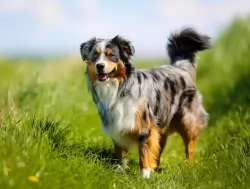 Koolie is naturally energetic, playful and affectionate so they are naturally very good to raise with children.
Special talents
They are known as great obedience dog. They are very famous as the tracking dogs.
Some of them are successful as the rescue dogs, therapy dogs or educators for school children.
Adaptability
This is not a type of dog that will be alone in the house, wait for you and then be quiet while you rest. They need a great deal of activity and they are not such great choice for indoor life anyways. The best thing for them would be the large yard, with somebody home most of the time. They are great if raised in a family, with children and active owners. They will be great for a loner at the farm as well since that is in their blood. They need enough place to run, chase, play, rest on the sun and be active as they please. They get affectionate towards their families, but they will be accepting their new home when they are older just fine.
Learning ability
They are very good at learning. Intelligent, yes, but yet very silly and playful to do what is told all the time. They will surprise you with how quickly they will pick up the new trick but not feeling like doing it every time you would like them to. Everything is a play for them, so it would be best if you know how to play, be affectionate and friendly to become a good owner of this breed.
Health Problems
Even though first generation mixes have no genetic health issues. There are however some issues they are prone to:
• Deafness - primarily in the white dogs, nothing can be done for it.
• Cataracts – can lead to blindness
• Hypothyroidism – can be medicated
• Hip Dysplasia – can lead to lameness
• Patellar Luxation – can lead to lameness
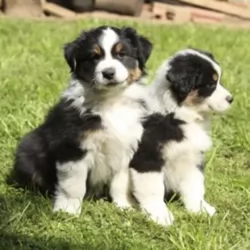 If you are careful enough, you will choose your Koolie form patiently chosen breeders, after checking the health history of the pup and the pup’s family. Advisable is to do these things in person and never to buy a Koolie from a pet shop.
Sometimes, pups can be born blind or deaf pups. They have the great chance of joint problems because of their extreme activity. Their need to run, jump and play all the time may result in damage to cartilage and ligaments, especially since they are not aware of their age most of the time.
There is a chance that pup has skin allergies or immune system issues if they are growing on a farm near the chemicals used for plants, so be careful what kind of herbicide you use if you have a Collie.
In some rare cases, they suffer from seizers. If untreated, they can cause death.
If you decide to take him to a regular vet check, you will have a happy and playful life together.
Caring The Pet
1Feeding the puppy – feed a high quality puppy food for small or toy dogs. Feed 3-4 times a day a total or 1 cup.
2.Feeding the adult - feed a high quality puppy food for small or toy dogs. Feed 3-4 times a day a total of 2 cups
3.Points for Good Health – overall good health
4. Games and Exercises – needs some moderate exercise and would love a fenced yard to run in. Will play fetch and some are good at agility.
Feeding the puppy and adult
 Whether you choose canned food or dry food, treats as biscuits or left-overs, the quantity is the safest way of keeping the balanced diet for your Collie. They like raw meat and raw bones. Make sure not to feed them with cooked bones because they can do more harm than good.
Grooming
Since Koolie coat can be very short with the undercoat or a bit longer with undercoat, bristle brushing every 3 or 4 days will be enough for them. Some of them like the water and some of them don’t and that is perfectly fine since there is no need for a regular bath.
Points for Good Health
Lots of activities and lots of love. They express their love all the time and you can learn a lot from them actually. They like raw bones and from-the-table delicious treats but make sure not to overfeed them.
The best type of activity
Games that need them to be fast and think quickly. Running with them, driving a bike with them (but not on the leash!) would be a great fun for them. Why not leash? They are so playful and happy and they tend to jump and run to the side to chase a butterfly or catch the falling leaf.
Comparison with other breeds
- vs Yorkshire Terrier - Breed Comparison
- vs Chihuahua - Breed Comparison
- vs Morkie - Breed Comparison
- vs Havanese - Breed Comparison
- vs Chorkie - Breed Comparison
- vs Pekingese - Breed Comparison
- vs Chinese Crested Dog - Breed Comparison
- vs Chiweenie - Breed Comparison
- vs Chug - Breed Comparison
- vs Affenpinscher - Breed Comparison
- vs Brussels Griffon - Breed Comparison
- vs Chipoo - Breed Comparison
- vs Chiapom - Breed Comparison
- vs English Toy Terrier (Black & Tan) - Breed Comparison
- vs Long Haired Chihuahua - Breed Comparison
- vs Bichon Bolognese - Breed Comparison
- vs Russian Toy Terrier - Breed Comparison
- vs Franzuskaya Bolonka - Breed Comparison
- vs Phalene - Breed Comparison
- vs Bugg - Breed Comparison
- vs Cockachon - Breed Comparison
- vs Shih Tzu - Breed Comparison
- vs Silky Terrier - Breed Comparison
- vs Snorkie - Breed Comparison
- vs Toy Bulldog - Breed Comparison
- Pembroke Welsh Corgi vs Australian Collie - Breed Comparison
- Belgian Shepherd Dog (Malinois) vs Australian Collie - Breed Comparison
- Bearded Collie vs Australian Collie - Breed Comparison
- Collie vs Australian Collie - Breed Comparison
- Dutch Shepherd vs Australian Collie - Breed Comparison
- Blue Healer vs Australian Collie - Breed Comparison
- English Shepherd vs Australian Collie - Breed Comparison
- Australian Collie vs Australian Shepherd - Breed Comparison
- Australian Collie vs Australian Cattle Dog - Breed Comparison
- Australian Collie vs Austrailian Blue Heeler - Breed Comparison
- Australian Collie vs Australian Red Heeler - Breed Comparison
- Catahoula Cur vs Australian Collie - Breed Comparison
- Catalan Sheepdog vs Australian Collie - Breed Comparison
- Pyrenean Shepherd vs Australian Collie - Breed Comparison
- Bergamasco vs Australian Collie - Breed Comparison
- Berger Picard vs Australian Collie - Breed Comparison
- Appenzell Mountain Dog vs Australian Collie - Breed Comparison
- Queensland Heeler vs Australian Collie - Breed Comparison
- German Coolie vs Australian Collie - Breed Comparison
- Bohemian Shepherd vs Australian Collie - Breed Comparison
- Croatian Sheepdog vs Australian Collie - Breed Comparison
- Red Heeler vs Australian Collie - Breed Comparison
- Belgian Shepherd Dog (Tervuren) vs Australian Collie - Breed Comparison
- Blue Lacy vs Australian Collie - Breed Comparison
- New Zealand Huntaway vs Australian Collie - Breed Comparison
 MyDogBreeds