 MyDogBreeds
 German Longhaired Pointer is originated from Germany but Bull Arab is originated from Australia. Both German Longhaired Pointer and Bull Arab are having almost same height. German Longhaired Pointer may weigh 18 kg / 39 pounds lesser than Bull Arab. Both German Longhaired Pointer and Bull Arab has almost same life span. German Longhaired Pointer may have less litter size than Bull Arab. German Longhaired Pointer requires Moderate maintenance. But Bull Arab requires Low maintenance
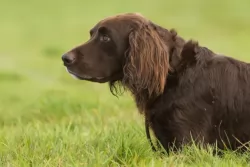 Looking at the German Longhaired Pointer you may think that you’re looking at a type of Setter dog or even a large Spaniel. These pointing dogs, hailing from Germany, are gun dogs or working dogs, having always been used to track game.
They were developed at the end of the 19th century, as breeders were specifically looking for a dog that was faster than the wiry- and short hair German pointers. Crossing English Setters and Pointers gave breeders this German Longhaired Pointer and the dog was shown for the first time in Germany in 1879.
Known as the GLP or Deutsch-Langhaar, the dog has the bloodlines of water dogs and scenthounds, and way back In 1897, Baron von Schorlemer wrote the first standard for the German Longhaired.
 In the 1970’s feral pig hunters wanted a dog that could be aggressive in finding and capturing the pigs. The hunters crossed the German Shorthaired Pointer, the Bull Terrier and the Greyhound to develop the Bull Arab. It is believed that the hybrid is at least 50% Bull Terrier. It is also possible that there is some Doberman, Mastiff, Great Dane and/or Pointer in the hybrid as well.
The job of the Bull Arab is to hunt out the feral pigs, grab one by the ear and hold it until the hunter arrives. They have a strong sense of smell and that is how they find the pigs.
Mike Hodgens, an Australian, developed the hybrid and added some Bloodhound as well to get that ability to smell out the pigs at great distances. They are also capable of catching buffalo and cattle. Some Australians use the breed in cattle or buffalo ranching. They are registered with the DRA or Dog Registry of America, Inc.
 Athletic and lean, the German Longhaired Pointer is a medium to large sized dog standing at 60 – 70 cm in height and weighing 25 to 32kg.
With his webbed feet, he can move with great speed. It is why the dog isn’t suited well to life in the city really, as he has always been a dog used to working and running over large areas. He will appreciate being with an active owner.
The beautiful double coat is medium length, slightly wavy and with feathering around the legs, chest and tail. The tail itself is carried stretched outwards or kept low. It is rich brown to coppery color, while some white can sometimes be found on the chest and paws. The attractive dog has brown eyes, a black nose and ears which are long and floppy.
Intelligent, gentle and amicable the German Longhaired Pointer is an affectionate, loyal dog who is also social, getting on well with other pets in the home as well as with children.
Being the loyal dog that he is, it makes him susceptible to separation anxiety so he should never be put into the backyard and left day after day on his own.
 Mike Hodgens succeeded in developing a powerful, well built dog. The Bull Arab has a powerful head and muzzle. He has moderate length drop ears and bright eyes that match the color of his coat. His chest is neither shallow nor deep and his back is straight and strong. Their tails are tapered and pointed yet the base is thick. They are a double-coated dog. They can be white with black, tan or liver, flecked or bicolor.
 German Longhaired Pointers are calm, friendly dogs who want to please their owners. They’re really intelligent too so training and socialization won’t be difficult with this bright dog.
Once trained, he makes an excellent, loyal and loving family pet. With a firm, kind, consistent type of owner, the German Longhaired Pointer is guaranteed to make you a wonderful pet.
 The Bull Arab is intelligent, calm and loyal. Like Pit Bulls in the U.S., the Bull Arab has a reputation for aggression against both people and animals. There is no data to support these claims. They have been used as therapy dogs and companion animals very successfully. They are great with kids and very affectionate. The breed is cited as being used for companion and therapy animals
 You’ll find that with an excellent diet and lots of love and care your German Longhaired Pointer can easily push 12 to 14 years of age.
If you’re a novice dog owner, talking with your vet will give you a good idea of how to feed your dog to ensure longevity.
No matter how vibrant and energetic your pet is, there may well come a day when he is lethargic, he just wants to lie, he doesn't want to eat and he doesn’t jump up to greet you. Then it’s time for concern and to get your 4-legged friend to the vet.
There are several health problems associated with dogs that are worth researching – hip dysplasia, skin allergies, progressive retinal atrophy, allergies and cataracts.
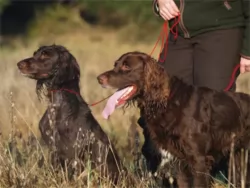 German Longhaired Pointers have the same kind of nutritional needs as all other active working or sporting dog breeds. He needs high quality food, and if you feed him a commercially manufactured food, make sure its the best and that it has minerals and vitamins for active, large breeds. Most of the dog food companies have breed-specific formulas for size, age and activity levels of dogs.
Always ensure an ongoing supply of cool, fresh water is available to him.
The coat of the German Longhair can become matted and he will require brushing at least twice a week to keep the hair free of loose hairs as well as burrs that could lead to the coat becoming untidy and tangled. The ears will also have to be watched as thick matting can occur. Also check the inside of his ears to avoid dirt and wax build up which can lead to ear infections.
General grooming will also be reqired such as checking the length of the nails if they aren’t naturally worn down. Don’t neglect his teeth and brush 2 or 3x a week with canine toothpaste and toothbrush.
Your German Longhaired isn’t a dog who likes to spend his days lying round. He is energetic and loves to be on the go. From robust ball games to rope games, running with you as you go running, swimming or cycling, this dog can’t seem to get enough exercise and will want to be included in all your activities.
 This is a working dog so he needs to eat the right kind of quality dog food. In order to avoid bloat do not feed large meals but rather feed one to two cups of food two to three times a day.
Hunting Accidents – this is the biggest reasons for health problems with the Bull Arab.
These are working dogs that are inactive when not working. They need a lot of exercise if they are not used for hunting. Agility, Tracking and hunting games, and field trials.
 This is an extremely healthy hybrid with no inherited issues, but they can possible have the same health issues as any of the parent breeds. This can include accidents while hunting, hip and elbow dysplasia and ear infections.