 MyDogBreeds
Both Mixed and Irish Doodles are originated from United States. Mixed may grow 72 cm / 29 inches higher than Irish Doodles. Mixed may weigh 81 kg / 179 pounds more than Irish Doodles. Mixed may live 6 years more than Irish Doodles. Both Mixed and Irish Doodles has same litter size. Mixed requires Moderate maintenance. But Irish Doodles requires Low maintenance
Many people are inclined to think that mixed breed or cross-breed dogs, also known as mutts or mongrels or designer dogs are just pavement specials. They think they look nothing much better than junkyard mutts.
This may be so, but not always, and these mixed breed dogs always seem to have hearts of gold. A Mixed breed is a dog that has parent’s who aren’t registered and who come from different breeds. In other words the parents aren’t of the same breed.
Guessing a cross breed’s ancestry can be difficult as these mixed-breeds have more genetic variation than pure breeds. They've been around since ancient times. The dogs originate in different countries and they all have different coats, different sizes and different temperaments.
It is sad but true – there are literally millions of mixed dogs worldwide, some of which never know what it is to live with- and be lovingly cared for by a human being.
 Known also as the Irish Doodle Setter or the Irish Setterdoodle, the Irish Doodle is a crossbreed – a mix of Irish Setter and Poodle.
This designer crossbreed comes from the United States. There isn't much of a history with the Irish Doodle, though both breeds used to create this dog breed have their own long histories.
Because the Irish Doodle is a hybrid breed, it isn’t recognized by the American Kennel Club. It is however recognized by the American Canine Hybrid Club.
Sometimes Mixed dog breeds come about from two dogs meeting on the streets and mating or it could be two pure-breeds accidentally mating, resulting in a mixed breed.
The mixed breed dog puppy could inherit looks from just the one purebred parent so that he grows up looking like a pure-breed. With a cross breed the standard for breeding isn’t the same for purebreds where the appearance and temperament is more or less the same.
A mixed breed dog doesn’t have these standards to conform to and they are as varied and unique as the colors in the rainbow. It’s not possible to know what a mixed breed dog’s puppies will look like. A typical example of a mixed breed is a Labradoodle. People love the temperament of the Labrador but they want the low shedding qualities of the Poodle as well.
Mixed breed dogs can be small or large and that means different litter sizes. If you don’t want your Mixed dog breed becoming a parent, you can spay or neuter your dog.
There are many people who avoid choosing a ridiculously high priced pure breed puppy and they prefer to choose a mixed breed. This is partly because these mixed breed dogs are healthy, resilient and nearly always a good match for you and your family.
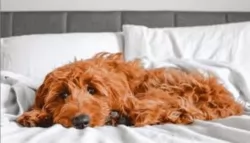 The Irish Doodle is a medium sized dog, standing at roughly 33cm to 38cm and weighing roughly 18kg to 31kg.
Pet owners appreciate that a dog like this is considered to be hypoallergenic and this attractive aspect of this dog comes from the Poodle side. The Irish Doodle's coat is long, soft and fairly wavy with apricot being the most common coat color but other colors include white, cream, brown and black. The head and muzzle is longish, the eyes brown, the ears floppy and the tail long.
The Poodle and the Irish Setter combine to ensure that the Irish Doodle is an intelligent dog and that he has an amicable disposition so that he is good with kids and pets in the home.
He has a host of excellent characteristics that make him a superb family pet and these are friendliness, intelligence, devotion and loyalty. He is easy to train and training and socialization will make him obedient so that he responds well to simple instructions such as come, stay, lie down, sit etc.
Doesn’t matter what your Mixed breed dog looks like – he is a unique individual and you can never really predict what kind of a character he will turn out to be.
He might inherit a bit of placid behavior from one parent and a bit of clownish behavior from the other. It’s what makes them so special.
Ask most dog lovers who have owned a mixed breed and you will usually hear them say that they wouldn’t trade their amazing loyal and devoted pet for all the money in the world.
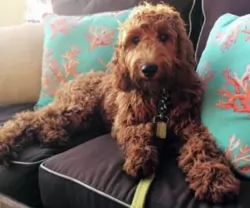 The Irish Doodle is guaranteed to make you a great pet. Every dog becomes better when they have been trained and socialized as they require having interactions with other dogs and people to know how to behave around them later on.
The Irish Doodle is a playful, active, attractive, loyal, fun loving pet who will learn easily.
The most important thing to remember with your Irish Doodle is to get involved in his life. He didn’t ask to come to you, but if you do your part and treat him like a much loved family member, you’ll soon see that your life isn’t complete without a wonderful 4-legged friend like the Irish Doodle.
All dogs, whether pure breeds or mixed breeds, need to be excellently cared for. When you consider the unconditional love your dog gives you, you want to ensure that you’re kind and loving towards him.
Every dog can be prone to common dog illnesses and there are some genetic predispositions for dogs with certain breeds within them.
All dogs can battle with problem teeth, but it appears to be more rife with smaller dogs. Dental disease starts with tartar build-up and when it isn’t removed from the teeth it progresses towards infection of the gums and teeth.
What you need to know is that not caring for the teeth can mean your pet losing his teeth but also putting your dog in danger of joint disease and problems with the kidneys and heart.
Obesity is a huge factor in small- and large dogs and can pave the way for other diseases with your pet. Being obese can shorten the life of your pet because it contributes to heart disease, digestive disorders, back pain and joint problems.
Fleas, ticks, mites and worms can play havoc with the health of your pet. Some of these parasites can then be transmitted from your pet to you. Parasites can cause pain, weight loss and even death for your pet so it is important to be vigilant in these matters.
Bloat, when the stomach twists and fills with gas as well as cancer and heart disease are just some of the more common diseases to look out for.
 Irish Doodles are a robust, resilient breed, and with good care they can live to be 11, 12, 13 or 14 years. Nonetheless you need to know about the more common dog illnesses that any dog can develop.
These are hip dysplasia, eye problems, ear infections, bloat and Von Willebrand's Disease.You can improve your dog’s health by making sure he gets the very best food there is to eat, a warm, dry place to sleep and that he is treated with lots of love and care.
Von Willebrand's disease is an inherited bleeding disorder. The disorder comes about because of a deficiency of von Willebrand Factor. This is an adhesive glyco-protein in the blood which is necessary for platelet binding or clotting. The condition can lead to excessive bleeding after an injury because the blood can’t clot.
Good nutritious food, exercise, grooming, a dry place to sleep, taking your pet to the vet when he is sick as well as plenty of love and attention will ensure your Mixed dog breed’s health and happiness.
Keep die diet of your pet simple and consistent to avoid digestive problems. Quality commercially manufactured food is a good choice. Boiled chicken, brown rice and cooked or raw vegetables will be excellent added into your dog’s kibble from time to time. Add in some raw meat occasionally as it is good for warding off skin diseases.
Exercise your pet regularly, but don’t overdo it with young dogs as it can lead to joint problems later on in life.
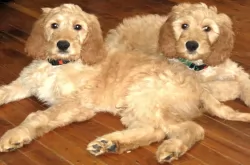 Even though the Irish Doodle's coat is long, this is a dog with just about no shedding, so a brush once a week will ensure his coat stays in tip-top condition. Some Irish Doodle owners like to take their pet to have the coat professionally trimmed.
The Irish Doodle isn’t one of these dogs where you need to ensure a good dose of exercise every day. He doesn’t particularly need a lot of exercise, so include him in your daily walks and give him a ball game now and then to keep him happy and fit.
As a medium sized dog, your Irish Doodle will require a high quality diet that will ensure he is getting all the right minerals and vitamins he needs for his activities.
If you choose one of the wet or dry commercially manufactured foods, make sure it is one of the best quality ones free from fillers, colorants and preservatives. It is to your pet’s benefit to add in some homemade food to his kibble such as cooked chicken, brown rice, pasta and vegetables.
Raw meat is expensive, but if you can, give him some raw meat occasionally too as this promotes bright eyes, a wet nose and a healthy skin and fur.
Fresh, cool water must be provided every day non-stop.