 MyDogBreeds
 Yoranian is originated from United States but Dalmatian is originated from Croatia. Yoranian may grow 31 cm / 12 inches shorter than Dalmatian. Yoranian may weigh 29 kg / 63 pounds lesser than Dalmatian. Both Yoranian and Dalmatian has almost same life span. Both Yoranian and Dalmatian has almost same litter size. Both Yoranian and Dalmatian requires Low maintenance.
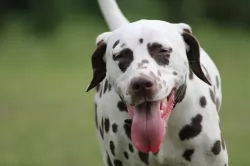 The history of the Dalmatian dog is also fairly scant, and the information you get is often unclear.
The name Dalmatian wasn’t used until the end of the 18th century, although it seems as though, according to murals on ancient tombs, there were white hounds then with specks over the body.
It does seem firm that the modern Dalmatian is because of breeding of the English nobility. They used these dogs to accompany them on their carriages. The dogs were also bred with the purpose of getting an exquisite spotted pattern.
It was in 1890 that the first Dalmatian Club was established in England and the dog was recognized by the American Kennel Club in 1888.
The Dalmatian is a medium sized dog with its beautiful white coat with black or liver spots being its main feature. The coat is short and dense and the Dalmatian pretty much sheds all year round.
It is notable that at birth, the puppies are pure white, with their spots starting to form about 4 weeks later.
Both the male and female stand at anything between 56–61cm in height and weigh between 22 to 35kg. He is a slender, muscular dogs with plenty of stamina. The ears of the dog are floppy, he has brown eyes and a long tail.
With his human family, the Dalmatian is an active, playful dog. He has the reputation of being somewhat unfriendly and aloof, but many who have kept him as a pet say this isn't so. He loves to take part in games and gets on well with children in the home.
He is intelligent, but when it comes to strangers, the Dalmatian is reserved and even aloof. If you want to get the best from your Dalmatian, make sure that he is trained and socialized as he then knows how to behave well around people. He makes a good watchdog too.
The Dalmatian is such a beautiful dog, energetic and playful and he is good with pets and children in the home.
He is intelligent too and training and socialization for him will be easy and promise to bring out all his good points.
The Dalmatian became popular in the 1800's when they were used as coach-dogs, and their popularity has been enhanced because of films from Hollywood such as ‘101 Dalmatians’.
Unfortunately many people receive Dalmatian puppies as gifts after seeing movies like this and then hand their dogs into rescue centers when they grow up and are no longer the cute little puppy they first met.
Be a responsible dog owner. A Dalmatian has feelings and you need to commit to caring for him for up to 15 years. You’ll be rewarded by having a wonderful, loyal canine friend.
Dalmatians, with good care, can live to be about 10 to 15 years. However, just as with other breeds, the Dalmatian is prone to certain health problems that are more specific to their breed. Some of these problems are skin allergies, deafness and urinary stones.
Dalmatians are known to have sensitive skin and they are prone to topical allergies. When you brush your dog, you should check his skin for redness and also check for fleas and ticks.
Red bumps on his skin could mean an allergy and can be distressing for your pet. Your pet may be scratching excessively and the skin may be red and moist with runny, itchy eyes. It is time to get your dog to the vet, who may prescribe an antihistamines to get the itching and allergies under control.
Unfortunately, the Dalmatian is a dog which has a tendency to form stones in the kidneys and bladder. A genetic mutation causes the raised uric acid levels which is more prevalent with the male Dalmatian. Straining to urinate can be tremendously stressful for your dog and you will need to get him to the vet immediately.
The Dalmatian is an easy dog to maintain and brushing twice a week will get rid of loose hairs. What is notable with the Dalmatian is that not only does he look like a well groomed dog, he also doesn’t have that typical dog smell around him.
No matter what kind of dog you have, a high-quality dog food is always beneficial for your dog’s health. Home-made food is always good for your dog and wholesome food such as brown rice, vegetables and some cooked chicken will delight your pet and keep him interested in his food.
There are also excellent manufactured foods and kibble is a good food to have when you select it according to your dog’s age and energy levels.
These foods, especially the top quality ones, ensure your pet gets all the nutrients he needs. Adding some raw meat into the diet can be highly beneficial for your pet and will keep him bright eyed, bushy tailed and with a wet nose.