 MyDogBreeds
Akita Inu is originated from Japan but Bisben is originated from India. Both Akita Inu and Bisben are having almost same height. Akita Inu may weigh 16 kg / 35 pounds lesser than Bisben. Both Akita Inu and Bisben has same life span. Both Akita Inu and Bisben has same litter size. Akita Inu requires Moderate maintenance. But Bisben requires Low maintenance
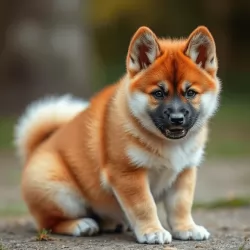 The Akita Inu, originating from Japan's snowy Akita Prefecture, has a long-standing legacy as a powerful hunting dog and loyal companion. Bred in the 1600s to track large game like boar and bear, the Akita quickly earned its place among Japanese nobility as a guardian and symbol of courage.
Its dignified nature and unwavering loyalty were immortalized in the true story of Hachikō, an Akita who waited nearly a decade for his deceased owner at a Tokyo train station. This devotion captured national and global admiration, leading to the breed’s recognition as a national treasure in Japan.
After World War II, American soldiers introduced Akitas to the West, giving rise to a larger, more robust variation known as the American Akita. Today, the Akita Inu remains a cherished breed worldwide for its strength, loyalty, and quiet dignity.
There is a lot of mystery surrounding this large herding dog said to come out of the Himalaya Mountains of Asia. The belief is that sheepdogs were crossed with wolves toward the end of the 18th century, but his origin is basically unknown. They are both herding dogs and guard dogs. Others theorize that rather than a wolf, the breed arose from the Mastif family. Still others claim that the Bisben is not a breed at all but rather a “landrace”. A landrace is an animal group that is only found to exist in the local area or is bred locally for a specific reason, while a breed is developed intentionally and from a select purebred with pedigree. The Bisben may be a landrace since it is very popular in India but hardly known anywhere else. What is known is that the Brisben was in existence at the end of the 1700’s and its job was to protect and herd livestock. There are three main theories about the origin of the Bisben. They are, in no particular order:
1. The Bisben was developed by mixing several different Himalayan and Indian Sheepdogs with wolves. The wolf population in the Himalayas and in India live in very close proximity to dogs and people and this population is quite large. These Tibetan and Indian wolves are known to be smaller, more comfortable with people and less aggressive than wolves from other parts of the world.
2. The Bisben was developed by mixing local sheep herding dogs with the Tibetan Mastiff. This gave the breed its protective nature and its large size according to this theory.
3. The Bisben was developed by mixing local dogs with the ones the British, Portuguese and French imported to the India subcontinent.
There is a fourth theory as well and it combines all three of these, supposing that the Bisben is a product of crossing local dogs with wolves, Tibetan Mastiffs and European dogs.
Regardless of their origins, the Bisben grew into one of the most respected animals in the Southern Himalayas. Their assistance to the shepherds of the area was unquestioned and irreplaceable. They were touch enough to herd flocks of goats or sheep across several treacherous and unstable mountain passes. The environment in which these dogs worked when herding is one of the harshest environments on the face of the earth. Temperatures were dangerously cold, altitudes dangerously high and the terrain just plain dangerous. Many deadly large predators live there as well. This included tigers, Asiatic black bears, golden eagles, Himalayan brown bears, snow leopards, fox, dholes, wolves, and small cats. The Bisben had to be able to fight off all of these predators. In addition to these herding and protecting duties, the Bisben was also known throughout the region as an excellent hunting dog. They are capable to this day of hunting large prey such as antelope or deer. They are equally comfortable hunting alone or in a pack. He has grown into one of the most popular hunting dogs in all of India.
The Himalayas, being so rugged and treacherous, were inaccessible to most of India for many centuries and the Brisben was unknown as well. Through the British imperialist expansion across all of the Indian subcontinent, the lowlands people were connected to the highlands and mountain people for the first time. This also meant that the Brisben was no longer unknown. The entire country began to appreciate the dog for its protection and herding of livestock, as well as a companion animal who would protect its owner and family as well. As India continues to grow the popularity of the Brisben grows as well and its numbers increase regularly. The breed, if it is a breed, remains an Indian secret. They have migrated to the countries around India, but their number are small. It is only in India that they are revered and prosper. They are not present in any great numbers in Europe, North America, Japan, or most of Asia.
Whether or not the Bisben becomes a recognized breed depends upon those who own and fancy them. Most Bisbens are bred to only other Bisbens in an effort to purify the breed. However, few dogs have pedigrees and the practice of breeding the Brisben to other breeds and mixed breed to acquire specific characteristics continues to this day. It is unlikely that the Bisben will ever be a purebred dog. It is quite variable in how it looks depending upon what the breeding line of the individual dog actually is. Does it look like a wolf? Does it look like a larger version of a local or European dog? There will always be these questions around the Bisben. Is it a breed or a landrace?
 The Akita Inu is a large, powerful, and dignified dog breed known for its striking appearance, quiet nature, and unwavering loyalty.
Originating from Japan, it has a broad head, erect triangular ears, and a plush double coat that comes in red, white, brindle, or sesame, with characteristic urajiro (whitish markings). The Akita carries itself with pride and confidence, often aloof with strangers but deeply affectionate and protective toward its family.
Calm, intelligent, and strong-willed, the breed requires early socialization and firm, consistent training. Though not ideal for first-time owners, the Akita Inu is a loyal guardian and devoted companion for those who understand and respect its independent spirit.
As mentioned in the previous section the appearance of the Brisban can vary greatly from one dog to another based on the individual dogs’ ancestry. Breed or landrace, the Brisban breeding line is not very pure. Therefore, appearance can vary greatly from what is described here and there is no standard by which to measure the Brisban. Most are distinctly large animals, being as tall as the European mountain dogs – the Newfoundland or the Bernese Mountain Dog, Swiss Mountain Dog. St. Bernard and Great Pyrenees. Reports are that it is perhaps the largest dog in India. At least it is one of the largest dogs in India. The Bisben is said by some to be a large, bulky, husky dog while others claim it to be tall and athletic, leaner than the Mastiff bred. Again, there is disagreement on the size and shape of the Bisben’s head with some claiming it is massively square like a Mastiff while others say the head is long and like that of a wolf not a Mastiff. The long hair of the Bisben and its confusing heritage may be the cause. They are most often black but might also be found to be tricolor, tan and “wolf-color” or brown, grey, shades of sable and black. No matter how it looks, this is a dog that was designed to work in the harshest conditions known and their physical appearance should make that abundantly clear.
 The Akita Inu is a large, noble, and powerful breed known for its dignified presence, strong loyalty, and quiet confidence. Originally bred for hunting and guarding, Akitas are naturally protective, courageous, and independent thinkers.
They form deep bonds with their family but are often aloof with strangers. Calm and clean by nature, they rarely bark without reason and carry themselves with elegance and strength.
Their double coat is thick and weather-resistant, requiring regular grooming, and they shed heavily, especially seasonally.
While intelligent, Akitas can be stubborn, so they thrive best with experienced owners who can offer consistent training and leadership. With proper care and socialization, the Akita Inu is a devoted, majestic companion.
The Bisben was so important to the people of the Indian subcontinent because of her temperament. He is a loyal, productive and courageous worker who took care of her flocks, her family and her pack. They are devoted to their family and if raised with children will care for them as well. He is suspicious of strangers. They are territorial and great watchdogs. They can take on any large challenger if need be to protect what they consider to be theirs. They can be highly dog aggressive and must be socialized as a puppy. Do not mix them with strange, unknown animals as the Bisben might attempt to kill them. If he sees them as his “pack” he will love and protect them, but not if he does not know them. Take as much time as you need to introduce him to a new animal and do not leave them unsupervised. They are not easy to train as they are stubborn, intelligent, want to be dominant and is a problem solver. If he doesn’t want to learn something forget it – he won’t. You can still train them. It just takes time and patience.
 The Akita Inu is generally a strong and resilient breed, but it is prone to several genetic and breed-specific health issues.
Common concerns include hip and elbow dysplasia, progressive retinal atrophy (PRA), and hypothyroidism, all of which can affect mobility, vision, and metabolism.
The breed is also susceptible to autoimmune disorders like VKH-like syndrome and sebaceous adenitis, a skin condition causing hair loss and irritation. Additionally, Akitas may experience bloat (gastric torsion), a life-threatening emergency common in deep-chested dogs.
Regular veterinary care, proper diet, and responsible breeding practices are essential to help minimize health risks and ensure a long, healthy life.
Because he is not a purebred and is probably a land range, there have not been a lot of health studies done and written up on the Brisban. It is believed that the Bisben is for all practical purposes a healthy working dog. As long as the breeding practices are not compromised it should remain a healthy line. It is bred for temperament and work not for appearance and showmanship. Some problems that plague large dogs have been noted in the Bisben. These conditions include hip and elbow dysplasia; optical issues such as Entropion, Ectropion and cataracts; ear infections; and Demadex and Demodectic mange. Most of these conditions can be tested for either in DNA or early in a pup’s life and should be tested for by the breeder before a puppy is sold
 Caring for an Akita Inu involves commitment, consistency, and understanding of the breed's unique needs. They require regular grooming, especially during seasonal shedding, with brushing at least 2–3 times a week and daily during coat blow periods.
Akitas thrive on routine exercise, such as long walks or playtime in a secure area, but they aren’t overly energetic. Training and socialization should start early, using positive reinforcement and calm, firm leadership to manage their independent and protective nature.
They are best suited to homes where they are the only pet or properly introduced to others. Akitas are clean, quiet, and typically bond closely with their family, so providing mental stimulation, affection, and clear boundaries is key.
Regular vet checkups, a balanced diet, and proper social interaction help keep your Akita healthy, happy, and well-adjusted.
The Bisben is a large working dog that needs a lot of calories if you are keeping him busy. Do not let him get overweight. The Bisben should not be free fed but rather given two controlled portion meals per day.
As previously mentioned, the Bison was developed with the harshest of conditions in mind and long hours of hard work. It is a healthy breed that is however prone to any of the issues that any large dog is prone to including dysplasia and mange and well as optical issues.
The Bisben needs a lot of exercise as the breed is developed for hard work. Walks are essential but if you have more than one dog, pack walks are even better and pack time at the dog park or in a fenced yard is great. The Bison was bred to hunt in packs as well as alone and they love to play in packs. In any respect they need at least an hour of strong exercise daily. If they don’t get enough exercise, they can become aggressive, destructive and fearful. This could result in destructive activity, barking and excess excitability. They are not very happy in the city and thrive in the countryside.