 MyDogBreeds
 Akita Inu is originated from Japan but Black Norwegian Elkhound is originated from Norway. Akita Inu may grow 22 cm / 9 inches higher than Black Norwegian Elkhound. Akita Inu may weigh 19 kg / 42 pounds more than Black Norwegian Elkhound. Both Akita Inu and Black Norwegian Elkhound has same life span. Akita Inu may have more litter size than Black Norwegian Elkhound. Akita Inu requires Moderate maintenance. But Black Norwegian Elkhound requires Low maintenance
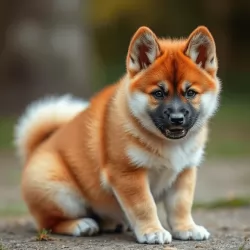 The Akita Inu, originating from Japan's snowy Akita Prefecture, has a long-standing legacy as a powerful hunting dog and loyal companion. Bred in the 1600s to track large game like boar and bear, the Akita quickly earned its place among Japanese nobility as a guardian and symbol of courage.
Its dignified nature and unwavering loyalty were immortalized in the true story of Hachikō, an Akita who waited nearly a decade for his deceased owner at a Tokyo train station. This devotion captured national and global admiration, leading to the breed’s recognition as a national treasure in Japan.
After World War II, American soldiers introduced Akitas to the West, giving rise to a larger, more robust variation known as the American Akita. Today, the Akita Inu remains a cherished breed worldwide for its strength, loyalty, and quiet dignity.
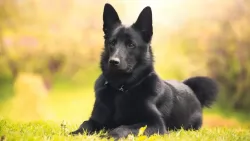 The Black Norwegian Elkhound was first bred in Norway in the early part of the 19th century as a smaller version of the Grey Norwegian Elkhound. The Black version is a Spitz and is very seldom seen anywhere in world but Norway. He is designed for the same job that the Grey Norwegian Elkhound performed. The difference is that the Black Norwegian is smaller, easier to see in the snow and ice of Norway and smaller than the Grey. It is a hunter, a herder, a guard dog and a watch dog. Because of the temperatures in Norway it was very important to have a hunting dog that was able to deal with the cold, the snow and the heavy fall rains in Norway and Scandinavia. The Black Norwegian Elkhound is a powerful and prideful dog. Much more so than the grey, he is independent and strongminded. It is highly intelligent and is one of the most ancient of breeds. He is more durable and more quarrelsome than his cousin the Grey Norwegian Elkhound or the more familiar Swedish Elkhound.
Ancestors of the Black date back to the first days human kind went hunting around 4000-5000BC. There have been skeletons of dogs very much like the Black Norwegian Elkhound found that dated back to that time period. They hunted and guarded for the Vikings and pulled sleds as well. They hunted deer, moose, badger, elk, mountain lions, bears, wolves, lynx, rabbit and reindeer. They are trackers who hold their quarry at bay by barking until the hunter can find them. Today they serve as loved family pets and guard dogs. In a National Emergency the leader of Norway can call up all the privately-owned elkhounds of any kind and assign them to work in a variety of sledding duties. Within the FCI, the Black Norwegian Elkhound is classified as a primitive Nordic hunting dog.
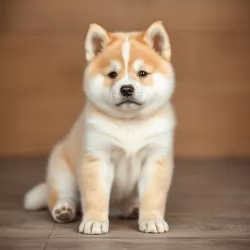 The Akita Inu is a large, powerful, and dignified dog breed known for its striking appearance, quiet nature, and unwavering loyalty.
Originating from Japan, it has a broad head, erect triangular ears, and a plush double coat that comes in red, white, brindle, or sesame, with characteristic urajiro (whitish markings). The Akita carries itself with pride and confidence, often aloof with strangers but deeply affectionate and protective toward its family.
Calm, intelligent, and strong-willed, the breed requires early socialization and firm, consistent training. Though not ideal for first-time owners, the Akita Inu is a loyal guardian and devoted companion for those who understand and respect its independent spirit.
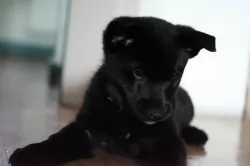 The Black Norwegian Elkhound is a short compact Spitz with dark eyes and a curly tail. It is the coat that sets this dog apart. It is an all-weather coat suitable for the cold, the snow and the rain of Norway. Ears are pointed and erect while the head is wedged and broad. His head is almost like that of a wolf. Its body is strong and compact. Its coat is coarse, short and double. He has a broad black nose with a straight bridge and with black lips and dark brown oval eyes. His legs and withers are strong boned and powerful with well padded feet to protect it from the freezing temperatures of Scandinavia.
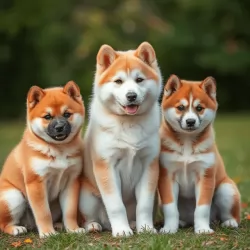 The Akita Inu is a large, noble, and powerful breed known for its dignified presence, strong loyalty, and quiet confidence. Originally bred for hunting and guarding, Akitas are naturally protective, courageous, and independent thinkers.
They form deep bonds with their family but are often aloof with strangers. Calm and clean by nature, they rarely bark without reason and carry themselves with elegance and strength.
Their double coat is thick and weather-resistant, requiring regular grooming, and they shed heavily, especially seasonally.
While intelligent, Akitas can be stubborn, so they thrive best with experienced owners who can offer consistent training and leadership. With proper care and socialization, the Akita Inu is a devoted, majestic companion.
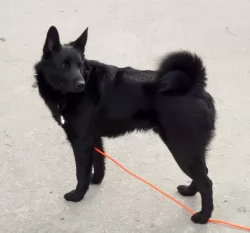 This dog was made for families. He loves children and is not a one person dogs. He gets attached to everyone in the family. However, he is smart and stubborn. He loves to join in with whatever the family is doing but he does it to please himself not his owner. He loves, loves, loves to play and has the stamina to do so all day long. He is agile, bold, independent, strong, curious and loyal. His loyalty can be territorial, and he can become protective of his home and his family. This makes him an excellent watchdog until your friends come to visit and he won’t let them in the house. You need a high fence to keep him safe in your own yard and away from strangers and even guests till he gets to know them.He tends to be dominant and aggressive with other dogs. They also have strong hunting instincts.
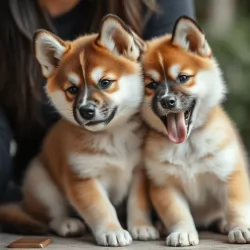 The Akita Inu is generally a strong and resilient breed, but it is prone to several genetic and breed-specific health issues.
Common concerns include hip and elbow dysplasia, progressive retinal atrophy (PRA), and hypothyroidism, all of which can affect mobility, vision, and metabolism.
The breed is also susceptible to autoimmune disorders like VKH-like syndrome and sebaceous adenitis, a skin condition causing hair loss and irritation. Additionally, Akitas may experience bloat (gastric torsion), a life-threatening emergency common in deep-chested dogs.
Regular veterinary care, proper diet, and responsible breeding practices are essential to help minimize health risks and ensure a long, healthy life.
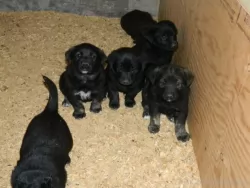 The Black Norwegian Elkhound is a strong and hardy dog, though he is susceptible to some of the problems many breeds face. These include issues with luxating patella, optical entropion, hip dysplasia, hypothyroidism, and Fanconi syndrome. The most serious of these is the Fanconi Syndrome which is an abnormal functioning in the tubules of the kidneys. This can be a life-threatening situation.
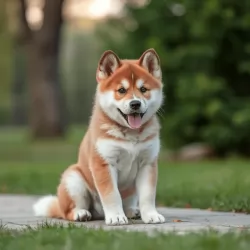 Caring for an Akita Inu involves commitment, consistency, and understanding of the breed's unique needs. They require regular grooming, especially during seasonal shedding, with brushing at least 2–3 times a week and daily during coat blow periods.
Akitas thrive on routine exercise, such as long walks or playtime in a secure area, but they aren’t overly energetic. Training and socialization should start early, using positive reinforcement and calm, firm leadership to manage their independent and protective nature.
They are best suited to homes where they are the only pet or properly introduced to others. Akitas are clean, quiet, and typically bond closely with their family, so providing mental stimulation, affection, and clear boundaries is key.
Regular vet checkups, a balanced diet, and proper social interaction help keep your Akita healthy, happy, and well-adjusted.
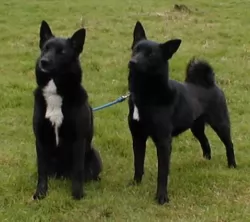 This is an energetic active dog, or she should be. Feed her high nutritious food twice a day. Do not overfeed.
The most potentially troublesome health issue is Fanconi Syndrome. This kidney disorder can impact the of the body’s absorption of electrolytes, water and nutrients. These nutrients include Sodium, Potassium, Glucose, Phosphate, Amino Acids and Phosphate
The Black Norwegian Elkhound loves to play, and they love to work. Exercise is vital, but it must be one of those two things – play or work. Don’t leave him alone to figure it out for himself or you wont like what this intelligent dog decides to do. She needs a large yard, a long walk daily but jogging with you is even better. Make him heel when on leash or he will think he oversees you. These are roaming dogs who will follow a scent anywhere and ignore your commands for her to come to you. They are better off on a leash unless you are in a dog park or a fenced yard.
The Black Norwegian Elkhound is great at all dog athletics, games and sports such as agility, rally obedience, flyball, tracking, herding.