 MyDogBreeds
 Akita Inu is originated from Japan but Black Russian Terrier is originated from Russia. Both Akita Inu and Black Russian Terrier are having almost same height. Akita Inu may weigh 21 kg / 46 pounds lesser than Black Russian Terrier. Both Akita Inu and Black Russian Terrier has almost same life span. Both Akita Inu and Black Russian Terrier has almost same litter size. Akita Inu requires Moderate maintenance. But Black Russian Terrier requires High maintenance
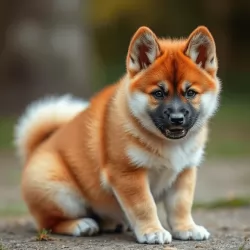 The Akita Inu, originating from Japan's snowy Akita Prefecture, has a long-standing legacy as a powerful hunting dog and loyal companion. Bred in the 1600s to track large game like boar and bear, the Akita quickly earned its place among Japanese nobility as a guardian and symbol of courage.
Its dignified nature and unwavering loyalty were immortalized in the true story of Hachikō, an Akita who waited nearly a decade for his deceased owner at a Tokyo train station. This devotion captured national and global admiration, leading to the breed’s recognition as a national treasure in Japan.
After World War II, American soldiers introduced Akitas to the West, giving rise to a larger, more robust variation known as the American Akita. Today, the Akita Inu remains a cherished breed worldwide for its strength, loyalty, and quiet dignity.
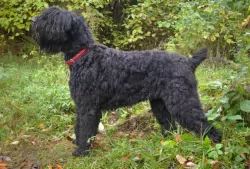 During the cold war, the Soviet Union developed the Black Russian Terrier as a working military dog. During the early 1950’s, the Red Star Kennel developed this breed and in 2004 by the American Kennel Club. The Black Russian Terrier is not really a terrier at all, but a mid-sized working dog used for hunting and guarding or as a pet. The Red Star Kennel is thought to have developed the BRT using a wide variety of breeds – as many as seventeen – including breeds like the Newfoundland, the Rottweiler, the Caucasian Shepard Dog and a Giant Shepard and an Airedale. So, you can see the wide variety and several more breeds were added. The Red Star Kennel in Moscow was owned by the state and they developed the BRT for specific working conditions and not for appearance. They did not really care how it looked except that it had to be black. In 1957 the state allowed a few puppies to be sold to non-military breeders. These breeders began to breed the Black Russian Terrier for appearance as well as function.
As these breeders worked with the dogs, they spread the breed throughout Russia and into Finland, Poland, Hungary, Germany, Czechoslovakia and Germany. From there they spread to Australia, Canada and the United States. The breed standard was developed in 1958 and by 1996 an updated version of the standard was developed to reflect the dog we see today. In 1996 the United Kingdom also got their first introduction to the breed. They are still rare outside of Russian or previous Soviet Union states.
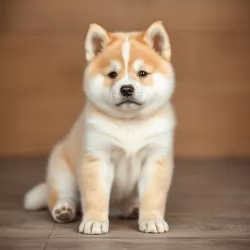 The Akita Inu is a large, powerful, and dignified dog breed known for its striking appearance, quiet nature, and unwavering loyalty.
Originating from Japan, it has a broad head, erect triangular ears, and a plush double coat that comes in red, white, brindle, or sesame, with characteristic urajiro (whitish markings). The Akita carries itself with pride and confidence, often aloof with strangers but deeply affectionate and protective toward its family.
Calm, intelligent, and strong-willed, the breed requires early socialization and firm, consistent training. Though not ideal for first-time owners, the Akita Inu is a loyal guardian and devoted companion for those who understand and respect its independent spirit.
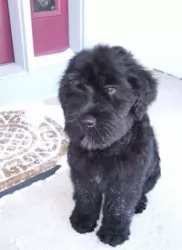 A little larger than a mid-sized dog, the Black Russian Terrier is strong, powerful, stable and alert. His head is block shaped and has a broad skull. The muzzle is square with a beard and mustache. A black, large nose and full black lips are matched with powerful and large jaws. He has a scissor bite and his ears should be triangles with rounded apexes. They have very large paws that are bear-like in appearance with thick black pads. They are also covered with hair. Their legs are muscular, powerful and strong. They have a cropped tail.
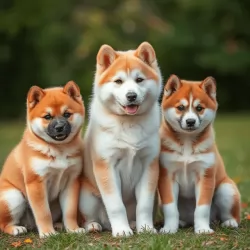 The Akita Inu is a large, noble, and powerful breed known for its dignified presence, strong loyalty, and quiet confidence. Originally bred for hunting and guarding, Akitas are naturally protective, courageous, and independent thinkers.
They form deep bonds with their family but are often aloof with strangers. Calm and clean by nature, they rarely bark without reason and carry themselves with elegance and strength.
Their double coat is thick and weather-resistant, requiring regular grooming, and they shed heavily, especially seasonally.
While intelligent, Akitas can be stubborn, so they thrive best with experienced owners who can offer consistent training and leadership. With proper care and socialization, the Akita Inu is a devoted, majestic companion.
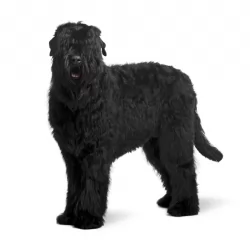 The Black Russian Terrier is a working dog and he is confident, calm, self-assured and confident. He is responsive and intelligent, protective and fearless, loyal and aloof. He is not welcoming to strangers. If socialized well, he is enough of an independent thinker to be able to decide on his own who or what poses a threat to his family and what doesn’t. They get bored quickly because they are so smart. Keep him stimulated. These are strong, athletic dogs who will love to run with you, jog along side your bike, hike the mountain or just walk with you. Whatever your form of exercise is, the Black Russian Terrier can adapt to it. They also have a strong prey drive so don’t trust them with animals they do not know. They are ok with cats and dogs that they grow up with. They love to play with kids but be careful they don’t unintentionally knock the little ones down.
The Black Russian Terrier matures later than other dogs. Treat the puppy the way you want the adult dog to be. If you don’t want a large dog on your bed don’t let the puppy sleep on the bed. He will soon be a large, powerful and strong dog with a mind of his own and you will not be able to keep him off the bed.
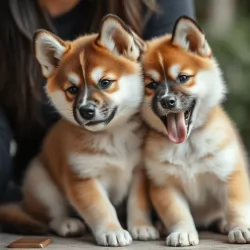 The Akita Inu is generally a strong and resilient breed, but it is prone to several genetic and breed-specific health issues.
Common concerns include hip and elbow dysplasia, progressive retinal atrophy (PRA), and hypothyroidism, all of which can affect mobility, vision, and metabolism.
The breed is also susceptible to autoimmune disorders like VKH-like syndrome and sebaceous adenitis, a skin condition causing hair loss and irritation. Additionally, Akitas may experience bloat (gastric torsion), a life-threatening emergency common in deep-chested dogs.
Regular veterinary care, proper diet, and responsible breeding practices are essential to help minimize health risks and ensure a long, healthy life.
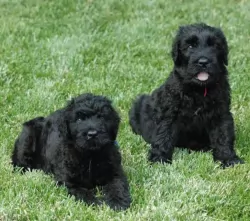 This is a healthy breed who faces some of the same issues other large dogs face such as dysplasia in the elbows and hips. Then they also face their own hereditary diseases such as Juvenile laryngeal paralysis, hyperuricosuria and polyneuropathy. They are also susceptible to heart disease, eye diseases, allergies, Panosteitis and hypertropic osteodystrophy. Let’s look at the major hereditary disease that are not so common.
This occurs when the larynx arytenoid cartilages stop working and don’t operate so then the adjoining muscles don’t work either and the dog cannot swallow without the possible damage to the airway and the cannot breathe properly during exercise or while panting.
This is a condition that can occur in people and animals. This condition can lead to kidney or bladder stones as there is too much uric acid in their urine.
Like any form of neuropathy, in this disease many different nerves are damaged, and this can cause weak reflexes and tremors. There are effective treatments however.
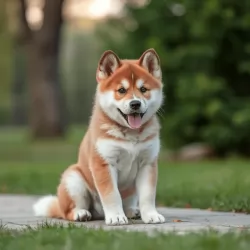 Caring for an Akita Inu involves commitment, consistency, and understanding of the breed's unique needs. They require regular grooming, especially during seasonal shedding, with brushing at least 2–3 times a week and daily during coat blow periods.
Akitas thrive on routine exercise, such as long walks or playtime in a secure area, but they aren’t overly energetic. Training and socialization should start early, using positive reinforcement and calm, firm leadership to manage their independent and protective nature.
They are best suited to homes where they are the only pet or properly introduced to others. Akitas are clean, quiet, and typically bond closely with their family, so providing mental stimulation, affection, and clear boundaries is key.
Regular vet checkups, a balanced diet, and proper social interaction help keep your Akita healthy, happy, and well-adjusted.
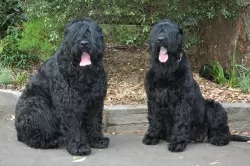 This is a large, working dog that needs healthy nutrition. Feed once or twice a day but do not overfeed. Don’t let your Black Russian Terrier get overweight. Proper nutrition for puppies is critical given the nutrionally based diseases discussed below.
This is a high energy dog that needs to work. He doesn’t just want to work, he needs to work. So, find him a job and one that includes a lot of exercise. He needs consistent and firm training but will respond well and excel in Obedience Trials. They are good at Schutzhund and agility. They need plenty of exercise and will be unhappy and destructive without enough and a job. He needs to burn off that energy.