 MyDogBreeds
 Akita Inu is originated from Japan but Briard is originated from France. Both Akita Inu and Briard are having almost same height. Both Akita Inu and Briard are having almost same weight. Akita Inu may live 3 years more than Briard. Both Akita Inu and Briard has same litter size. Akita Inu requires Moderate maintenance. But Briard requires High maintenance
 The Akita Inu, originating from Japan's snowy Akita Prefecture, has a long-standing legacy as a powerful hunting dog and loyal companion. Bred in the 1600s to track large game like boar and bear, the Akita quickly earned its place among Japanese nobility as a guardian and symbol of courage.
Its dignified nature and unwavering loyalty were immortalized in the true story of Hachikō, an Akita who waited nearly a decade for his deceased owner at a Tokyo train station. This devotion captured national and global admiration, leading to the breed’s recognition as a national treasure in Japan.
After World War II, American soldiers introduced Akitas to the West, giving rise to a larger, more robust variation known as the American Akita. Today, the Akita Inu remains a cherished breed worldwide for its strength, loyalty, and quiet dignity.
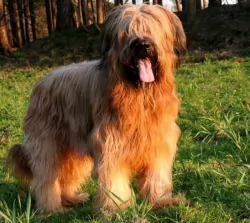 Through myth and legend, the Briard is thought to be a very ancient dog. A French herding breed, a Briard type of dog appears in writings as early as the end of the 14th century. According to legends the Briard was owned by Napoleon, Charlemagne, Lafayette and Thomas Jefferson. As a cross between the Barbet and the Beauceron, the Briard came into popularity following its appearance in a Paris dog show in 1863. Bred originally to guard and herd sheep, these intelligent, independent dogs were often left on their own. Because they both guarded and herded, their size and structure as well as their personalities were different from other dogs that worked sheep. Those that herded only were fast, agile and smaller. Those that only guarded were heavier, bigger and stronger. The Briard was in-between these two types of breeds. He was well suited to any kind of farm work and guarded the crops from the sheep’s desire to eat them. They moved the sheep from one grazing area to another and then to their holding area at night. No humans had to assist the Briard in this work once they were trained.
During World War 1, the Briards were drafted into service as messengers, sentries and search dogs for lost or injured soldiers. In that time frame the breed served almost to the point of extinction. Breeding programs following the war brought them back. Today the Briard is a home companion, a police dog, as well as both military and civilian search and rescue dogs.
 The Akita Inu is a large, powerful, and dignified dog breed known for its striking appearance, quiet nature, and unwavering loyalty.
Originating from Japan, it has a broad head, erect triangular ears, and a plush double coat that comes in red, white, brindle, or sesame, with characteristic urajiro (whitish markings). The Akita carries itself with pride and confidence, often aloof with strangers but deeply affectionate and protective toward its family.
Calm, intelligent, and strong-willed, the breed requires early socialization and firm, consistent training. Though not ideal for first-time owners, the Akita Inu is a loyal guardian and devoted companion for those who understand and respect its independent spirit.
 The Briard is a powerful, intelligent and independent working dog. They have a straight topline and their height is almost the same as their length. They have long, large, rectangular heads with wide muzzles. Their noses are also square and jet black while their side set, large eyes can be black-brown or black. Their ears have traditionally been cropped but with more countries outlawing it, they can now have natural ears set high on the head. They have a tail that is feathered and low-cut. The feet of a Briard are round, compact and large.
The Briard is a double coated breed with a long beard and mustache. Their hair completely covers the head and the eyes so that they are not seen. They have prominent eyebrows as well.
 The Akita Inu is a large, noble, and powerful breed known for its dignified presence, strong loyalty, and quiet confidence. Originally bred for hunting and guarding, Akitas are naturally protective, courageous, and independent thinkers.
They form deep bonds with their family but are often aloof with strangers. Calm and clean by nature, they rarely bark without reason and carry themselves with elegance and strength.
Their double coat is thick and weather-resistant, requiring regular grooming, and they shed heavily, especially seasonally.
While intelligent, Akitas can be stubborn, so they thrive best with experienced owners who can offer consistent training and leadership. With proper care and socialization, the Akita Inu is a devoted, majestic companion.
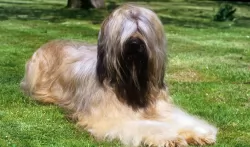 As mentioned previously the Briard is intelligent and independent. They are also loyal, rugged, protective and bond intensely with their humans. They are often aloof when it comes to strangers or even when new furniture is introduced into the household. They have to learn that anything new into the family environment is friendly and good. They are great with children and susceptible to separation anxiety because of their deep affection for their people. Socialization for puppies is a must. This will let them know that people and children, other dogs in general are not harmful to their families. They have great memories and once they learn something – right or wrong – it is almost impossible to change it. They were bred to be independent thinkers who acted on their own conclusions. This is still true of the breed today, making them appear to be stubborn.
They are great watchdogs, fearless and brave; willing to learn, eager to make you happy. They are basically gentle but that always runs up against their protective nature. A strong alpha leader is needed to handle this hard-working dog.
 The Akita Inu is generally a strong and resilient breed, but it is prone to several genetic and breed-specific health issues.
Common concerns include hip and elbow dysplasia, progressive retinal atrophy (PRA), and hypothyroidism, all of which can affect mobility, vision, and metabolism.
The breed is also susceptible to autoimmune disorders like VKH-like syndrome and sebaceous adenitis, a skin condition causing hair loss and irritation. Additionally, Akitas may experience bloat (gastric torsion), a life-threatening emergency common in deep-chested dogs.
Regular veterinary care, proper diet, and responsible breeding practices are essential to help minimize health risks and ensure a long, healthy life.
 Being a large breed, the Briard shares many of the same health concerns as other large breeds. They have a few of their own as well. Typical issues for a Briard might include:
Progressive Retinal Atrophy/Degeneration –degeneration of the photoreceptors and retina.
 Caring for an Akita Inu involves commitment, consistency, and understanding of the breed's unique needs. They require regular grooming, especially during seasonal shedding, with brushing at least 2–3 times a week and daily during coat blow periods.
Akitas thrive on routine exercise, such as long walks or playtime in a secure area, but they aren’t overly energetic. Training and socialization should start early, using positive reinforcement and calm, firm leadership to manage their independent and protective nature.
They are best suited to homes where they are the only pet or properly introduced to others. Akitas are clean, quiet, and typically bond closely with their family, so providing mental stimulation, affection, and clear boundaries is key.
Regular vet checkups, a balanced diet, and proper social interaction help keep your Akita healthy, happy, and well-adjusted.
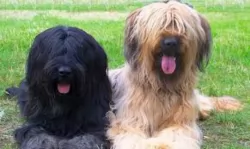 It is best to feed the Briard smaller meals 2-3 times a day to prevent bloat. Feed 3-4 cups total for the day of a dry dog food that is high quality and made for large breeds.
Stationary Night Blindness – Congenital limited vision in the dark can vary from slight difficulty moving to complete inability to see in the dark.
Progressive Retinal Atrophy/Degeneration – Can lead to night blindness, limited or total blindness. Puppies with the disease can be blind before their first birthday.
Bloat (Gastric Torsion) – Stomach is distended and twists. Fatal if not treated quickly. Caused by eating a large meal quickly and either exercise immediately or drink a large amount of water right after eating.
Von Willebrand’s Disease – Blood clotting disorder leads to excessive bleeding. There is no cure, but it is manageable.
The Briard is a working dog and as such needs a job. They excel at agility, flyball, herding, obedience, confirmation and tracking. They need exercise and make excellent service dogs for people with disabilities and therapy dogs for those in emotional need.