 MyDogBreeds
 Akita Inu is originated from Japan but Brussels Griffon is originated from Belgium. Akita Inu may grow 51 cm / 21 inches higher than Brussels Griffon. Akita Inu may weigh 33 kg / 73 pounds more than Brussels Griffon. Akita Inu may live 3 years more than Brussels Griffon. Akita Inu may have more litter size than Brussels Griffon. Both Akita Inu and Brussels Griffon requires Moderate maintenance.
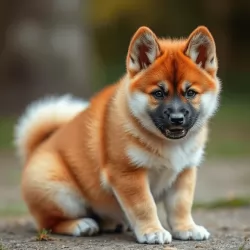 The Akita Inu, originating from Japan's snowy Akita Prefecture, has a long-standing legacy as a powerful hunting dog and loyal companion. Bred in the 1600s to track large game like boar and bear, the Akita quickly earned its place among Japanese nobility as a guardian and symbol of courage.
Its dignified nature and unwavering loyalty were immortalized in the true story of Hachikō, an Akita who waited nearly a decade for his deceased owner at a Tokyo train station. This devotion captured national and global admiration, leading to the breed’s recognition as a national treasure in Japan.
After World War II, American soldiers introduced Akitas to the West, giving rise to a larger, more robust variation known as the American Akita. Today, the Akita Inu remains a cherished breed worldwide for its strength, loyalty, and quiet dignity.
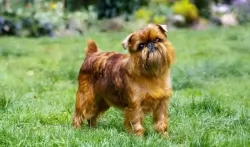 The Brussels Griffon is one of the three different types of Griffons. There is the Belgian, the Petit, and the Brussels Griffon. “Griffon” means wiry and the Brussels Griffon lives up to that moniker. The Brussels Griffon’s coat is longer than that of the Belgian Griffon and the Petit Brabanon (Griffon) has a smooth, short coat. The breed is probably originally developed by crossing Belgian street dogs with the Affenpinsher as early in the 1800’s. They were favored by the cabbies in Brussels as guard dogs. They were also bred to hunt rats. Sometime toward the end of the 19th century, the Griffon was again crossed this time with a pug. This accounts for the type of head that the Brussels Griffon has, namely a brachycephalic head. It also accounts for the smooth coat of the Petit Griffon. The modern-day Griffon may also have been crossed at some time with one or more of these breeds: the English Toy Spaniel, the Irish Terrier and the Yorkshire Terrier.
By 1880, the breed was recognized and appeared in the Brussels Exhibition of 1880. They were also found in paintings of the same era by the Flemish painter, Van Eyck. In the beginning of the 20th century, the breed was extremely popular with the nobility in Belgium. As with so many other breeds, the number of Brussels Griffon was greatly reduced during the First World War. It did not take them long however to make a comeback after the war. Their popularity then spread around the globe.
The European FCI considers the Brussels Griffon, the Belgian Griffon and the Petit Brabancon (Griffon) to be three separate breeds with no interbreeding among them. They are shown as three separate breeds in Europe, with the difference between the Belgian and Brussels being the accepted colors. The Brussels is only red in color while the Belgium Griffon can be in all other colors. In the United States the three types of Griffons are considered one breed with three varieties. Only the Brussels Griffon is recognized by the AKC. The difference in coat and color make for the different varieties in the U.S.
 The Akita Inu is a large, powerful, and dignified dog breed known for its striking appearance, quiet nature, and unwavering loyalty.
Originating from Japan, it has a broad head, erect triangular ears, and a plush double coat that comes in red, white, brindle, or sesame, with characteristic urajiro (whitish markings). The Akita carries itself with pride and confidence, often aloof with strangers but deeply affectionate and protective toward its family.
Calm, intelligent, and strong-willed, the breed requires early socialization and firm, consistent training. Though not ideal for first-time owners, the Akita Inu is a loyal guardian and devoted companion for those who understand and respect its independent spirit.
 All three types of Griffons are toy size dogs with short, thick bodies and distinctive brachycephalic heads. Regardless of coat color their muzzles and whiskers are black, and they have large eyes, also black, a mustache and beard. They have black eyelashes and a nose that is very black. All this is set against their red, beige, black or black and tan coat. Their forehead is dome shaped and the muzzle is short. The breed has small ears that are high up on the dog’s head. The ears might be cropped in the United States but would not be in Europe. The lower jaw is prominent and the jaw itself is undershot. They have black toenails and pads, with strong and muscular hind legs. The Griffon has a docked, high set tail in the U.S. and a full tail in Europe and all of the United Kingdom.
The rough coated types have a dense and wiry coat and the standard encourages the hardest possible wire coat. Their heads are also wiry and long around the chin, cheeks, nose and eyes. They should be hand-stripped and never left ungroomed. The coat can matt if not taken care of adequately. One of the most important features of the Brussels Griffon is its human like face or monkey like appearance.
 The Akita Inu is a large, noble, and powerful breed known for its dignified presence, strong loyalty, and quiet confidence. Originally bred for hunting and guarding, Akitas are naturally protective, courageous, and independent thinkers.
They form deep bonds with their family but are often aloof with strangers. Calm and clean by nature, they rarely bark without reason and carry themselves with elegance and strength.
Their double coat is thick and weather-resistant, requiring regular grooming, and they shed heavily, especially seasonally.
While intelligent, Akitas can be stubborn, so they thrive best with experienced owners who can offer consistent training and leadership. With proper care and socialization, the Akita Inu is a devoted, majestic companion.
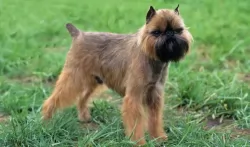 The Brussels Griffon is sociable, alert and very intelligent. She is very energetic, playful and loving. They bond deeply with their family. Housebreaking might be a challenge as it is with all toy/small breeds. They are incredibly lonely and restless when their people are not around them. They have great personalities, terrier like characteristics, and deep loyalty to their humans. They are great companions and love children. Just remember how small they are. They are susceptible to Little Dog Syndrome if the human does not establish themselves as the alpha right away.
 The Akita Inu is generally a strong and resilient breed, but it is prone to several genetic and breed-specific health issues.
Common concerns include hip and elbow dysplasia, progressive retinal atrophy (PRA), and hypothyroidism, all of which can affect mobility, vision, and metabolism.
The breed is also susceptible to autoimmune disorders like VKH-like syndrome and sebaceous adenitis, a skin condition causing hair loss and irritation. Additionally, Akitas may experience bloat (gastric torsion), a life-threatening emergency common in deep-chested dogs.
Regular veterinary care, proper diet, and responsible breeding practices are essential to help minimize health risks and ensure a long, healthy life.
 The Brussels Griffon is susceptible to many of the diseases and genetic conditions that many other toy or small dogs have. Flat-faced breeds like the Griffon also suffer from difficulty with breathing under certain weather conditions and they are known to snore. They should not be kept in hot, sunny, humid climates for this reason. They may also display patella luxation (slipping kneecaps) and hip dysplasia. Lastly, they are susceptible to ear infections. Dams are often in need of cesarean sections to deliver their litters. They have very serious health issues due to the head shape and flat face. These might include eye and respiratory issues and syringomyelia – a deadly neurological disease. They are susceptible to epilepsy, dental issues and eye lash issues.
 Caring for an Akita Inu involves commitment, consistency, and understanding of the breed's unique needs. They require regular grooming, especially during seasonal shedding, with brushing at least 2–3 times a week and daily during coat blow periods.
Akitas thrive on routine exercise, such as long walks or playtime in a secure area, but they aren’t overly energetic. Training and socialization should start early, using positive reinforcement and calm, firm leadership to manage their independent and protective nature.
They are best suited to homes where they are the only pet or properly introduced to others. Akitas are clean, quiet, and typically bond closely with their family, so providing mental stimulation, affection, and clear boundaries is key.
Regular vet checkups, a balanced diet, and proper social interaction help keep your Akita healthy, happy, and well-adjusted.
 The Brussels Griffon can choke easily so take care with the size of kibble you feed them. They need about one fourth to one half of a cup of high quality dry food that is designed for small or toy dogs. Divide this amount into two or three small meals per day. Puppies should be fed more often than adults but never feed just one large meal per day. Be careful that your Brussels Griffon does not become obese.
The Brussels Griffon, regardless of type has some very serious health issues due to the shape of their heads.
Brachycephalic Syndrome – This can cause all the respiratory issues as well as eye issues such as cataracts and corneal ulcers.
This is a very playful and energetic breed that needs at least some exercise every day. They love to play with their family. They are smart and easy to train. They love agility, obedience, barn hunt and tracking activities. You can just as effectively play with and exercise your Brussels inside as well as out.