 MyDogBreeds
 Akita Inu is originated from Japan but Finnish Spitz is originated from Finland. Akita Inu may grow 21 cm / 9 inches higher than Finnish Spitz. Akita Inu may weigh 24 kg / 53 pounds more than Finnish Spitz. Akita Inu may live 4 years more than Finnish Spitz. Akita Inu may have more litter size than Finnish Spitz. Both Akita Inu and Finnish Spitz requires Moderate maintenance.
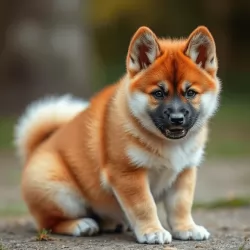 The Akita Inu, originating from Japan's snowy Akita Prefecture, has a long-standing legacy as a powerful hunting dog and loyal companion. Bred in the 1600s to track large game like boar and bear, the Akita quickly earned its place among Japanese nobility as a guardian and symbol of courage.
Its dignified nature and unwavering loyalty were immortalized in the true story of Hachikō, an Akita who waited nearly a decade for his deceased owner at a Tokyo train station. This devotion captured national and global admiration, leading to the breed’s recognition as a national treasure in Japan.
After World War II, American soldiers introduced Akitas to the West, giving rise to a larger, more robust variation known as the American Akita. Today, the Akita Inu remains a cherished breed worldwide for its strength, loyalty, and quiet dignity.
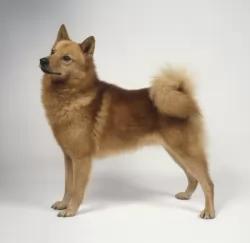 The “barking Bird Dog” or Finnish Spitz was Developed in Finland. The breed is fearless and small with a different style than many other hunting dogs. He style of tracking is unusual and he indicated his quarry by barking. He was bred to hunt all sizes of prey from as large as bears to as small as squirrels. He was called the “Barking Bird Dig” because he pointed at the prey by barking and giving the hunter knowledge of the prey and an easy approach to it. In Finland, the Spitz is still a hunting dog. In 1979 The Finnish Spitz became the national dog of Finland.
Spitz-like dogs have been present in Finland for over 8000 years. It is believed that dogs living in higher latitudes had more in common with the Taymyr Wolf od North Asia than with the gray wolf. Tests indicate that the chance of the Spitz being related to the Taymyr is between 1.4&a and 27.3%. The Taymyr is extinct today. This shows that the present day dog descends from more than one type of wolf and more than one area. The Spitz was a favorite of the Finno-Ugrian tribes as he helped them find food. These tribes were pretty isolated until 1880. Then the Spitz were mated with other dogs and were almost extinct as a breed separate from all the other local dogs.
However, like many other breeds the Finnish Spitz found a savior. A Finnish huntsman, named Hugo Roos, noticed the native Finnish Spitz while he was hunting up North. He decided to breed dogs that were genuine Finnish Spitz without the blood of other breeds mixed in. After thirty years the current day Finnish Spitz was born.The latest breed standard was confirmed by the Love Finnish Kennel Club in 1996.
 The Akita Inu is a large, powerful, and dignified dog breed known for its striking appearance, quiet nature, and unwavering loyalty.
Originating from Japan, it has a broad head, erect triangular ears, and a plush double coat that comes in red, white, brindle, or sesame, with characteristic urajiro (whitish markings). The Akita carries itself with pride and confidence, often aloof with strangers but deeply affectionate and protective toward its family.
Calm, intelligent, and strong-willed, the breed requires early socialization and firm, consistent training. Though not ideal for first-time owners, the Akita Inu is a loyal guardian and devoted companion for those who understand and respect its independent spirit.
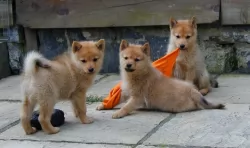
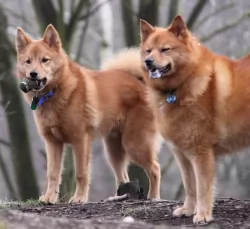
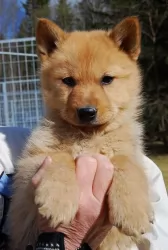 The Finnish Spitz is balanced and symmetrical in body and females are longer than males. They have a very distinguishable prick, foxy ears and face. They have a smiling expression and a curved tail. They are a golden-red color with a double coat. The under coat is dense and soft While the top coat is stiff. Puppies often look like little red fox cubs. When born they are black, grey or brown with a lot of black. As an adult the pups grow up to be a mix of fawn and dark black. Lips, nose and rims of the eyes should be black.
 The Akita Inu is a large, noble, and powerful breed known for its dignified presence, strong loyalty, and quiet confidence. Originally bred for hunting and guarding, Akitas are naturally protective, courageous, and independent thinkers.
They form deep bonds with their family but are often aloof with strangers. Calm and clean by nature, they rarely bark without reason and carry themselves with elegance and strength.
Their double coat is thick and weather-resistant, requiring regular grooming, and they shed heavily, especially seasonally.
While intelligent, Akitas can be stubborn, so they thrive best with experienced owners who can offer consistent training and leadership. With proper care and socialization, the Akita Inu is a devoted, majestic companion.
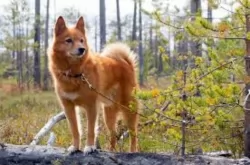 Very child friendly – loves to play with children as long as the children pay attention to them. If not, the Spitz will go elsewhere.
They are independent thinkers and close to family but not strangers. They often “yodel” instead of howl.
Needs to be with people, bonds deeply with his humans. Most get along well with other dogs but because of their hunting instinct they are not good with small pets or birds.
They are smart and learn easily. They are great athletes and learn games and competition well.
 The Akita Inu is generally a strong and resilient breed, but it is prone to several genetic and breed-specific health issues.
Common concerns include hip and elbow dysplasia, progressive retinal atrophy (PRA), and hypothyroidism, all of which can affect mobility, vision, and metabolism.
The breed is also susceptible to autoimmune disorders like VKH-like syndrome and sebaceous adenitis, a skin condition causing hair loss and irritation. Additionally, Akitas may experience bloat (gastric torsion), a life-threatening emergency common in deep-chested dogs.
Regular veterinary care, proper diet, and responsible breeding practices are essential to help minimize health risks and ensure a long, healthy life.
 Typically, a somewhat healthy breed, the Finnish Spitz does struggle with a few genetic concerns. They have been known to suffer from:
 Caring for an Akita Inu involves commitment, consistency, and understanding of the breed's unique needs. They require regular grooming, especially during seasonal shedding, with brushing at least 2–3 times a week and daily during coat blow periods.
Akitas thrive on routine exercise, such as long walks or playtime in a secure area, but they aren’t overly energetic. Training and socialization should start early, using positive reinforcement and calm, firm leadership to manage their independent and protective nature.
They are best suited to homes where they are the only pet or properly introduced to others. Akitas are clean, quiet, and typically bond closely with their family, so providing mental stimulation, affection, and clear boundaries is key.
Regular vet checkups, a balanced diet, and proper social interaction help keep your Akita healthy, happy, and well-adjusted.
 Don’t overfeed the little guy. The Spitz had a good appetite for a dog its size and can gain weight quickly . Feed twice a day about 1/8th of a cup.
The same advice hold for the adult dog. Feed 1/4th of a cub of high quality dry food twice a day.
When the Spitz is a puppy you should limit strenuous exercise and jumping. Don’t spay neuter at too young an age. Wait until they are mature at 3-5 years of age.
Again do not exercise vigorously at too young an age. When older the Finnish Spitz will need a yard to run in and exercise to satisfy his hunting instincts. A long walk every day is a must.