 MyDogBreeds
 Both Akita Inu and Shikoku are originated from Japan. Akita Inu may grow 44 cm / 18 inches higher than Shikoku. Akita Inu may weigh 14 kg / 30 pounds lesser than Shikoku. Both Akita Inu and Shikoku has same life span. Akita Inu may have more litter size than Shikoku. Both Akita Inu and Shikoku requires Moderate maintenance.
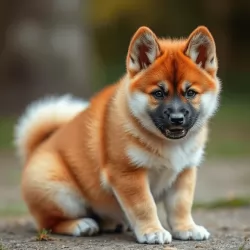 The Akita Inu, originating from Japan's snowy Akita Prefecture, has a long-standing legacy as a powerful hunting dog and loyal companion. Bred in the 1600s to track large game like boar and bear, the Akita quickly earned its place among Japanese nobility as a guardian and symbol of courage.
Its dignified nature and unwavering loyalty were immortalized in the true story of Hachikō, an Akita who waited nearly a decade for his deceased owner at a Tokyo train station. This devotion captured national and global admiration, leading to the breed’s recognition as a national treasure in Japan.
After World War II, American soldiers introduced Akitas to the West, giving rise to a larger, more robust variation known as the American Akita. Today, the Akita Inu remains a cherished breed worldwide for its strength, loyalty, and quiet dignity.
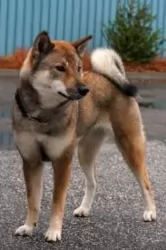 The Shikoku is from the Shikoku Island in Japan and they are very much like the Japanese Shiba Inu. There are six native Japanese dog breeds and the Shikoku is medium sized and sits in between the smaller Shiba Inu and the very large Akita Inu. All of the Japanese native breeds are members of the Spitz family. The Japanese have sorted their six breeds into 3 categories by size. Being medium size, the Shikoku is a member of the Shika-inus group. Others in this group are the Ainu Ken, the Kai Ken and the Kishu Inu. There are small differences between the three dogs in the Shika-inus group.
The Shikoku was bred to be a hunting dog in Kochi Prefecture to hunt boar and deer. Other names for the breed include Kochi-ken and Kishu dog or boar hound. This dog is considered to be the purest of the Japanese native dogs or Nihoken. They are today very , very rare. There are very few outsides of Japan, but some in North America are attempting to save the breed.
The are od Kochi Prefecture is a mountainous region with rough terrain that anyone outside of the area would have a hard time accessing. That is why the Shikoku is considered to be so pure as they were pretty well isolated in the mountains. The breeders were also isolated by the mountains and there was very little interbreeding. Although breeding the same dog, these different groups developed different lines of the Shikoku.
Documentation tells us that the number of originals lines was just two and these were the Western and Eastern Shikoku. The Western dog was known as the Mount Ishizuchi Shikoku and the Eastern as the Mount Tsurugi Shikoku. Within these two lines of Shikoku there are additional strains.
Within the Eastern line there is the Tokushima (lya) and the Koci-Aki strains. Within the Western line there is the Hata Uwahara, the Ehime-ken Shuso-gun and the Honkawa. Among these lines and strains, there are different coats and different colors; some heavier and some taller, but all figure into the development of the breed.
Finally, in the Showa Era the Japanese established the Dog Protective League and they began collecting the native dogs from around the country. They protected them so that the breed will go on. The Shikoku is today recognized as Foundation Stock by the AKC and it is fully recognized by the Japan Kennel Club, the Canadian Hound Club and the Shikoku has been declared a living Japanese “natural monument”.
Two bloodlines became the way the Shikoku were know after the war – the Honkawa and the Hata lines The Honkawa line were the descendants of the Choshun-go and the Hata line were the descendants of the Matsukaze-go. They bred the lines separately until 1955, when they mixed them to make the breed stronger. They are no longer considered separate in any way.
Because they are such primitive dogs, the Shikoku are good watch dogs and quite reserved with strangers. They need a lot of socialization to be a family pet but once they are, they make great companions. Intelligent, quick to learn and eager to please. Of the two lines of Shikoku dogs from the Western strains, the current Shikoku owes much of its current development to the Honkawa and Hata strains.
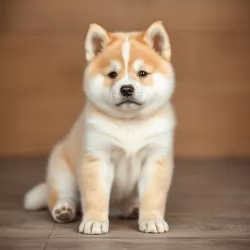 The Akita Inu is a large, powerful, and dignified dog breed known for its striking appearance, quiet nature, and unwavering loyalty.
Originating from Japan, it has a broad head, erect triangular ears, and a plush double coat that comes in red, white, brindle, or sesame, with characteristic urajiro (whitish markings). The Akita carries itself with pride and confidence, often aloof with strangers but deeply affectionate and protective toward its family.
Calm, intelligent, and strong-willed, the breed requires early socialization and firm, consistent training. Though not ideal for first-time owners, the Akita Inu is a loyal guardian and devoted companion for those who understand and respect its independent spirit.
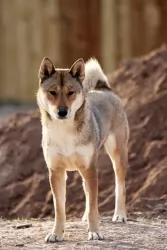
 Today’s Shikoku is a medium sized breed with a Spitz like body – square with a head that is wedge shaped. The ears are pointed, and the tail is curved and feathered. They have arched toes and hard pads with dark, hard nails.
The two lines of the Shikoku are slightly different in built and look. The Honkawa strain is slender and athletic; agile and single coated. They have dark eyes and most of them are black and tan.
On the other hand, the Hata strain is much heavier boned, with the front more muscular than the rear. They have small ears, a wide skull and a strong undercoat. His eyes are shaped differently than the Honkawa. Their coats are also mostly red and tan.
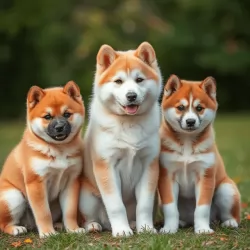 The Akita Inu is a large, noble, and powerful breed known for its dignified presence, strong loyalty, and quiet confidence. Originally bred for hunting and guarding, Akitas are naturally protective, courageous, and independent thinkers.
They form deep bonds with their family but are often aloof with strangers. Calm and clean by nature, they rarely bark without reason and carry themselves with elegance and strength.
Their double coat is thick and weather-resistant, requiring regular grooming, and they shed heavily, especially seasonally.
While intelligent, Akitas can be stubborn, so they thrive best with experienced owners who can offer consistent training and leadership. With proper care and socialization, the Akita Inu is a devoted, majestic companion.
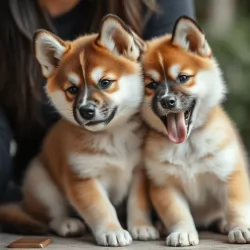 The Akita Inu is generally a strong and resilient breed, but it is prone to several genetic and breed-specific health issues.
Common concerns include hip and elbow dysplasia, progressive retinal atrophy (PRA), and hypothyroidism, all of which can affect mobility, vision, and metabolism.
The breed is also susceptible to autoimmune disorders like VKH-like syndrome and sebaceous adenitis, a skin condition causing hair loss and irritation. Additionally, Akitas may experience bloat (gastric torsion), a life-threatening emergency common in deep-chested dogs.
Regular veterinary care, proper diet, and responsible breeding practices are essential to help minimize health risks and ensure a long, healthy life.
 Being isolated as they were, the Shikoku was a fairly healthy breed, no genetic testing has been done. Despite this they suffer a few of the same potential issues as other breeds their size.
Otherwise this is an agile and hardy breed with no known congenital health issues.
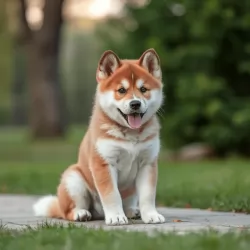 Caring for an Akita Inu involves commitment, consistency, and understanding of the breed's unique needs. They require regular grooming, especially during seasonal shedding, with brushing at least 2–3 times a week and daily during coat blow periods.
Akitas thrive on routine exercise, such as long walks or playtime in a secure area, but they aren’t overly energetic. Training and socialization should start early, using positive reinforcement and calm, firm leadership to manage their independent and protective nature.
They are best suited to homes where they are the only pet or properly introduced to others. Akitas are clean, quiet, and typically bond closely with their family, so providing mental stimulation, affection, and clear boundaries is key.
Regular vet checkups, a balanced diet, and proper social interaction help keep your Akita healthy, happy, and well-adjusted.
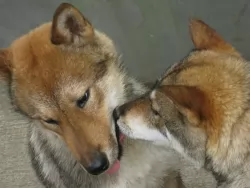 Feeding the puppy Be careful with feeding the puppy and adult as the breed is known to have a tendency toward obesity. Fresh food is better as it is what the breed has been used to, but a high quality puppy kibble is acceptable. Feed three times per day.
2.Feeding the adult He is a high energy dog so feed a high energy food designed for a medium sized dog. Feed in two meals each day.
4. Games and Exercises You will need a fenced yard for this breed and time to play with them. If not, you would need time to walk her more than once a day. They love to play indoors as well, chasing balls, learning new things. The breed make great companions for hiking, swimming, play frisbee or catch outside. They do well at agility, rally, obedience and flyball.
 1.Children friendliness – They might be a little aloof with children. They are hunters.