 MyDogBreeds
 Akita Inu is originated from Japan but Spinone Italiano is originated from Italy. Both Akita Inu and Spinone Italiano are having almost same height. Both Akita Inu and Spinone Italiano are of same weight. Akita Inu may live 6 years more than Spinone Italiano. Both Akita Inu and Spinone Italiano has almost same litter size. Both Akita Inu and Spinone Italiano requires Moderate maintenance.
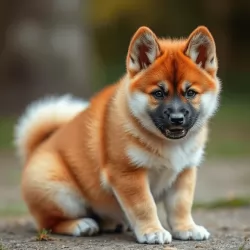 The Akita Inu, originating from Japan's snowy Akita Prefecture, has a long-standing legacy as a powerful hunting dog and loyal companion. Bred in the 1600s to track large game like boar and bear, the Akita quickly earned its place among Japanese nobility as a guardian and symbol of courage.
Its dignified nature and unwavering loyalty were immortalized in the true story of Hachikō, an Akita who waited nearly a decade for his deceased owner at a Tokyo train station. This devotion captured national and global admiration, leading to the breed’s recognition as a national treasure in Japan.
After World War II, American soldiers introduced Akitas to the West, giving rise to a larger, more robust variation known as the American Akita. Today, the Akita Inu remains a cherished breed worldwide for its strength, loyalty, and quiet dignity.
 This Italian breed has an ancient blood line tracing all the back to 500 BC. Originally bred to hunt, he is today a friendly, alert and loyal companion. He is intelligent enough to do any job you give him. The Spinone is thought to be one of the oldest gun dogs ever, but it is not entirely clear that he came from Italy. There are some who think he may have come from somewhere in these European countries – Italy, Greece, France, Celtic Ireland, Spain or Russia. However, most believe the breed came from Italy in the Piedmont area.
The most common thinking is that he is a descendent of the Spanish Pointer and/or the Russian Setter. One other theory is that setters from Greece were brought to the Roman Empire and crossed with a variety of Italian dog to make the coarse haired Spinone we see today. Then the French put in their claim that the breed is a cross of many French pointers.
The theory that counts might just belong to the Italians who believe the ancestor to the Spinone includes the German Wirehaired Pointer, the Pudelpointer and the Wirehaired Pointer. It was not until the 19th century that the name Spinone was officially given to the breed.
Before that it might have been known as a Spinoso and named after a thorn bus in Italy called the Spino. This bush was so thick and sharp that small prey animals learned to hide under it because the predators could not get through it. The Spinone however was able to fight through the briars with its thick, coarse hair and tough skin.
The breed almost became extinct during the second world war as before and after the hunters in Italy had started to use other breeds for hunting. Breeders also began to cross the Spinone with wire hairs like German Wirehaired Pointer, the Wirehaired Pointing Griffon and the Boulet.
The most popular hunting dog in Italy today is the Bracco Italiano while the Spinone is still used for hunting.
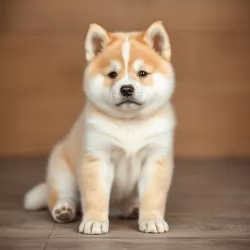 The Akita Inu is a large, powerful, and dignified dog breed known for its striking appearance, quiet nature, and unwavering loyalty.
Originating from Japan, it has a broad head, erect triangular ears, and a plush double coat that comes in red, white, brindle, or sesame, with characteristic urajiro (whitish markings). The Akita carries itself with pride and confidence, often aloof with strangers but deeply affectionate and protective toward its family.
Calm, intelligent, and strong-willed, the breed requires early socialization and firm, consistent training. Though not ideal for first-time owners, the Akita Inu is a loyal guardian and devoted companion for those who understand and respect its independent spirit.
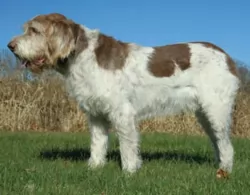
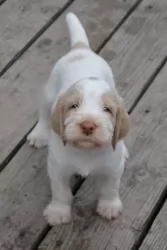 The breed is made up of strong, solid and muscled dogs that have an almost square build. His legs are made to travel any terrain and his head is long with an occipital that is pronounced and unique to the Spinone. They are said to have “human appearing eyes”, with a docked tail in countries allowing it and webbed paws.
Shorter hair covers their feet, head, legs, muzzle and ears. They have longer hair on their eyebrows and it is stiff, with soft hair on the muzzle and cheeks with a beard and mustache. It is a single coated dog though the coat is rough. They should have skin, lips, nose, and pads in colors that coordinate with their coats. For white dog it is a red-orange color, brown in dogs that are roan colored and dark red-orange in the orange and white colored dog.
 The Akita Inu is a large, noble, and powerful breed known for its dignified presence, strong loyalty, and quiet confidence. Originally bred for hunting and guarding, Akitas are naturally protective, courageous, and independent thinkers.
They form deep bonds with their family but are often aloof with strangers. Calm and clean by nature, they rarely bark without reason and carry themselves with elegance and strength.
Their double coat is thick and weather-resistant, requiring regular grooming, and they shed heavily, especially seasonally.
While intelligent, Akitas can be stubborn, so they thrive best with experienced owners who can offer consistent training and leadership. With proper care and socialization, the Akita Inu is a devoted, majestic companion.
 3.Adaptability – Young dogs need a lot of attention but they don’t need a lot of space. The young dogs are energetic while the adult dogs are laid-back. They need exercise every day and at least a small back yard.
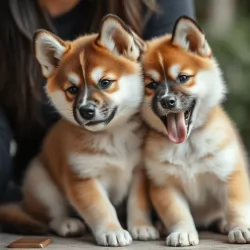 The Akita Inu is generally a strong and resilient breed, but it is prone to several genetic and breed-specific health issues.
Common concerns include hip and elbow dysplasia, progressive retinal atrophy (PRA), and hypothyroidism, all of which can affect mobility, vision, and metabolism.
The breed is also susceptible to autoimmune disorders like VKH-like syndrome and sebaceous adenitis, a skin condition causing hair loss and irritation. Additionally, Akitas may experience bloat (gastric torsion), a life-threatening emergency common in deep-chested dogs.
Regular veterinary care, proper diet, and responsible breeding practices are essential to help minimize health risks and ensure a long, healthy life.
 This is an ancient breed with not a lot of documented genetic issues, but it does have one deadly condition.
• Cerebellar ataxia (CA) is inherited and hits the puppies. Because it is a recessive gene both the mother and father must carry it for the puppy to inherit it. This makes it less likely than it would be otherwise. Puppies with the condition do not live more than a year. Since it is a genetic problem there is now a test for it that identifies carriers at a 95% accuracy rate.
• Like many other large breed dogs, they are susceptible to hip dysplasia. This can cause arthritis and/or lameness. There are now hip replacement surgeries available for this condition.
• Bloat is again common in large dogs and you need to watch for it with the Spinone. It can be deadly if not treated immediately. Let your dog rest quietly after eating. Do not let her exercise or play energetically after eating.
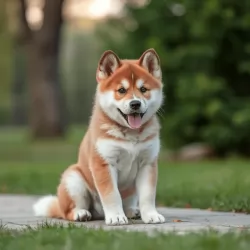 Caring for an Akita Inu involves commitment, consistency, and understanding of the breed's unique needs. They require regular grooming, especially during seasonal shedding, with brushing at least 2–3 times a week and daily during coat blow periods.
Akitas thrive on routine exercise, such as long walks or playtime in a secure area, but they aren’t overly energetic. Training and socialization should start early, using positive reinforcement and calm, firm leadership to manage their independent and protective nature.
They are best suited to homes where they are the only pet or properly introduced to others. Akitas are clean, quiet, and typically bond closely with their family, so providing mental stimulation, affection, and clear boundaries is key.
Regular vet checkups, a balanced diet, and proper social interaction help keep your Akita healthy, happy, and well-adjusted.
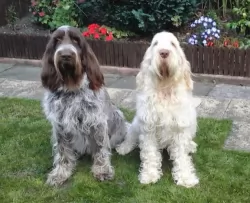 1Feeding the puppy – feed a high quality dog food for puppies of large breeds. Feed 3-4x day but don’t overfeed or let him exercise after eating even as a puppy.
2.Feeding the adult - feed a high quality dog food for large breeds. Feed 1-2X day but don’t overfeed or let him exercise after eating.
4. Games and Exercises – The Spinone is an active breed, but not a fast dog. In fact, they like to travel at a trot so it becomes a great dog for jogging or running with. They love to jump, track, hunt, hike. They do well with agility, retrieving, flyball, carting, being a therapy dog, a rescue dog and a watchdog.