 MyDogBreeds
 Gully Terrier is originated from India but American Staffordshire Terrier is originated from United Kingdom. Gully Terrier may grow 8 cm / 4 inches higher than American Staffordshire Terrier. Gully Terrier may weigh 8 kg / 18 pounds more than American Staffordshire Terrier. Both Gully Terrier and American Staffordshire Terrier has almost same life span. Both Gully Terrier and American Staffordshire Terrier has almost same litter size. Gully Terrier requires Moderate maintenance. But American Staffordshire Terrier requires Low maintenance
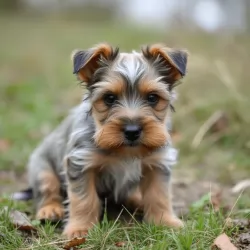 The Gully Terrier originated in India as a street dog, a mix of indigenous Indian Pariah Dogs and bully breeds like Pit Bulls and American Bulldogs.
Developed primarily for protection and hunting, they were used as guard dogs in urban and semi-urban areas. The name "Gully" refers to the narrow alleys and streets where these dogs were often found, while "Bully" highlights their muscular, strong build inherited from bully breeds.
Known for their loyalty, alertness, and protective instincts, Gully Terriers became valued companions for families in need of a strong, resilient dog that could thrive in tough environments.
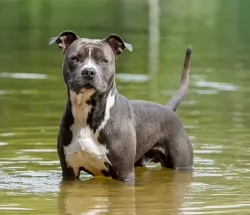 The American Staffordshire Terrier is a part of all the confusion surrounding the group of “pit bulls”. The American Staffordshire Terrier is directly related to the English Bull Terrier and English Terrier. The breed of the English Staffordshire Terrier was bred in the early 19th century in the West Midlands. It was not until later that the breed came from Staffordshire. These English Staffordshire Terriers are also the source of contention by breeders who insist it was the Fox Terrier, White English Terrier, Tan and Black Terrier that are the ancestors of the English Staffordshire Terrier.
These terriers (AKA pit bull terrier) came to the United States in the mid 1800’s. By the late 1890’s they were accepted by the United Kennel Club (UKC)as the American Pit Bull Terrier – a new and distinct breed. There were also some that were accepted into the AKC as the Staffordshire Terrier. In England they were still known as the American Staffordshire Terrier. When the AKC accepted the breed in 1936 they were given a new standard, new purpose and new group – the terrier. In 1969 the American Kennel Club recognized these dogs as American Staffordshire Terriers and refused to recognize the American Pit Bull Terrier. The name was changed to move the breed away from its characterization as a bull fighter and to distinguish it from the smaller English Staffordshire Terrier. All American Staffordshire Terriers are directly related to the American Pit Bull Terriers.
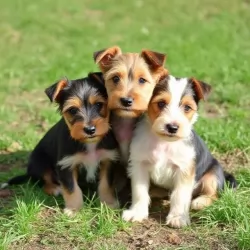 The Gully Terrier is a medium-sized, muscular dog known for its agility, loyalty, and protective nature. With a short, dense coat that comes in various colors, including black, brown, tan, and white, this breed has a distinctive appearance, often with a strong, powerful build.
The Gully Terrier is highly energetic and requires regular exercise to stay happy and healthy. Its intelligent, alert, and sometimes independent nature makes it a great guard dog and companion, although consistent training is necessary to manage its strong-willed personality.
This breed is well-suited for active families or individuals looking for a devoted and protective dog with a loving but protective demeanor.
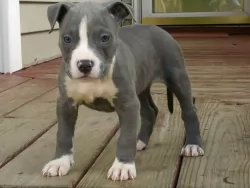 The American Staffordshire Terrier is a strong, powerful dog – stocky, muscular and graceful. At one point in time the American Staffordshire Terrier and the American Pit Bull Terrier were considered to be the same breed. Even today there are those that make that argument, but they have been recognized outside the AKC as separate breeds. The AKC only recognizes the American Staffordshire Terrier and not the APBT. However – even though there have been decades of separation in breeding the American Staffordshire Terrier and the American Pit Bull Terrier are the very same dogs genetically.
The American Staffordshire Terrier has a broad skull, high set ears and pronounced cheek bones. Their ears should not be cropped by AKC standards and their eyes are far apart, round and dark. With a medium sized muzzle and a heavy muscular back, they are as powerful as they look, if not more so. Most have black noses. The AmStaff has a broad, deep chest with wide set forelegs and compact feet. The tail is short and tapered and it should not be docked.
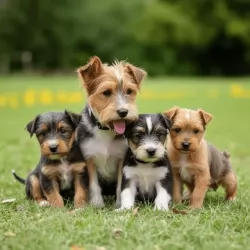 The Gully Terrier is a loyal, energetic, and intelligent breed with a strong, muscular build. Known for their protective nature, they make excellent guard dogs, staying alert and watchful of their surroundings.
While they are friendly and devoted to their family, they can also be independent and sometimes stubborn, requiring consistent training. Their short, dense coat is easy to groom, needing only regular brushing and ear cleaning.
Gully Terriers are active dogs that thrive on daily exercise and mental stimulation, making them great companions for those with an active lifestyle.
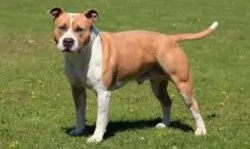 The American Staffordshire Terrier is a loving, gentle dog that wants nothing more than to be with and please his people. Contrary to his reputation as a “killer”, this dog is actually a lover. They are great with children and want to be a part of the family. They even think they are lap dogs, regardless of their size. They are never going to be aggressive toward people and even though they are not one-person dogs, they are loyal, and they are devoted to the family and the “leader of the pack”.
This breed can tell who is their friend and who is not. They are not aggressive, but they will protect their own. They are courageous, confident, attentive, bold and strong-willed. The AmStaff gets along with other dogs most of the time, but they will never back down from a challenge and should never be left unsupervised with another dog. They should not be loose in a neighborhood or at a dog park. No matter how much you trust your American Staffordshire Terrier they can be killers in any fight with another dog.
In addition to this you must socialize and train your AmStaff. You need to be the pack leader and be in control. The AmStaff wants to please you so for a strong leader they will respond positively to positive training. They are intelligent and pick up quickly on what you want them to do. However, they are incredibly strong physically so training them to heel and walk with you obediently is a must. A well trained and exercised American Staffordshire Terrier is a happy dog and a loyal family dog.
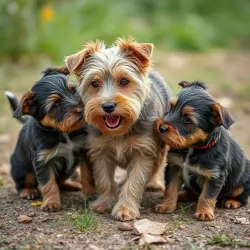 Like many medium to large-sized dogs, Gully Terriers can be prone to hip dysplasia, a condition where the hip joint doesn't develop properly, leading to arthritis and discomfort.
Due to their floppy or semi-erect ears, Gully Terriers can be more susceptible to ear infections. Regular ear cleaning and checking can help prevent this.
Their short coat can sometimes be prone to skin irritations, especially if they are exposed to harsh weather or poor hygiene. Allergies or parasite infestations (like fleas) can cause skin problems.
Gully Terriers are highly energetic, but they can be prone to obesity if they don't get enough exercise or are overfed. A balanced diet and regular activity are essential.
Some dogs in this breed may experience congenital eye issues like cataracts or progressive retinal atrophy (PRA), which can affect vision.
Regular vet check-ups to monitor joints, ears, and skin Consistent exercise to maintain a healthy weight Proper grooming to reduce risk of skin issues and ear infections
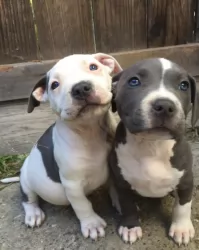 For the most part the American Staffordshire Terrier, like most of the “pit bulls” is a hearty, healthy dog. They have a few tendencies that breeders should test for including hip dysplasia, allergies, and heart issues. They can test for Cerebellar ataxia, which has affected the AmStaff with a progressive decline in their ability to control their muscles and coordination.
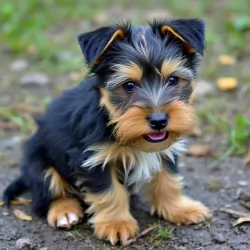 Caring for a Gully Terrier is straightforward but requires attention to their exercise, grooming, and training needs:
Gully Terriers are energetic and need daily exercise. Regular walks, runs, or play sessions will keep them happy and healthy.
They are smart and need activities that challenge their minds, like puzzle toys or training sessions.
Their short coat requires minimal care. Brush them once or twice a week and clean their ears regularly to prevent infections. Trim nails as needed.
Gully Terriers can be a bit independent, so start training early with positive reinforcement. Socialize them with people and other animals to avoid territorial behavior.
Feed them a balanced diet and control their portions to avoid weight gain. Regular vet check-ups will help keep them healthy.
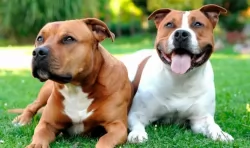 feed You can feed your American Staffordshire Terrier either commercially purchased food or food you make yourself if the quality is high, nutrition is good, and the amount eaten is determined by the owner. Do not free feed. The AmStaff has the tendency to become obese. Its ok to use treats for training and rewards, as long as its use is controlled.
As previously mentioned the American AmStaff Terrier has a tendency toward a few health issues. Hip Dysplasia – this condition causes a lot of pain and disability. It leads to different types of arthritis and degenerative joint disease. Cardiac Issues – Congenital heart disease consists of vessel malformation and lesions.
The AmStaff can be susceptible to Autoimmune Thyroiditis. This is a form of hypothyroidism developed by dogs. It is usually seen between 2 and 5 years of age. Continual retesting is recommended.
This is the most dangerous disease possibility that the American Staffordshire Terrier faces. There is a test for this condition which causes the AmStaff to display an inability to control their muscles and a loss of balance, to the point of falling. This is a progressive disease that often leads to euthanasia. The Staffordshire Terrier Club of America suggests that AmStaffs carrying the NCL genes should never be bred.
The American Staffordshire Terrier is an energetic, and athletic dog that loves to play and needs plenty of exercise. This breed is oriented to people and should never be left alone in the yard all day as a way for her to exercise. She needs you to play with her. If you cannot do this, then you should not own this breed of dog. This breed also loves to play canine sports. They thrive on games like dock diving, agility and obedience competitions. They excel at search and rescue. These are competitive dogs that want nothing more then to please their people.