 MyDogBreeds
 Gully Terrier is originated from India but American Staghound is originated from United States. Gully Terrier may grow 21 cm / 8 inches shorter than American Staghound. Gully Terrier may weigh 6 kg / 13 pounds lesser than American Staghound. Both Gully Terrier and American Staghound has almost same life span. Gully Terrier may have more litter size than American Staghound. Gully Terrier requires Moderate maintenance. But American Staghound requires Low maintenance
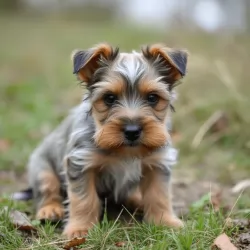 The Gully Terrier originated in India as a street dog, a mix of indigenous Indian Pariah Dogs and bully breeds like Pit Bulls and American Bulldogs.
Developed primarily for protection and hunting, they were used as guard dogs in urban and semi-urban areas. The name "Gully" refers to the narrow alleys and streets where these dogs were often found, while "Bully" highlights their muscular, strong build inherited from bully breeds.
Known for their loyalty, alertness, and protective instincts, Gully Terriers became valued companions for families in need of a strong, resilient dog that could thrive in tough environments.
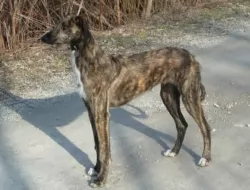 The American Staghound is hunting dog and type of sighthound that is not recognized as a separate breed. They have historically been bred to hunt coyotes and then other game. Even though they are not considered a separate breed some of their breeding lines have existed much longer than some officially recognized breeds. The American Staghound is a cross between the Greyhound and the Scottish Deerhound. There was probably some Borzoi mixed in as well. The Staghound is believed to have traveled with General Custer across the American West.
The breed is a long-legged running dog with the speed of a Greyhound, the sighting ability of sight hounds and more endurance than any running breed. They are incredible athletes with amazing agility and have been bred to course game – coyotes mostly – and therefore are bred with a very intense prey drive. In the past they chased stags and deer and today they chase coyotes and hare. Coyotes are much faster than wolves and fight just as hard. The American Staghound is the only breed fast enough to track down the coyote. However, the breed is not recognized by the AKC.
Hunting with an American Staghound today is not very different from hunting with them in medieval times. Strict breeding practices and the non-commercialization of the breed has led to the almost perfect preservation of this hunting breed. They have not changed very much over the centuries. They have been breeding Staghound to Staghound since the early 1800’s. At times very, good hunting dogs from Greyhound and Deerhound stock are added to the mix. For hundreds of years now the closed breeding has led to what might be the finest coyote chasing sighthound possible.
The American Staghound is hunting dog and type of sighthound that is not recognized as a separate breed. They have historically been bred to hunt coyotes and then other game. Even though they are not considered a separate breed some of their breeding lines have existed much longer than some officially recognized breeds. The American Staghound is a cross between the Greyhound and the Scottish Deerhound. There was probably some Borzoi mixed in as well. The Staghound is believed to have traveled with General Custer across the American West.
The breed is a long-legged running dog with the speed of a Greyhound, the sighting ability of sight hounds and more endurance than any running breed. They are incredible athletes with amazing agility and have been bred to course game – coyotes mostly – and therefore are bred with a very intense prey drive. In the past they chased stags and deer and today they chase coyotes and hare. Coyotes are much faster than wolves and fight just as hard. The American Staghound is the only breed fast enough to track down the coyote. However, the breed is not recognized by the AKC.
Hunting with an American Staghound today is not very different from hunting with them in medieval times. Strict breeding practices and the non-commercialization of the breed has led to the almost perfect preservation of this hunting breed. They have not changed very much over the centuries. They have been breeding Staghound to Staghound since the early 1800’s. At times very, good hunting dogs from Greyhound and Deerhound stock are added to the mix. For hundreds of years now the closed breeding has led to what might be the finest coyote chasing sighthound possible.
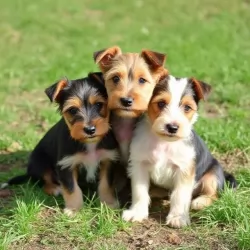 The Gully Terrier is a medium-sized, muscular dog known for its agility, loyalty, and protective nature. With a short, dense coat that comes in various colors, including black, brown, tan, and white, this breed has a distinctive appearance, often with a strong, powerful build.
The Gully Terrier is highly energetic and requires regular exercise to stay happy and healthy. Its intelligent, alert, and sometimes independent nature makes it a great guard dog and companion, although consistent training is necessary to manage its strong-willed personality.
This breed is well-suited for active families or individuals looking for a devoted and protective dog with a loving but protective demeanor.
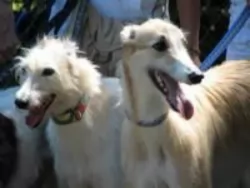
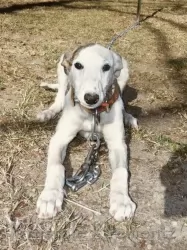 When you look at the American Staghound you can clearly see the Scottish Deerhound and the Greyhound lines. They have strong running muscles in their long legs and deep chest. He is of course a sight hound, so his vision is acute.
His running endurance is second to none. It is this endurance in running all day that makes the American Staghound difference from the Scottish Deerhound and the Greyhound. Yes, both the Deerhound are greyhound are great runners, but the American Staghound runs just as fast with an endurance level ten times that of the other hounds. His heavy bones structure and thick skin are also different from the other racing fast sight hounds.
When you look at the American Staghound you can clearly see the Scottish Deerhound and the Greyhound lines. They have strong running muscles in their long legs and deep chest. He is of course a sight hound, so his vision is acute.
His running endurance is second to none. It is this endurance in running all day that makes the American Staghound difference from the Scottish Deerhound and the Greyhound. Yes, both the Deerhound are greyhound are great runners, but the American Staghound runs just as fast with an endurance level ten times that of the other hounds. His heavy bones structure and thick skin are also different from the other racing fast sight hounds.
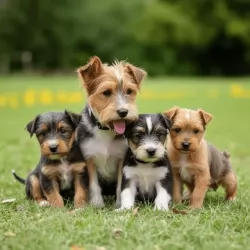 The Gully Terrier is a loyal, energetic, and intelligent breed with a strong, muscular build. Known for their protective nature, they make excellent guard dogs, staying alert and watchful of their surroundings.
While they are friendly and devoted to their family, they can also be independent and sometimes stubborn, requiring consistent training. Their short, dense coat is easy to groom, needing only regular brushing and ear cleaning.
Gully Terriers are active dogs that thrive on daily exercise and mental stimulation, making them great companions for those with an active lifestyle.
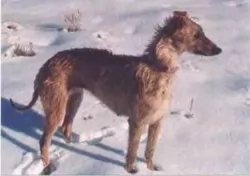 This dog was bred to run fast and long after something it sees. They are not considered hyperactive but won’t live well in a confined space such as an apartment or condo. You will need a single-family house with a large yard. Though they are affectionate, family dogs, they are not cut out to be guard dogs. They are not especially protective or territorial, though they may bark at what they can see in the distance.
They are calm in their homes if exercised enough and great with children. They are often gentle and loving. They are pack oriented and accept other dogs, but they are not welcoming toward cats or other prey sized animals. Be careful with the AS around small children as he might knock them down or see them as prey as well. They consider anything smaller that runs to be prey.
When chasing prey, they are not only fast and enduring, they are tenacious and courageous. Remember that this is a breed that has been bred true in order to hunt and only in order to hunt. Their hunting instincts will override almost any other. Over the centuries only the best hunters were allowed to be bred so that only the best hunters would be born.
This dog was bred to run fast and long after something it sees. They are not considered hyperactive but won’t live well in a confined space such as an apartment or condo. You will need a single-family house with a large yard. Though they are affectionate, family dogs, they are not cut out to be guard dogs. They are not especially protective or territorial, though they may bark at what they can see in the distance.
They are calm in their homes if exercised enough and great with children. They are often gentle and loving. They are pack oriented and accept other dogs, but they are not welcoming toward cats or other prey sized animals. Be careful with the AS around small children as he might knock them down or see them as prey as well. They consider anything smaller that runs to be prey.
When chasing prey, they are not only fast and enduring, they are tenacious and courageous. Remember that this is a breed that has been bred true in order to hunt and only in order to hunt. Their hunting instincts will override almost any other. Over the centuries only the best hunters were allowed to be bred so that only the best hunters would be born.
 Like many medium to large-sized dogs, Gully Terriers can be prone to hip dysplasia, a condition where the hip joint doesn't develop properly, leading to arthritis and discomfort.
Due to their floppy or semi-erect ears, Gully Terriers can be more susceptible to ear infections. Regular ear cleaning and checking can help prevent this.
Their short coat can sometimes be prone to skin irritations, especially if they are exposed to harsh weather or poor hygiene. Allergies or parasite infestations (like fleas) can cause skin problems.
Gully Terriers are highly energetic, but they can be prone to obesity if they don't get enough exercise or are overfed. A balanced diet and regular activity are essential.
Some dogs in this breed may experience congenital eye issues like cataracts or progressive retinal atrophy (PRA), which can affect vision.
Regular vet check-ups to monitor joints, ears, and skin Consistent exercise to maintain a healthy weight Proper grooming to reduce risk of skin issues and ear infections
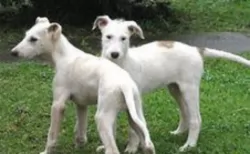 The American Staghound has been bred so consistently within the breed and true that they exhibit very few health problems. All running dogs are susceptible to joint issues, but the Staghound has less than most. Two issues they do face more often are a problem with anesthesia if they ever need it and the propensity to be vulnerable to bloat. Since they are a centuries old hybrid there are no real health issues born of genetics.
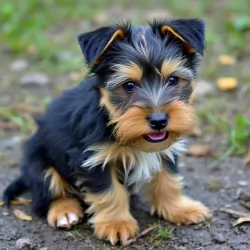 Caring for a Gully Terrier is straightforward but requires attention to their exercise, grooming, and training needs:
Gully Terriers are energetic and need daily exercise. Regular walks, runs, or play sessions will keep them happy and healthy.
They are smart and need activities that challenge their minds, like puzzle toys or training sessions.
Their short coat requires minimal care. Brush them once or twice a week and clean their ears regularly to prevent infections. Trim nails as needed.
Gully Terriers can be a bit independent, so start training early with positive reinforcement. Socialize them with people and other animals to avoid territorial behavior.
Feed them a balanced diet and control their portions to avoid weight gain. Regular vet check-ups will help keep them healthy.
 It is important that you don’t ever over feed you American Staghound as they are thin and bred to run. Even though they are heavier boned than their closest relatives, they are still very susceptible to obesity if overfed. The adult AS should be fed about 4-6 cups of dry food every day in at least 2 meals but 3 of more would be better. This will prevent bloat.
As previously mentioned there are no genetic issues with the health of the American Staghound. Bred for one reason and one reason alone for many centuries has led to this healthy state. Also, as stated previously they can have issues with bloat and anesthesia. The issue with anesthesia comes from the fact that the American Staghound has very little body fat to muscle ration. The issue with bloat or torsion can be avoided with many smaller meals and not running your Staghound right after they eat a large meal.
Of course, the American Staghound loves to run and if you are not going to hunt with her, you will have to find another source of vigorous physical activity. Every day from puppyhood on the AS must be stimulated mentally and physically in order to grow and mature correctly. He must have a home where the freedom to run is an everyday experience, not a dog park once a week. If you ride bikes, race walk or run on a daily basis this might be the dog for you. They obviously excel at games like lure coursing and can be good at agility.