 MyDogBreeds
 Gully Terrier is originated from India but Bernese Mountain Dog is originated from Switzerland. Gully Terrier may grow 15 cm / 5 inches shorter than Bernese Mountain Dog. Gully Terrier may weigh 20 kg / 44 pounds lesser than Bernese Mountain Dog. Gully Terrier may live 7 years more than Bernese Mountain Dog. Gully Terrier may have less litter size than Bernese Mountain Dog. Both Gully Terrier and Bernese Mountain Dog requires Moderate maintenance.
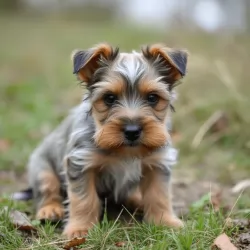 The Gully Terrier originated in India as a street dog, a mix of indigenous Indian Pariah Dogs and bully breeds like Pit Bulls and American Bulldogs.
Developed primarily for protection and hunting, they were used as guard dogs in urban and semi-urban areas. The name "Gully" refers to the narrow alleys and streets where these dogs were often found, while "Bully" highlights their muscular, strong build inherited from bully breeds.
Known for their loyalty, alertness, and protective instincts, Gully Terriers became valued companions for families in need of a strong, resilient dog that could thrive in tough environments.
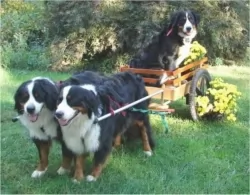
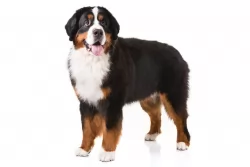 The Bernese Mountain Dog comes from the Swiss Alps and is one of four separate breeds called Sennenhund or “Alpine pasture dog”. The Name Bernese Mountain Dog indicates the area of Switzerland that the dogs come from – the canton of Bern. These groups of dogs accompanied the dairymen and herders and they were farm dogs. They pulled carts, delivered goods from village to village. The Bernese Mountain Dog was part of this group along with: Greater Swiss Mountain Dog, Appenzeller,Entlebucher Mountain Dog and the Bernese Mountain Dog. It is probably true that the Bernese Mountain Dog has been a part of farm life in the Alps for over 2000 years.
In some regions of the Alps, these dogs were called Durrbachhund after a small town named Durrbah and are said to be rooted in the Molosser breeds. Tin 1902 the Swiss Kennel Club recognized the Bernese Mountain Dog as a separate breed and the first breed club was founded in 1907 in the region of Burgdorf. The first standard for the breed was written and separated the 4 dogs into their own breeds. The Molosser is an ancient breed whose versatility and travels made it expressly influential in the developing of Mastiff dogs like St. Bernards, Great Pyranees, Mastiffs and Swiss Mountain Dogs like the Bernese.
However at the end of the 19th century famers and shepherds began to import other breeds of working dogs, while at the same time automated modes of transportation began to replace the farm dogs. Under these circumstances the number of Bernese Mountain Dog began to decline and the breed faced potential extinction. A group of people were gathered together to save the Berner, including Franz Schertenleib and Albert Heim. Still today the Bernese are in short supply and because of the need and desire to increase the numbers, some breeding practices have not been as good as they should have been. However, today’s Berner is a great family dog and he still loves to work. He is good at carting, herding, search and rescue, watch dog, tracking, and competitive obedience.
The Bernese Mountain Dog came to the US after World War I and was imported to Britain in the 1930’s. The AKC accepted the Berner as a new Working-Class breed in 1937. It was not until 1968 that the Bernese Mountain Dog Club of America was formed. In 1981, the AKC accepted the club as a member and in 1990 they (AKC) adopted the standard used today to judge the Bernese Mountain Dog.
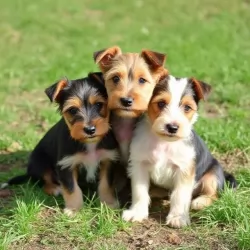 The Gully Terrier is a medium-sized, muscular dog known for its agility, loyalty, and protective nature. With a short, dense coat that comes in various colors, including black, brown, tan, and white, this breed has a distinctive appearance, often with a strong, powerful build.
The Gully Terrier is highly energetic and requires regular exercise to stay happy and healthy. Its intelligent, alert, and sometimes independent nature makes it a great guard dog and companion, although consistent training is necessary to manage its strong-willed personality.
This breed is well-suited for active families or individuals looking for a devoted and protective dog with a loving but protective demeanor.
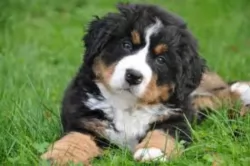 The Bernese Mountain Dog is a large, lovable clown. He has a heavy build with a tri color- mostly black – coat. He should have a white chest and rust coloring on the front of his legs, the sides of his mouth, and above his eyes. His eyes should be dark and blue eyes are a disqualification. His coat is silky, thick and long. He has medium sized triangle shaped ears and a scissors bite. He has round toes and strong, straight legs, He is well suited to cold weather. His skull is broad and flat, his muzzle is straight and strong, his nose must be black, and he does not usually drool.
He is an imposing sight, but he is also as non-aggressive as any breed. He is strong, intelligent, and agile. He should have his dew claws removed. This breed should be self-assured, yet good natured and calm. He is welcoming to strangers and loyal to his people. He needs his people.
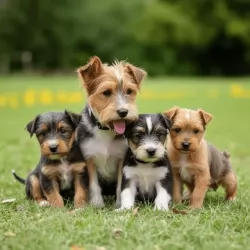 The Gully Terrier is a loyal, energetic, and intelligent breed with a strong, muscular build. Known for their protective nature, they make excellent guard dogs, staying alert and watchful of their surroundings.
While they are friendly and devoted to their family, they can also be independent and sometimes stubborn, requiring consistent training. Their short, dense coat is easy to groom, needing only regular brushing and ear cleaning.
Gully Terriers are active dogs that thrive on daily exercise and mental stimulation, making them great companions for those with an active lifestyle.
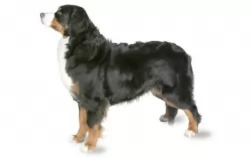 When reading the AKC standard for the Bernese Mountain Dog you will find that the breed is good natured and self-assured. They are not aggressive, shy or anxious. These are gentle, loving dogs. At the same time, they should be socialized to all kinds of animals, people and children when they are puppies. They are happy outside but need to live in the house with their people. They need exercise and play, and because they are so large, they need this outside. But when it comes to cuddling and sleeping they need to be indoors.
They love children though you should be careful with small children because of the Berner’s size and their not being aware of their size at times. They are extremely loyal to their people and want to be with people. They are intelligent, and they want to please their people. At the same time, they are sensitive. They do not respond well to punishment or harshness. They are imposing but they are lovers at heart.
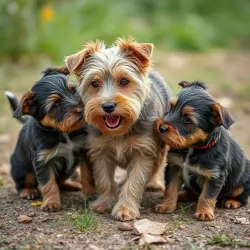 Like many medium to large-sized dogs, Gully Terriers can be prone to hip dysplasia, a condition where the hip joint doesn't develop properly, leading to arthritis and discomfort.
Due to their floppy or semi-erect ears, Gully Terriers can be more susceptible to ear infections. Regular ear cleaning and checking can help prevent this.
Their short coat can sometimes be prone to skin irritations, especially if they are exposed to harsh weather or poor hygiene. Allergies or parasite infestations (like fleas) can cause skin problems.
Gully Terriers are highly energetic, but they can be prone to obesity if they don't get enough exercise or are overfed. A balanced diet and regular activity are essential.
Some dogs in this breed may experience congenital eye issues like cataracts or progressive retinal atrophy (PRA), which can affect vision.
Regular vet check-ups to monitor joints, ears, and skin Consistent exercise to maintain a healthy weight Proper grooming to reduce risk of skin issues and ear infections
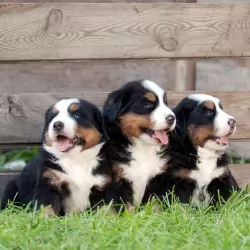 Even though it is well known that cancer is the leading cause of dog deaths across the globe, the Bernese Mountain Dog is particularly prone to die of cancer. Half of all Berners compared with 27% of all dogs, die from cancer. The Berner’s life span is also shorter than most dogs his size. IT is also not just one cancer that attacks the Bernese Mountain Dog but rather at least 6 or more including mast cell, osteosarcoma, malignant histiocytosis, fibrosarcoma, and lymphosarcoma.
They can also suffer from PRA (Progressive Retinal Atrophy), hypoadrenocorticism, cataracts and histiocytic sarcoma. Another issue that plaques the Berner more than other breeds is musculoskeletal issues that cause mortality. This can include issues such as cruciate ligament rupture, arthritis and hip dysplasia. These types of aliments cause death in 6% of the breed while they are usually the cause of mortality in only 2% of all other dogs.
Even though it is well known that cancer is the leading cause of dog deaths across the globe, the Bernese Mountain Dog is particularly prone to die of cancer. Half of all Berners compared with 27% of all dogs, die from cancer. The Berner’s life span is also shorter than most dogs his size. IT is also not just one cancer that attacks the Bernese Mountain Dog but rather at least 6 or more including mast cell, osteosarcoma, malignant histiocytosis, fibrosarcoma, and lymphosarcoma.
They can also suffer from PRA (Progressive Retinal Atrophy), hypoadrenocorticism, cataracts and histiocytic sarcoma. Another issue that plaques the Berner more than other breeds is musculoskeletal issues that cause mortality. This can include issues such as cruciate ligament rupture, arthritis and hip dysplasia. These types of aliments cause death in 6% of the breed while they are usually the cause of mortality in only 2% of all other dogs.
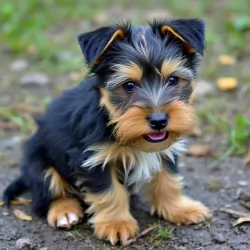 Caring for a Gully Terrier is straightforward but requires attention to their exercise, grooming, and training needs:
Gully Terriers are energetic and need daily exercise. Regular walks, runs, or play sessions will keep them happy and healthy.
They are smart and need activities that challenge their minds, like puzzle toys or training sessions.
Their short coat requires minimal care. Brush them once or twice a week and clean their ears regularly to prevent infections. Trim nails as needed.
Gully Terriers can be a bit independent, so start training early with positive reinforcement. Socialize them with people and other animals to avoid territorial behavior.
Feed them a balanced diet and control their portions to avoid weight gain. Regular vet check-ups will help keep them healthy.
 As with any large purebred dog, the Bernese Mountain Dog needs high quality food that will provide hi with nutrition and keep him from becoming overweight if fed properly. He is however a very large dog with a very large appetite. Watch his calorie intake. It’s ok to use treats if you fit them into the overall calorie intake for the day. Feed him smaller meals twice a day.
As previously mentioned the breed has quite a few health challenges to deal with, cancer being the number one issue. The small genetic line is one of, if not the main, culprit in this high mortality rate and short life span of the Bernese Mountain Dog. In addition to the conditions mentioned above, they are also susceptible to bloat (stomach inversion). In addition, they face the conditions mentioned previously and should be tested for dysplasia of the hip and elbow, Von Willebrand’s Disease, Cardiac testing and an eye or ophthalmologist exam.
The Bernese Mountain Dog is a gentle giant. They have a calm happy demeanor and they love to work. In fact, they need to work. They love children and will quickly give them cart rides. They compete in carting competitions and herding events sponsored by the AKC. They need exercise but not an extreme amount or intense type. A half-hour a day is enough for them. They love long walks or hiking. They are great companions for backpacking or camping. They are also good at tracking, rally, obedience, and agility.