 MyDogBreeds
 Gully Terrier is originated from India but Bichon Bolognese is originated from Spain. Gully Terrier may grow 52 cm / 21 inches higher than Bichon Bolognese. Both Gully Terrier and Bichon Bolognese are having almost same weight. Both Gully Terrier and Bichon Bolognese has same life span. Gully Terrier may have more litter size than Bichon Bolognese. Gully Terrier requires Moderate maintenance. But Bichon Bolognese requires Low maintenance
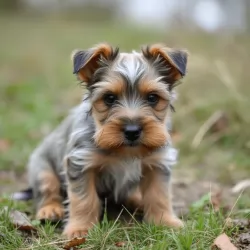 The Gully Terrier originated in India as a street dog, a mix of indigenous Indian Pariah Dogs and bully breeds like Pit Bulls and American Bulldogs.
Developed primarily for protection and hunting, they were used as guard dogs in urban and semi-urban areas. The name "Gully" refers to the narrow alleys and streets where these dogs were often found, while "Bully" highlights their muscular, strong build inherited from bully breeds.
Known for their loyalty, alertness, and protective instincts, Gully Terriers became valued companions for families in need of a strong, resilient dog that could thrive in tough environments.
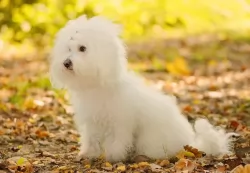 The Bichon Bolognese is one of 4 types of Bichon breeds the others being the Havense, the Bichon Frise and the Maltese. The Lowchen and the Coton de Tulear are also listed in this grouping at times. The Bolognese was developed in Italy and is a small, companion animal. They are named after the city of Bologna in Northern Italy. The Bichon Bolognese is considered a toy dog and are considered an ancient breed that lived with Italian nobility. Their precise ancestry is not known and the Maltese is considered its closest relative. They have been known to exist since at least 1200.
The Bichon Bolognese is found in many works of art throughout the centuries. They were the favorite of many an Italian artist since the 17th century including Titian, Watteau, Gosse and Goya. They were known to be owned by Duke Frederico Gonzaga, Madame De Pompadour, Catherine the Great of Russia and Empress Maria Theresa of Austria. Cosimo de Medici gave eight Bolognese to Belgian noblemen. The Duke d’Este was given two as a gift.
Of all the Bichon group – the Bolognese is the hardest to find and the best problem solver. They read body language amazingly well, stick with their owners and are attentive and devoted. Liz Stannard brought them to England in 1990 and they were entered in the breed registry that same year and joined the show ring cycle in 2001. By 2002 they were shown at Crufts, England’s International Dog Show.
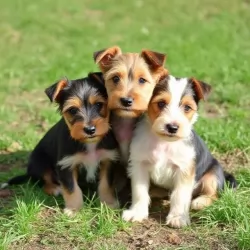 The Gully Terrier is a medium-sized, muscular dog known for its agility, loyalty, and protective nature. With a short, dense coat that comes in various colors, including black, brown, tan, and white, this breed has a distinctive appearance, often with a strong, powerful build.
The Gully Terrier is highly energetic and requires regular exercise to stay happy and healthy. Its intelligent, alert, and sometimes independent nature makes it a great guard dog and companion, although consistent training is necessary to manage its strong-willed personality.
This breed is well-suited for active families or individuals looking for a devoted and protective dog with a loving but protective demeanor.
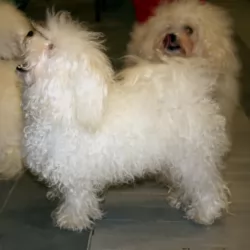
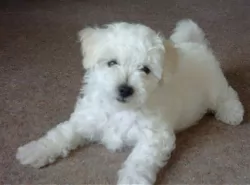 Like the other members of the Bichon group, the Bolognese is a compact, little white dog. It is considered a member of the toy group and is stocky in its build. It is a muscled, square dog of medium length with an ovoid skull and large, square, black muzzle. The jaw is well developed, and they have black lips, black nose and black eyelids. They have a straight muzzle with a strong, aligned bite and its eyes are round and wide. They have long, high set ears that hang down to a rigid base. The coat is white, long and shorter only at the muzzle. The coat is fluffy but not fringed.
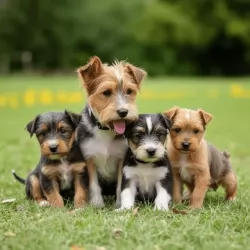 The Gully Terrier is a loyal, energetic, and intelligent breed with a strong, muscular build. Known for their protective nature, they make excellent guard dogs, staying alert and watchful of their surroundings.
While they are friendly and devoted to their family, they can also be independent and sometimes stubborn, requiring consistent training. Their short, dense coat is easy to groom, needing only regular brushing and ear cleaning.
Gully Terriers are active dogs that thrive on daily exercise and mental stimulation, making them great companions for those with an active lifestyle.
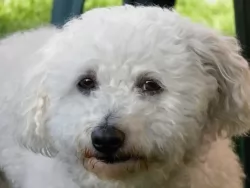 These little white dogs with the shaggy hair are intelligent, loving, playful, loyal, and happy to do whatever you ask them to. They are more reserved than their relative the Bichon Frise. They are great at obedience training and seem to love it. They learn quickly and love to please you, yet they can also be very stubborn. Like the Bichon Frise, they are difficult to housebreak. They need to be with their people who they will develop bad habits and a bad attitude. They are bred to be companion dogs. If socialized when young they are great with strangers after you have indicated that the strangers are ok. They are barking watchdogs but not continuous barkers. They get along with other dogs but are ok by themselves as well. They do get separation anxiety when their people are gone for extended periods of time. They can be very serious and docile, but they love to be with people. They are very loyal and very bonded to their family.
Be sure you are the pack leader as they can acquire Small Dog Syndrome. With this syndrome the dog comes to believe he is the alpha and the humans are his pack. This causes many kinds of problems with behavior including howling when not getting attention, their separation anxiety and destructiveness can also come from this.
 Like many medium to large-sized dogs, Gully Terriers can be prone to hip dysplasia, a condition where the hip joint doesn't develop properly, leading to arthritis and discomfort.
Due to their floppy or semi-erect ears, Gully Terriers can be more susceptible to ear infections. Regular ear cleaning and checking can help prevent this.
Their short coat can sometimes be prone to skin irritations, especially if they are exposed to harsh weather or poor hygiene. Allergies or parasite infestations (like fleas) can cause skin problems.
Gully Terriers are highly energetic, but they can be prone to obesity if they don't get enough exercise or are overfed. A balanced diet and regular activity are essential.
Some dogs in this breed may experience congenital eye issues like cataracts or progressive retinal atrophy (PRA), which can affect vision.
Regular vet check-ups to monitor joints, ears, and skin Consistent exercise to maintain a healthy weight Proper grooming to reduce risk of skin issues and ear infections
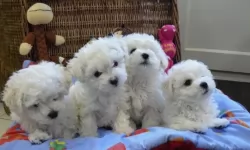 Like others in the Bichon group, they have moving kneecaps (luxating patella’s). They also have some eye conditions. They should be tested for any genetic issues, although the breed is a very healthy one and they do not usually have major health issues.
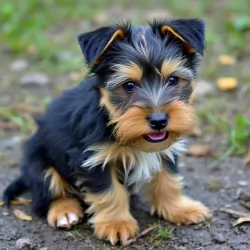 Caring for a Gully Terrier is straightforward but requires attention to their exercise, grooming, and training needs:
Gully Terriers are energetic and need daily exercise. Regular walks, runs, or play sessions will keep them happy and healthy.
They are smart and need activities that challenge their minds, like puzzle toys or training sessions.
Their short coat requires minimal care. Brush them once or twice a week and clean their ears regularly to prevent infections. Trim nails as needed.
Gully Terriers can be a bit independent, so start training early with positive reinforcement. Socialize them with people and other animals to avoid territorial behavior.
Feed them a balanced diet and control their portions to avoid weight gain. Regular vet check-ups will help keep them healthy.
 Like other toy breeds do not overfeed the Bolognese. Feed them ¼ of a cup of high quality dry food once a day. Treats are often used for training just be judicious with them.
They are very healthy with a propensity toward: Moving kneecaps (Luxating patella)
Legg-Calve-Perthes Disease – This causes the thigh bones to shrink due to a loss of blood supply. It can be repaired surgically.
Periodontal Disease due to their small mouth size.
They need to walk everyday but they can be couch potatoes. One long 20-minute walk will do or a couple 10-minute walks.
While Bolognese are perfectly happy to lounge around the house, they should also have a daily walk.[7] A suitable walk would be around 20–25 minute a couple of times a day or substitute 10-minute walks a few times a day. They love to play off-lead, whether its in the house or in a fenced in yard or dog park.