 MyDogBreeds
 Gully Terrier is originated from India but Briard is originated from France. Gully Terrier may grow 13 cm / 5 inches shorter than Briard. Both Gully Terrier and Briard are having almost same weight. Gully Terrier may live 3 years more than Briard. Both Gully Terrier and Briard has almost same litter size. Gully Terrier requires Moderate maintenance. But Briard requires High maintenance
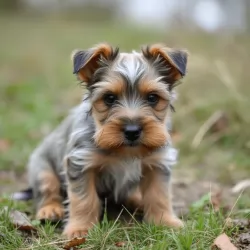 The Gully Terrier originated in India as a street dog, a mix of indigenous Indian Pariah Dogs and bully breeds like Pit Bulls and American Bulldogs.
Developed primarily for protection and hunting, they were used as guard dogs in urban and semi-urban areas. The name "Gully" refers to the narrow alleys and streets where these dogs were often found, while "Bully" highlights their muscular, strong build inherited from bully breeds.
Known for their loyalty, alertness, and protective instincts, Gully Terriers became valued companions for families in need of a strong, resilient dog that could thrive in tough environments.
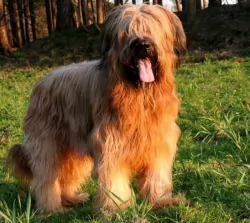 Through myth and legend, the Briard is thought to be a very ancient dog. A French herding breed, a Briard type of dog appears in writings as early as the end of the 14th century. According to legends the Briard was owned by Napoleon, Charlemagne, Lafayette and Thomas Jefferson. As a cross between the Barbet and the Beauceron, the Briard came into popularity following its appearance in a Paris dog show in 1863. Bred originally to guard and herd sheep, these intelligent, independent dogs were often left on their own. Because they both guarded and herded, their size and structure as well as their personalities were different from other dogs that worked sheep. Those that herded only were fast, agile and smaller. Those that only guarded were heavier, bigger and stronger. The Briard was in-between these two types of breeds. He was well suited to any kind of farm work and guarded the crops from the sheep’s desire to eat them. They moved the sheep from one grazing area to another and then to their holding area at night. No humans had to assist the Briard in this work once they were trained.
During World War 1, the Briards were drafted into service as messengers, sentries and search dogs for lost or injured soldiers. In that time frame the breed served almost to the point of extinction. Breeding programs following the war brought them back. Today the Briard is a home companion, a police dog, as well as both military and civilian search and rescue dogs.
 The Gully Terrier is a medium-sized, muscular dog known for its agility, loyalty, and protective nature. With a short, dense coat that comes in various colors, including black, brown, tan, and white, this breed has a distinctive appearance, often with a strong, powerful build.
The Gully Terrier is highly energetic and requires regular exercise to stay happy and healthy. Its intelligent, alert, and sometimes independent nature makes it a great guard dog and companion, although consistent training is necessary to manage its strong-willed personality.
This breed is well-suited for active families or individuals looking for a devoted and protective dog with a loving but protective demeanor.
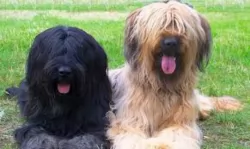
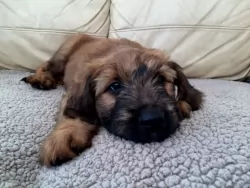 The Briard is a powerful, intelligent and independent working dog. They have a straight topline and their height is almost the same as their length. They have long, large, rectangular heads with wide muzzles. Their noses are also square and jet black while their side set, large eyes can be black-brown or black. Their ears have traditionally been cropped but with more countries outlawing it, they can now have natural ears set high on the head. They have a tail that is feathered and low-cut. The feet of a Briard are round, compact and large.
The Briard is a double coated breed with a long beard and mustache. Their hair completely covers the head and the eyes so that they are not seen. They have prominent eyebrows as well.
 The Gully Terrier is a loyal, energetic, and intelligent breed with a strong, muscular build. Known for their protective nature, they make excellent guard dogs, staying alert and watchful of their surroundings.
While they are friendly and devoted to their family, they can also be independent and sometimes stubborn, requiring consistent training. Their short, dense coat is easy to groom, needing only regular brushing and ear cleaning.
Gully Terriers are active dogs that thrive on daily exercise and mental stimulation, making them great companions for those with an active lifestyle.
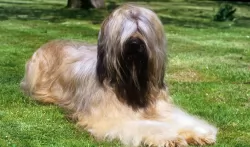 As mentioned previously the Briard is intelligent and independent. They are also loyal, rugged, protective and bond intensely with their humans. They are often aloof when it comes to strangers or even when new furniture is introduced into the household. They have to learn that anything new into the family environment is friendly and good. They are great with children and susceptible to separation anxiety because of their deep affection for their people. Socialization for puppies is a must. This will let them know that people and children, other dogs in general are not harmful to their families. They have great memories and once they learn something – right or wrong – it is almost impossible to change it. They were bred to be independent thinkers who acted on their own conclusions. This is still true of the breed today, making them appear to be stubborn.
They are great watchdogs, fearless and brave; willing to learn, eager to make you happy. They are basically gentle but that always runs up against their protective nature. A strong alpha leader is needed to handle this hard-working dog.
 Like many medium to large-sized dogs, Gully Terriers can be prone to hip dysplasia, a condition where the hip joint doesn't develop properly, leading to arthritis and discomfort.
Due to their floppy or semi-erect ears, Gully Terriers can be more susceptible to ear infections. Regular ear cleaning and checking can help prevent this.
Their short coat can sometimes be prone to skin irritations, especially if they are exposed to harsh weather or poor hygiene. Allergies or parasite infestations (like fleas) can cause skin problems.
Gully Terriers are highly energetic, but they can be prone to obesity if they don't get enough exercise or are overfed. A balanced diet and regular activity are essential.
Some dogs in this breed may experience congenital eye issues like cataracts or progressive retinal atrophy (PRA), which can affect vision.
Regular vet check-ups to monitor joints, ears, and skin Consistent exercise to maintain a healthy weight Proper grooming to reduce risk of skin issues and ear infections
 Being a large breed, the Briard shares many of the same health concerns as other large breeds. They have a few of their own as well. Typical issues for a Briard might include:
Progressive Retinal Atrophy/Degeneration –degeneration of the photoreceptors and retina.
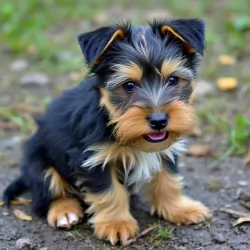 Caring for a Gully Terrier is straightforward but requires attention to their exercise, grooming, and training needs:
Gully Terriers are energetic and need daily exercise. Regular walks, runs, or play sessions will keep them happy and healthy.
They are smart and need activities that challenge their minds, like puzzle toys or training sessions.
Their short coat requires minimal care. Brush them once or twice a week and clean their ears regularly to prevent infections. Trim nails as needed.
Gully Terriers can be a bit independent, so start training early with positive reinforcement. Socialize them with people and other animals to avoid territorial behavior.
Feed them a balanced diet and control their portions to avoid weight gain. Regular vet check-ups will help keep them healthy.
 It is best to feed the Briard smaller meals 2-3 times a day to prevent bloat. Feed 3-4 cups total for the day of a dry dog food that is high quality and made for large breeds.
Stationary Night Blindness – Congenital limited vision in the dark can vary from slight difficulty moving to complete inability to see in the dark.
Progressive Retinal Atrophy/Degeneration – Can lead to night blindness, limited or total blindness. Puppies with the disease can be blind before their first birthday.
Bloat (Gastric Torsion) – Stomach is distended and twists. Fatal if not treated quickly. Caused by eating a large meal quickly and either exercise immediately or drink a large amount of water right after eating.
Von Willebrand’s Disease – Blood clotting disorder leads to excessive bleeding. There is no cure, but it is manageable.
The Briard is a working dog and as such needs a job. They excel at agility, flyball, herding, obedience, confirmation and tracking. They need exercise and make excellent service dogs for people with disabilities and therapy dogs for those in emotional need.