 MyDogBreeds
 Gully Terrier is originated from India but Dutch Shepherd is originated from Netherlands. Gully Terrier may grow 6 cm / 2 inches shorter than Dutch Shepherd. Both Gully Terrier and Dutch Shepherd are having almost same weight. Both Gully Terrier and Dutch Shepherd has same life span. Both Gully Terrier and Dutch Shepherd has almost same litter size. Both Gully Terrier and Dutch Shepherd requires Moderate maintenance.
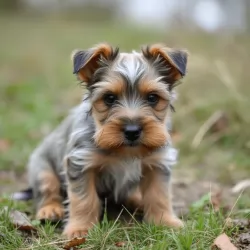 The Gully Terrier originated in India as a street dog, a mix of indigenous Indian Pariah Dogs and bully breeds like Pit Bulls and American Bulldogs.
Developed primarily for protection and hunting, they were used as guard dogs in urban and semi-urban areas. The name "Gully" refers to the narrow alleys and streets where these dogs were often found, while "Bully" highlights their muscular, strong build inherited from bully breeds.
Known for their loyalty, alertness, and protective instincts, Gully Terriers became valued companions for families in need of a strong, resilient dog that could thrive in tough environments.
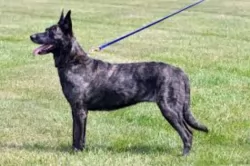 The Dutch Shepherd is of Dutch origin, hailing from the Netherlands. They were originally used as herding dogs on the farms, where they became a jack-of-all-trades type of dog.
The Dutch Shepherd in those days, 100 odd years ago, were also known as Hollandse Herders.
These dogs are more rare in modern days, but when you do find them, they are being used as police or security dogs, as guides for the blind, or simply as family friends.
 The Gully Terrier is a medium-sized, muscular dog known for its agility, loyalty, and protective nature. With a short, dense coat that comes in various colors, including black, brown, tan, and white, this breed has a distinctive appearance, often with a strong, powerful build.
The Gully Terrier is highly energetic and requires regular exercise to stay happy and healthy. Its intelligent, alert, and sometimes independent nature makes it a great guard dog and companion, although consistent training is necessary to manage its strong-willed personality.
This breed is well-suited for active families or individuals looking for a devoted and protective dog with a loving but protective demeanor.
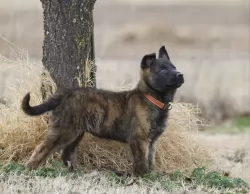 The Dutch Shepherd dog is very similar in appearance to the popular German Shepherds, being a medium to large sized dog.
The males are slightly heavier than females, but both males and females can stand between 55 and 62cm and weigh between 20 and 32kg.
There are actually 3 varieties found in the Dutch Shepherd dogs - short-haired, long-haired, and wiry or rough-haired. The dog has a double coat, consisting of a woolly undercoat and a top coat. The basic color of the coat is gold or silver through to red, giving rise to the brindle variations. Too much black or white seen in the fur is considered a fault.
In 1914 it was decided that brindle coats would distinguish them from the others.
The eyes of the Dutch Shepherd are dark, almond shaped and slightly slanting, while the medium sized ears are erect and high on the head and the thick tail is slightly curved. The dog has an unusually long tongue which is often found hanging out.
Early training and socializing for this dog is important so that he can learn to stay calm around new people, or visitors to the property.
The beautiful Dutch Shepherd doesn’t like being left alone for too long, loving rather to be involved with all that the family is involved in. They get on well with other pets in the home as well as being child-friendly.
They are happy dogs, who can also be smart and cunning, therefore highly trainable. They soak up new commands easily. Dutch Shepherds are also good watchdogs as they are fiercely loyal, and do not take kindly to strangers.
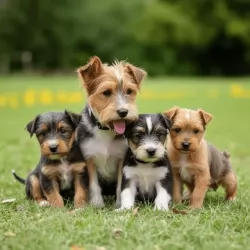 The Gully Terrier is a loyal, energetic, and intelligent breed with a strong, muscular build. Known for their protective nature, they make excellent guard dogs, staying alert and watchful of their surroundings.
While they are friendly and devoted to their family, they can also be independent and sometimes stubborn, requiring consistent training. Their short, dense coat is easy to groom, needing only regular brushing and ear cleaning.
Gully Terriers are active dogs that thrive on daily exercise and mental stimulation, making them great companions for those with an active lifestyle.
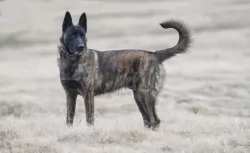 Your alert, intelligent and somewhat rare Dutch Shepherd is a loyal, protective dog, and while he can be aggressive around intruders and be a great guard dog, he can also be a gentle, loving animal around his human family members.
Though his tongue is long and often hangs out, you won’t have to contend with drooling. He is a wonderfully active dog and doesn’t easily gain weight. He isn’t a barker or howler, and his exceptional intelligence makes him highly trainable.
Whether there are children or other animals in the house, you can rely on your Dutch Shepherd to get on well with them, making him a wonderful family pet and canine friend.
 Like many medium to large-sized dogs, Gully Terriers can be prone to hip dysplasia, a condition where the hip joint doesn't develop properly, leading to arthritis and discomfort.
Due to their floppy or semi-erect ears, Gully Terriers can be more susceptible to ear infections. Regular ear cleaning and checking can help prevent this.
Their short coat can sometimes be prone to skin irritations, especially if they are exposed to harsh weather or poor hygiene. Allergies or parasite infestations (like fleas) can cause skin problems.
Gully Terriers are highly energetic, but they can be prone to obesity if they don't get enough exercise or are overfed. A balanced diet and regular activity are essential.
Some dogs in this breed may experience congenital eye issues like cataracts or progressive retinal atrophy (PRA), which can affect vision.
Regular vet check-ups to monitor joints, ears, and skin Consistent exercise to maintain a healthy weight Proper grooming to reduce risk of skin issues and ear infections
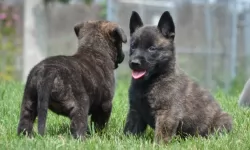 The Dutch Shepherd dogs are the healthiest of the Shepherd breeds. They have relatively few health problems.
However, like the German Shepherds they may develop hip dysplasia, but this is in fact fairly rare. Get your pet to the vet if you suspect this in your dog because it can lead to lameness.
In 2018 the University of Minnesota identified a disease in Dutch Shepherds called Miositis. This is an inflammatory myopathy causing painful inflammation of the skeletal muscle tissue.
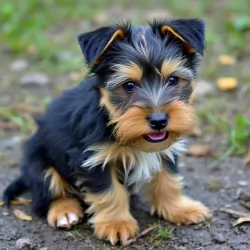 Caring for a Gully Terrier is straightforward but requires attention to their exercise, grooming, and training needs:
Gully Terriers are energetic and need daily exercise. Regular walks, runs, or play sessions will keep them happy and healthy.
They are smart and need activities that challenge their minds, like puzzle toys or training sessions.
Their short coat requires minimal care. Brush them once or twice a week and clean their ears regularly to prevent infections. Trim nails as needed.
Gully Terriers can be a bit independent, so start training early with positive reinforcement. Socialize them with people and other animals to avoid territorial behavior.
Feed them a balanced diet and control their portions to avoid weight gain. Regular vet check-ups will help keep them healthy.
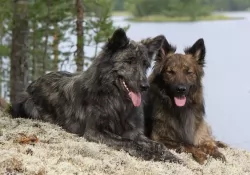 Unfortunately Dutch Shepherds shed quite a bit of hair during their shedding period in spring and autumn. This makes regular brushing important during these seasons so as to remove the dead hairs, especially from the undercoat.
The wire- or rough-haired variety shouldn’t be brushed but should rather be groomed by a professional groomer every 6 months or so.
Their nails need to be trimmed when necessary, to avoid cracking, splitting, or an injury.
Their ears can be cleaned weekly to get rid of any debris or wax build-up. This, if left, can lead to infection. Brush his teeth 2 or 3 times a week to avoid dental disease which brings on a host of illnesses.
These dogs do need regular exercising, and at the same time need to be physically and mentally stimulated. He is the kind of dog that has been used for herding purpose on the farm and he just craves activity. Take him with you on your walks and include him in ball games, hikes, jogging, swimming or when you go cycling – he is game for all kinds of activities.
The formula for their diet would be that of a medium to large dog with high energy levels. The top commercially manufactured foods have been developed to include all the important vitamins and minerals. Fish oil can also be added to their food to keep the coat shiny.
Add in cooked rice, cooked vegetables and chicken from time to time and be sure to add in some raw meat occasionally to prevent problems with the skin. Always ensure that your pet has fresh, cool water to drink.