 MyDogBreeds
 Gully Terrier is originated from India but English Setter is originated from United Kingdom. Gully Terrier may grow 13 cm / 5 inches shorter than English Setter. Gully Terrier may weigh 45 kg / 99 pounds lesser than English Setter. Both Gully Terrier and English Setter has same life span. Both Gully Terrier and English Setter has same litter size. Both Gully Terrier and English Setter requires Moderate maintenance.
 The Gully Terrier originated in India as a street dog, a mix of indigenous Indian Pariah Dogs and bully breeds like Pit Bulls and American Bulldogs.
Developed primarily for protection and hunting, they were used as guard dogs in urban and semi-urban areas. The name "Gully" refers to the narrow alleys and streets where these dogs were often found, while "Bully" highlights their muscular, strong build inherited from bully breeds.
Known for their loyalty, alertness, and protective instincts, Gully Terriers became valued companions for families in need of a strong, resilient dog that could thrive in tough environments.
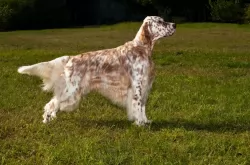 The English Setter seems to have been a hunting dog in England as far back as the 15th century. These dogs were known to be ‘setter types’ – hunting dogs that ‘set dogges’ – to set or point at game birds. It is believed that the English Setter is a cross of the Water Spaniel, Spanish Pointer and English Springer Spaniel. In the late 1500’s Sr. Johannes Caius, a sportsman, announced to his friends that there was a new dog our of France for hunting. He then describes an English Setter.
Then in the early 1800’s Rev. Harrison of Carlise sold a couple of setters to Mr. Laverack. This pair is the foundation for the breed of English Setters. Without really knowing, Laverack claimed that this line he was breeding from had been pure for 35 previous years. He inbred his male and female for many years and did well in confirmation and field trials.
Then in 1874 the first English Setters were imported to the US from this Laverack line. Mr. Llewellin then crossed the best dogs in the Laverack line with his dogs and eventually produced winning champions Armstrong Dash II and Dashing Bondhu. This led to the “Dashing Bondhu” or the Llewellin line of English Setters. This is why the English Setter is sometimes referred to as the Llewelllin or Laverack Setter.
The setter group to which the English setter belongs includes the Irish Setter, the Gordon Setters and the Irish Red and White Setter. The English Setter, as well as the others, were bred to hunt birds such as pheasant and quail. It was the job of the setter to find the prey and point it out to the hunter after it had been shot. They were also used to flush the birds from the brush so that the hunter could then release hawks to take down the prey. The English Setter is methodical and systemic in their approach.
By the 1600’s this working dog had become the breed of the landed gentry and shooting game was their pastime. These nobles did not use hawks to capture the prey but rather shot them after the English Setter flushed them out. The English Setter is very popular today both as a hunting dog and as a family pet. The English Setter is bred for athleticism and endurance. The have both AKC and UKC certification.
 The Gully Terrier is a medium-sized, muscular dog known for its agility, loyalty, and protective nature. With a short, dense coat that comes in various colors, including black, brown, tan, and white, this breed has a distinctive appearance, often with a strong, powerful build.
The Gully Terrier is highly energetic and requires regular exercise to stay happy and healthy. Its intelligent, alert, and sometimes independent nature makes it a great guard dog and companion, although consistent training is necessary to manage its strong-willed personality.
This breed is well-suited for active families or individuals looking for a devoted and protective dog with a loving but protective demeanor.
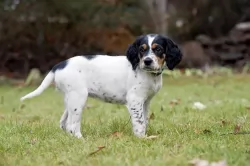 The English Setter is very much a setter in his looks. He is medium in size and was bred to hunt by following airborne prey over a large expanse of ground. He has to have both speed and stamina. He also has to run with his head up watching the prey in the air.
He has a slight dome shaped head and a long muzzle with dark, gentle eyes. The ears have their tips lined up with the eyes, the neck is long and muscular. He shows powerful hindquarters and a fairly long tail.
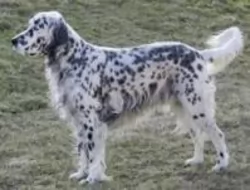
The coat length is medium and silk. The ears, chest, neck and legs are feathered, as is the tail. The hunting version has a shorter, finer coat than the show dog. The show dogs’ coats are flowing and long. Both types have a white coat with Belton or ticking. The Belton can be black, orange, lemon, liver and the tricolor. This is the liver or blue Belton but there are tan markings on the legs, chest, and face. It was Laverack who named the ticking Belton after a village in England.
 The Gully Terrier is a loyal, energetic, and intelligent breed with a strong, muscular build. Known for their protective nature, they make excellent guard dogs, staying alert and watchful of their surroundings.
While they are friendly and devoted to their family, they can also be independent and sometimes stubborn, requiring consistent training. Their short, dense coat is easy to groom, needing only regular brushing and ear cleaning.
Gully Terriers are active dogs that thrive on daily exercise and mental stimulation, making them great companions for those with an active lifestyle.
 The AKC standard for the English Setter breed describes him as a “Gentleman by Nature” and that might be all you need to know about this delightful dog. They are people-oriented and settle right down with their families if they get enough exercise. With proper stimulation they become couch potatoes when you bring them in at night.
They are very friendly with everyone but are especially happy when playing with children. You can trust them with your other pets, children of all ages and anyone coming to your front door. They are not guard dogs. However, they can have a stubborn streak, they can be strong-willed. This is especially true the more working than show stock they are. In addition, they are intelligent, calm and quiet in the house.
 Like many medium to large-sized dogs, Gully Terriers can be prone to hip dysplasia, a condition where the hip joint doesn't develop properly, leading to arthritis and discomfort.
Due to their floppy or semi-erect ears, Gully Terriers can be more susceptible to ear infections. Regular ear cleaning and checking can help prevent this.
Their short coat can sometimes be prone to skin irritations, especially if they are exposed to harsh weather or poor hygiene. Allergies or parasite infestations (like fleas) can cause skin problems.
Gully Terriers are highly energetic, but they can be prone to obesity if they don't get enough exercise or are overfed. A balanced diet and regular activity are essential.
Some dogs in this breed may experience congenital eye issues like cataracts or progressive retinal atrophy (PRA), which can affect vision.
Regular vet check-ups to monitor joints, ears, and skin Consistent exercise to maintain a healthy weight Proper grooming to reduce risk of skin issues and ear infections
 English Setters, like many other breeds that have a base white coat, can be affected by congenital deafness. A test done by LSU in 2010 showed the 12.4% of the dogs they tested were affected by this. They are also prone to:
Most of this is caused by autoimmune thyroiditis or a condition where the immune system attacks its own thyroid gland.
The primary cause of death after ten years old
 Caring for a Gully Terrier is straightforward but requires attention to their exercise, grooming, and training needs:
Gully Terriers are energetic and need daily exercise. Regular walks, runs, or play sessions will keep them happy and healthy.
They are smart and need activities that challenge their minds, like puzzle toys or training sessions.
Their short coat requires minimal care. Brush them once or twice a week and clean their ears regularly to prevent infections. Trim nails as needed.
Gully Terriers can be a bit independent, so start training early with positive reinforcement. Socialize them with people and other animals to avoid territorial behavior.
Feed them a balanced diet and control their portions to avoid weight gain. Regular vet check-ups will help keep them healthy.
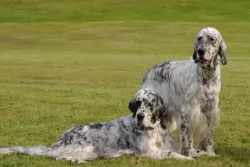 The English Setter is a hard working dog and should be fed accordingly. Puppies should be fed three times a day and adults twice to avoid bloat. Watch your English Spaniel though as they love to counter surf.
In addition to the conditions listed above the English Setter is prone to:
Caused by excessive exercise before or after having eaten a large meal. It is suggested that you feed your English Setter twice a day, smaller meals and not right before or after strenuous exercise.
Keep her ears clean and check regularly for infections.
The English Spaniel needs exercise on a routine basis – every day walks are best along with some time to just run either in a fenced yard or dog park. Take her jogging, running alongside your bike, hiking or just long walks. They do well with lure coursing, agility, confirmation, obedience and rally.