 MyDogBreeds
 Gully Terrier is originated from India but Fox Terrier is originated from United Kingdom. Gully Terrier may grow 17 cm / 7 inches higher than Fox Terrier. Gully Terrier may weigh 26 kg / 58 pounds more than Fox Terrier. Both Gully Terrier and Fox Terrier has same life span. Both Gully Terrier and Fox Terrier has almost same litter size. Gully Terrier requires Moderate maintenance. But Fox Terrier requires Low maintenance
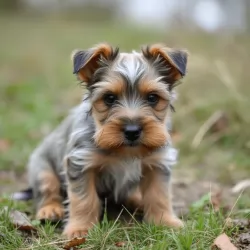 The Gully Terrier originated in India as a street dog, a mix of indigenous Indian Pariah Dogs and bully breeds like Pit Bulls and American Bulldogs.
Developed primarily for protection and hunting, they were used as guard dogs in urban and semi-urban areas. The name "Gully" refers to the narrow alleys and streets where these dogs were often found, while "Bully" highlights their muscular, strong build inherited from bully breeds.
Known for their loyalty, alertness, and protective instincts, Gully Terriers became valued companions for families in need of a strong, resilient dog that could thrive in tough environments.
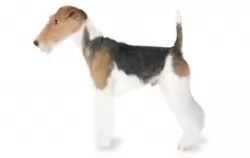 The Wirehaired Fox Terrier and the Smooth Fox Terrier were for over 100 years the same breed of dog. Now it is believed that they are two separate breeds with two separate ancestry. It is an English creation with Dachshunds, Fox Hound, English Hounds, and Beagle in their background. It is also believed that the Wales, Durham and Derbyshire extinct rough-coated black and tan working terrier. The white terrier breeds that exist today are related to the Fox Terrier. In addition, it is recognized that terrier breeds of today such as the Jack Russel, the Rat Terrier, and the Miniature Fox Terrier are descendants of the Fox Terrier.
They are one of the oldest of the terrier breeds dating back to the 17tth century in the British Isles. They were primarily farm dogs guarding against the fox and vermin. Like any terrier they go to ground – digging, growling, barking and lunging at the den until the animal comes out and the farmer killed it. The breed was made popular in England through their living with royalty. The Nots Kennel had a lot to do with this as well. King Edward VII’ Wire Fox Terrier came from the Notts Kennel. The Best Champion of Crufts in 1911 was a Wire Fox Terrier, and Queen Victoria had one as well. The Wire Fox Terrier finally became a family dog in the 1930’s. During this time there were feature movies and comic strips that feature a Wire Fox Terrier, such as The Thin Man and The Adventures of Tintin.
The late 1900’s saw the population moving off the farms, out of the country and into the cities. This caused a decline in the popularity of the breed. Keeping terriers born to hunt in the city proved a challenge in the beginning. Their popularity is influenced as well by the breeds success in the prestigious Westminster Kennel Club Dog Show in New York – second only to the Crufts Dog Show in England. Adding to their early success at Crufts, the Wirehaired Fox Terrier breed has won more Westminster Best in Show than any other with 14. Only five dogs have won at Westminster more than once and one of those is a Wirehaired Fox Terrier. A Smooth Fox Terrier won it three times.
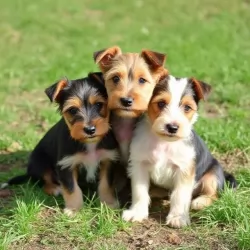 The Gully Terrier is a medium-sized, muscular dog known for its agility, loyalty, and protective nature. With a short, dense coat that comes in various colors, including black, brown, tan, and white, this breed has a distinctive appearance, often with a strong, powerful build.
The Gully Terrier is highly energetic and requires regular exercise to stay happy and healthy. Its intelligent, alert, and sometimes independent nature makes it a great guard dog and companion, although consistent training is necessary to manage its strong-willed personality.
This breed is well-suited for active families or individuals looking for a devoted and protective dog with a loving but protective demeanor.
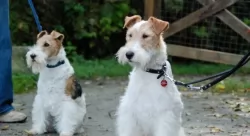
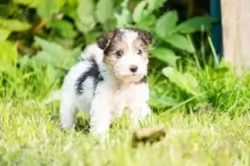 The Wirehaired Fox terrier is a sturdy dog with features quite similar to the Smooth Fox Terrier. It is symmetrical with a short back, round, dark eyes, a body that is shorter and ears that are v-shaped. He is medium sized with a flat skull that narrows as it approaches the nose. The nose is black, and the muzzle also tapers to it. The breed has a high, docked tail outside the United Kingdom. The tail is natural in the United Kingdom. They don’t have a broad or narrow chest, but it is deep. Laid back shoulders and a short back are signs of good breeding. Their legs are strong, and their feet have tough, cushioned pads.
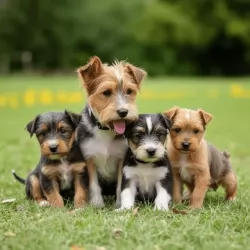 The Gully Terrier is a loyal, energetic, and intelligent breed with a strong, muscular build. Known for their protective nature, they make excellent guard dogs, staying alert and watchful of their surroundings.
While they are friendly and devoted to their family, they can also be independent and sometimes stubborn, requiring consistent training. Their short, dense coat is easy to groom, needing only regular brushing and ear cleaning.
Gully Terriers are active dogs that thrive on daily exercise and mental stimulation, making them great companions for those with an active lifestyle.
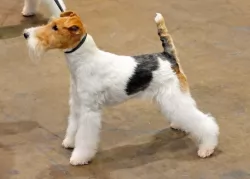 The Wirehaired Fox Terrier is good with children but if teased and frustrated he could bite. Children should know how to play with them and not to tease them.
He is great at performing tricks, tracking, agility, watch dog, competitive hunting or field trials.
The Wirehaired Fox Terrier is quite adaptable and can live anywhere. He is not a big dog but remember he is very high energy.
The breed is very smart but being independent thinkers, they can be difficult to train at times. Consistency and patience are needed when training the Wirehaired Fox Terrier. They get bored easily and if training sessions are not fun you will lose them. This is a breed that loves people but need constant supervision and companionship.
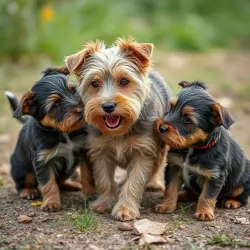 Like many medium to large-sized dogs, Gully Terriers can be prone to hip dysplasia, a condition where the hip joint doesn't develop properly, leading to arthritis and discomfort.
Due to their floppy or semi-erect ears, Gully Terriers can be more susceptible to ear infections. Regular ear cleaning and checking can help prevent this.
Their short coat can sometimes be prone to skin irritations, especially if they are exposed to harsh weather or poor hygiene. Allergies or parasite infestations (like fleas) can cause skin problems.
Gully Terriers are highly energetic, but they can be prone to obesity if they don't get enough exercise or are overfed. A balanced diet and regular activity are essential.
Some dogs in this breed may experience congenital eye issues like cataracts or progressive retinal atrophy (PRA), which can affect vision.
Regular vet check-ups to monitor joints, ears, and skin Consistent exercise to maintain a healthy weight Proper grooming to reduce risk of skin issues and ear infections
 This is basically a healthy breed, but there are some potential issues that could arise:
This is possible in white terriers
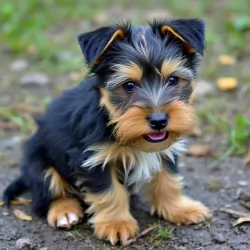 Caring for a Gully Terrier is straightforward but requires attention to their exercise, grooming, and training needs:
Gully Terriers are energetic and need daily exercise. Regular walks, runs, or play sessions will keep them happy and healthy.
They are smart and need activities that challenge their minds, like puzzle toys or training sessions.
Their short coat requires minimal care. Brush them once or twice a week and clean their ears regularly to prevent infections. Trim nails as needed.
Gully Terriers can be a bit independent, so start training early with positive reinforcement. Socialize them with people and other animals to avoid territorial behavior.
Feed them a balanced diet and control their portions to avoid weight gain. Regular vet check-ups will help keep them healthy.
 Give them two meals maybe three per day. Total food per day divided into the number of meals is 1/8-1/4 cup day.
Once again feed one-two meals per day and don’t overfeed. Total of ½ cup day
Being a terrier, the Wirehaired Fox Terrier needs a lot of exercise. He is energetic and playful. He loves to play ball, take interesting walks, and play in fenced areas. He needs to be in either a fenced area or on a leash as he will chase any small animal that he sees moving. But if you leave him unsupervised in a fenced area, don’t forget he is a terrier. He is likely to dig under or climb over a fence that isn’t entirely secure.
He loves earth dog trials, agility, tracking, hunting, flyball, and running. He hardly ever walks. He can play ball chasing for hours if you let him. Exercise is bonding for you and your Wirehaired Fox Terrier.