 MyDogBreeds
 Gully Terrier is originated from India but New Guinea Singing Dog is originated from Papua New Guinea. Gully Terrier may grow 18 cm / 8 inches higher than New Guinea Singing Dog. Gully Terrier may weigh 20 kg / 45 pounds more than New Guinea Singing Dog. Gully Terrier may live 5 years less than New Guinea Singing Dog. Both Gully Terrier and New Guinea Singing Dog has almost same litter size. Both Gully Terrier and New Guinea Singing Dog requires Moderate maintenance.
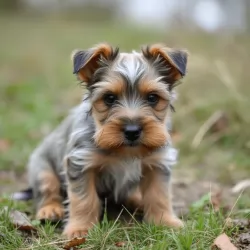 The Gully Terrier originated in India as a street dog, a mix of indigenous Indian Pariah Dogs and bully breeds like Pit Bulls and American Bulldogs.
Developed primarily for protection and hunting, they were used as guard dogs in urban and semi-urban areas. The name "Gully" refers to the narrow alleys and streets where these dogs were often found, while "Bully" highlights their muscular, strong build inherited from bully breeds.
Known for their loyalty, alertness, and protective instincts, Gully Terriers became valued companions for families in need of a strong, resilient dog that could thrive in tough environments.
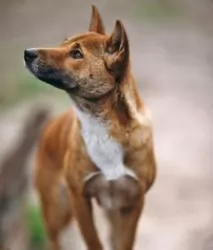 In 1957 the New Guinea Singing Dog was “discovered” in the Highlands of Papua New Guinea and he is found no where else. There is a lot of debate among scientists, taxonomists and biologist as to what is really a species and what is a subspecies. When the NGSD was found he was classified as a new canid species then in 2007 they were downgraded to a subspecies.
Today the NGSD is considered to be a wild dog and a primitive dog. They have lived in Papua New Guinea in the Highlands for thousands of years. They are closely related to other wild dogs, such as Australia’s dingo. They are today as they were a thousand years ago – wild. So wild that many counties have them in their zoos.
With the right care and enough socialization, they do very well as companion animals living with people. They are difficult to domesticate however and the person who owns one should be a part of the NGSD community in order to get support, share issues, and learn from others who have lived with these “wild dogs” for many years.
Any New Guinea Singing Dog found in North America or Europe is a direct descendent of two couples that were taken to zoos in China and Australia. The NGSD makes a howling sound that modulates and undulates through a wide series of tones. No other dog makes this musical sound. Rare even in New Guinea today, the Singer is thought to be the rarest of all dogs.
The only organization that recognizes the Singing Dog is the UKC and they are allowed in UKC competition. The NGSD now holds the classification of a domestic dog – a Canis lupus dingo - which is a subspecies of Canis lupus. In 2016 a group of 15 wild dogs were photographed for the first time ever. Prior to this the NGSD were never seen in more than pairs.
It is believed that they do not live and operate in packs, but rather solitary, pairs or family groups where both the parents do the work of raising the pups.
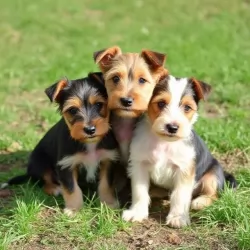 The Gully Terrier is a medium-sized, muscular dog known for its agility, loyalty, and protective nature. With a short, dense coat that comes in various colors, including black, brown, tan, and white, this breed has a distinctive appearance, often with a strong, powerful build.
The Gully Terrier is highly energetic and requires regular exercise to stay happy and healthy. Its intelligent, alert, and sometimes independent nature makes it a great guard dog and companion, although consistent training is necessary to manage its strong-willed personality.
This breed is well-suited for active families or individuals looking for a devoted and protective dog with a loving but protective demeanor.
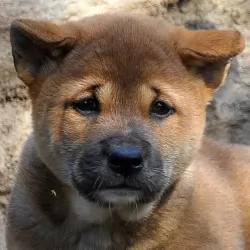 The New Guinea Singing Dog is a medium sized dog with short legs and a broad head. They are about average height and they are very limber and flexible. They can rotate their paws and spread their legs at much greater angles than the average canine. Thus, they can easily climb a tree. They can jump like a cat.
They have very reflective eyes that are shaped like almonds and have dark rims. The color of the eye can be dark brown to dark amber. It is also believed that they can see better than other domestic dogs in low light settings. Their pupils let in more light due to pupils that are wider than most other dogs.
The ears of the NGSD are lined with fur, pointed and erect. The are forward laying and can be rotated in order to hear even the farthest and faintest of sounds. There are dark guard hairs on the spine and back of the ears and tail. On young dogs the muzzle is black but by age 7 it is already beginning to turn gray.
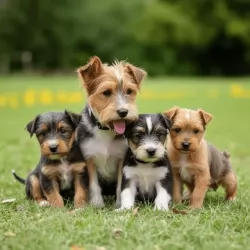 The Gully Terrier is a loyal, energetic, and intelligent breed with a strong, muscular build. Known for their protective nature, they make excellent guard dogs, staying alert and watchful of their surroundings.
While they are friendly and devoted to their family, they can also be independent and sometimes stubborn, requiring consistent training. Their short, dense coat is easy to groom, needing only regular brushing and ear cleaning.
Gully Terriers are active dogs that thrive on daily exercise and mental stimulation, making them great companions for those with an active lifestyle.
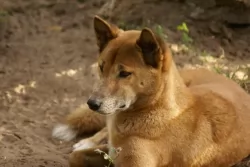 They could be, but it must be remembered that this is a wild dog.
Varying the pitches when howling
It’s possible but not recommended. Leave them wild.
Highly intelligent but trainability is questionable unless well socialize and attached to their people.
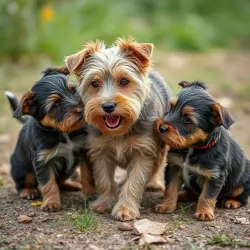 Like many medium to large-sized dogs, Gully Terriers can be prone to hip dysplasia, a condition where the hip joint doesn't develop properly, leading to arthritis and discomfort.
Due to their floppy or semi-erect ears, Gully Terriers can be more susceptible to ear infections. Regular ear cleaning and checking can help prevent this.
Their short coat can sometimes be prone to skin irritations, especially if they are exposed to harsh weather or poor hygiene. Allergies or parasite infestations (like fleas) can cause skin problems.
Gully Terriers are highly energetic, but they can be prone to obesity if they don't get enough exercise or are overfed. A balanced diet and regular activity are essential.
Some dogs in this breed may experience congenital eye issues like cataracts or progressive retinal atrophy (PRA), which can affect vision.
Regular vet check-ups to monitor joints, ears, and skin Consistent exercise to maintain a healthy weight Proper grooming to reduce risk of skin issues and ear infections
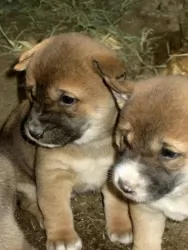 Though the breed is not extinct – it is so wild and secretive that there is no history or record of any health problems. However, the small number of domestic companion animals have shown health issues in recent years.
Pancreatitis – can be chronic or acute. If chronic it needs to be treated and diet changed. If acute it is usually deadly.
Hip Dysplasia – can cause lameness or arthritis.
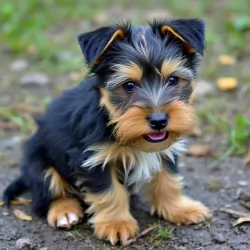 Caring for a Gully Terrier is straightforward but requires attention to their exercise, grooming, and training needs:
Gully Terriers are energetic and need daily exercise. Regular walks, runs, or play sessions will keep them happy and healthy.
They are smart and need activities that challenge their minds, like puzzle toys or training sessions.
Their short coat requires minimal care. Brush them once or twice a week and clean their ears regularly to prevent infections. Trim nails as needed.
Gully Terriers can be a bit independent, so start training early with positive reinforcement. Socialize them with people and other animals to avoid territorial behavior.
Feed them a balanced diet and control their portions to avoid weight gain. Regular vet check-ups will help keep them healthy.
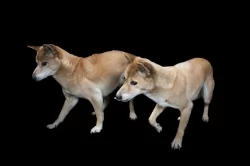 In the wild both pups and adults are thought to eat small mammals and birds as well as fruits. In homes feed a high protein diet. Because of the tendency toward pancreatitis do not feed raw or under cooked meat. If feeding meet do so in small amounts well cooked, very lean. Stay away from the fat. Feed puppies very small amounts. ¾-1 cup high quality dry puppy food twice a day.
Same as the puppy when it comes to meat although you could give the adult a little more. 1 ½ cups od high quality medium breed dog food twice a day.
In the wild there is no indication of health issue. A very healthy breed.
The NGSD needs a lot of stimulation both mental and physical. They must have a daily walk and somewhere to run. They are escape artist in homes. Remember they can jump like cats and climb trees. If their head can pass through a hole, so can the rest of their body.