 MyDogBreeds
 Gully Terrier is originated from India but Spanish Water Dog is originated from Spain. Gully Terrier may grow 6 cm / 3 inches higher than Spanish Water Dog. Gully Terrier may weigh 13 kg / 29 pounds more than Spanish Water Dog. Both Gully Terrier and Spanish Water Dog has almost same life span. Both Gully Terrier and Spanish Water Dog has same litter size. Both Gully Terrier and Spanish Water Dog requires Moderate maintenance.
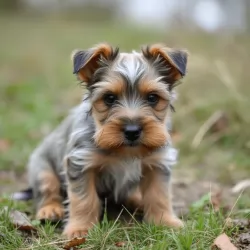 The Gully Terrier originated in India as a street dog, a mix of indigenous Indian Pariah Dogs and bully breeds like Pit Bulls and American Bulldogs.
Developed primarily for protection and hunting, they were used as guard dogs in urban and semi-urban areas. The name "Gully" refers to the narrow alleys and streets where these dogs were often found, while "Bully" highlights their muscular, strong build inherited from bully breeds.
Known for their loyalty, alertness, and protective instincts, Gully Terriers became valued companions for families in need of a strong, resilient dog that could thrive in tough environments.
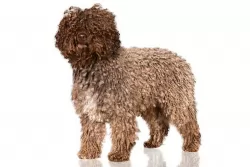 Bred in Spain to guard and herd sheep, the Spanish Water Dog was also used in hunting because he could retrieve in water. The breed is closely aligned with other water dogs like the Irish Water Spaniel, Portuguese Water Dog and French Barbel. It is especially true that the Spanish Water Dog and the Portuguese Water Dog share some of the same ancestors. The two breeds are closely related.
In the early days of the breed, they were separated into three different sizes and types. The dogs from Northern Spain were smaller than the others and came from the regions of Cantabria and Asturias. These lighter colored dogs eventually became their own breed – the Cantabria Water Dog. The second group came from western Andalusia marsh lands. He had a long chorded coat. The third group was the strongest and largest and came from the southern Andalusian sierras. This was by far the largest and most influential group, most of whom were herders. Eventually the groups interbred and today’s SWD carries the traits of all three. They were and still are a very versatile breed. In addition to herding they fished or retrieved for hunters.
The breed was revived in the 1970”s by two breeders, Santiago Montesinos and Antonio Garcia Perez travelled through southern Spain to buy or borrow dogs for breeding. By 1980, they had established the Spanish Water Dog Club of Spain and reestablished the breed. They fought to the breed recognized in Spain first. After five years of hard work, the Federation Cynologique Internationale recognized the breed permanently in 1999.
The UKC, or United Kennel Club, of the United States, recognized the breed in 2001, accepting them for confirmation by 2004. In the United States the breed was championed by Ken and Jerry Mann to attain that UKC recognition. Still the AKC, or American Kennel Club, held out on their recognition. The Manns showed the SWD in 2000 in the AKC Rare Breed Conformation and the UKC multi-breed show in 2004.
The Manns also used their breed for herding in the United States in entered them into the herding competition. In the they advocated for and got the SWD into the herding group for confirmation with the UKC in 2013. The American Kennel Club approved the requests of the Spanish Water Dog Club, Inc and recognized the breed in 2005 as foundation stock. By 2008 the AKC recognized the SWD to be able to compete in field trials by not conformation. In 2015 the SWD will be admitting to AKC conformation and fully recognized as a member of the herding group. They were also recognized by the American Herding Breed Association in 2007.
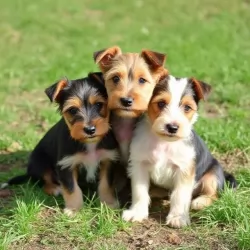 The Gully Terrier is a medium-sized, muscular dog known for its agility, loyalty, and protective nature. With a short, dense coat that comes in various colors, including black, brown, tan, and white, this breed has a distinctive appearance, often with a strong, powerful build.
The Gully Terrier is highly energetic and requires regular exercise to stay happy and healthy. Its intelligent, alert, and sometimes independent nature makes it a great guard dog and companion, although consistent training is necessary to manage its strong-willed personality.
This breed is well-suited for active families or individuals looking for a devoted and protective dog with a loving but protective demeanor.
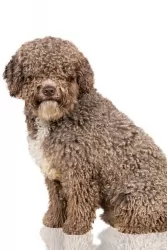
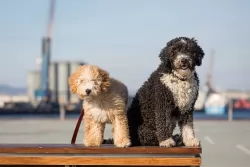
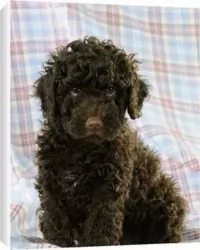 The Spanish Water Dog is an athletic, medium size, robust breed that is not as tall as it is long. In countries like the US, the tails are docked but it is not a conformation fault if they are not. The carry themselves with pride and elegance, have a strong head and expressive eyes which are brown. They have flat skulls and wide set eyes. Their paw pads, eye-rims and nose should be darker than their coat or at least the same color. Their eyes are chestnut, hazel or dark brown and their ears are medium height and triangular. His coat is curly and his topline is straight. With a broad chest and arched rib, he is a very athletic looking dog. The breed has much respiratory capacity with broad shoulders and straight sturdy legs. The breed has rounded feet , tight toes, and resistant pads.
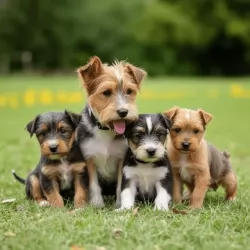 The Gully Terrier is a loyal, energetic, and intelligent breed with a strong, muscular build. Known for their protective nature, they make excellent guard dogs, staying alert and watchful of their surroundings.
While they are friendly and devoted to their family, they can also be independent and sometimes stubborn, requiring consistent training. Their short, dense coat is easy to groom, needing only regular brushing and ear cleaning.
Gully Terriers are active dogs that thrive on daily exercise and mental stimulation, making them great companions for those with an active lifestyle.
 3.Adaptability - very adaptable with the right exercise. Neither heat nor cold bother them.
 Like many medium to large-sized dogs, Gully Terriers can be prone to hip dysplasia, a condition where the hip joint doesn't develop properly, leading to arthritis and discomfort.
Due to their floppy or semi-erect ears, Gully Terriers can be more susceptible to ear infections. Regular ear cleaning and checking can help prevent this.
Their short coat can sometimes be prone to skin irritations, especially if they are exposed to harsh weather or poor hygiene. Allergies or parasite infestations (like fleas) can cause skin problems.
Gully Terriers are highly energetic, but they can be prone to obesity if they don't get enough exercise or are overfed. A balanced diet and regular activity are essential.
Some dogs in this breed may experience congenital eye issues like cataracts or progressive retinal atrophy (PRA), which can affect vision.
Regular vet check-ups to monitor joints, ears, and skin Consistent exercise to maintain a healthy weight Proper grooming to reduce risk of skin issues and ear infections
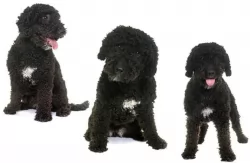 The Spanish Water Dog has much of the same health problems as the other water dogs and dogs their size and heritage. Here are some of the health issues they are prone to.
• Exocrine Pancreatic Insufficiency – inability to digest food – can be treated.
• CHG – Congenital Hypothyroidism with Goiter – inherited and pups don’t grow correctly.
• Neuroaxonal Dystrophy – cognitive and muscular dysfunction. Vitamin E and insulin deficiency
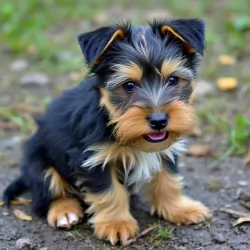 Caring for a Gully Terrier is straightforward but requires attention to their exercise, grooming, and training needs:
Gully Terriers are energetic and need daily exercise. Regular walks, runs, or play sessions will keep them happy and healthy.
They are smart and need activities that challenge their minds, like puzzle toys or training sessions.
Their short coat requires minimal care. Brush them once or twice a week and clean their ears regularly to prevent infections. Trim nails as needed.
Gully Terriers can be a bit independent, so start training early with positive reinforcement. Socialize them with people and other animals to avoid territorial behavior.
Feed them a balanced diet and control their portions to avoid weight gain. Regular vet check-ups will help keep them healthy.
 1.Feeding the puppy – Because of the breed propensity to some genetic dietary issues it is important to feed high quality food made from mostly meat. Avoid grains as much as possible. Don’t feed adult foods to the puppies. Feed puppy breed specific or medium size dogs.
2.Feeding the adult - Feed the adult as little grain and as much protein as possible. Feed adult breed specific or medium size dog’s food.
4. Games and Exercises – This is a working breed. Remember they are both herders and hunters and need exercise. They love strenuous hiking, running, jogging, long walks, swimming and playing fetch. Don’t over work the puppy/young dog until they have matured and their growth plates close.