 MyDogBreeds
 Gully Terrier is originated from India but Spinone Italiano is originated from Italy. Gully Terrier may grow 14 cm / 5 inches shorter than Spinone Italiano. Both Gully Terrier and Spinone Italiano are having almost same weight. Gully Terrier may live 6 years more than Spinone Italiano. Gully Terrier may have less litter size than Spinone Italiano. Both Gully Terrier and Spinone Italiano requires Moderate maintenance.
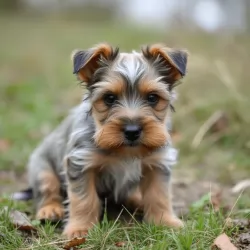 The Gully Terrier originated in India as a street dog, a mix of indigenous Indian Pariah Dogs and bully breeds like Pit Bulls and American Bulldogs.
Developed primarily for protection and hunting, they were used as guard dogs in urban and semi-urban areas. The name "Gully" refers to the narrow alleys and streets where these dogs were often found, while "Bully" highlights their muscular, strong build inherited from bully breeds.
Known for their loyalty, alertness, and protective instincts, Gully Terriers became valued companions for families in need of a strong, resilient dog that could thrive in tough environments.
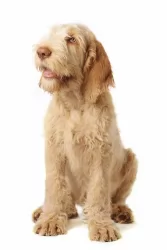 This Italian breed has an ancient blood line tracing all the back to 500 BC. Originally bred to hunt, he is today a friendly, alert and loyal companion. He is intelligent enough to do any job you give him. The Spinone is thought to be one of the oldest gun dogs ever, but it is not entirely clear that he came from Italy. There are some who think he may have come from somewhere in these European countries – Italy, Greece, France, Celtic Ireland, Spain or Russia. However, most believe the breed came from Italy in the Piedmont area.
The most common thinking is that he is a descendent of the Spanish Pointer and/or the Russian Setter. One other theory is that setters from Greece were brought to the Roman Empire and crossed with a variety of Italian dog to make the coarse haired Spinone we see today. Then the French put in their claim that the breed is a cross of many French pointers.
The theory that counts might just belong to the Italians who believe the ancestor to the Spinone includes the German Wirehaired Pointer, the Pudelpointer and the Wirehaired Pointer. It was not until the 19th century that the name Spinone was officially given to the breed.
Before that it might have been known as a Spinoso and named after a thorn bus in Italy called the Spino. This bush was so thick and sharp that small prey animals learned to hide under it because the predators could not get through it. The Spinone however was able to fight through the briars with its thick, coarse hair and tough skin.
The breed almost became extinct during the second world war as before and after the hunters in Italy had started to use other breeds for hunting. Breeders also began to cross the Spinone with wire hairs like German Wirehaired Pointer, the Wirehaired Pointing Griffon and the Boulet.
The most popular hunting dog in Italy today is the Bracco Italiano while the Spinone is still used for hunting.
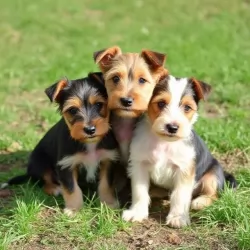 The Gully Terrier is a medium-sized, muscular dog known for its agility, loyalty, and protective nature. With a short, dense coat that comes in various colors, including black, brown, tan, and white, this breed has a distinctive appearance, often with a strong, powerful build.
The Gully Terrier is highly energetic and requires regular exercise to stay happy and healthy. Its intelligent, alert, and sometimes independent nature makes it a great guard dog and companion, although consistent training is necessary to manage its strong-willed personality.
This breed is well-suited for active families or individuals looking for a devoted and protective dog with a loving but protective demeanor.
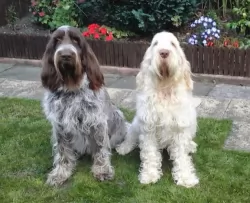
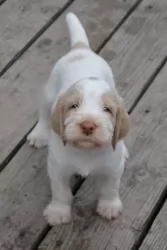 The breed is made up of strong, solid and muscled dogs that have an almost square build. His legs are made to travel any terrain and his head is long with an occipital that is pronounced and unique to the Spinone. They are said to have “human appearing eyes”, with a docked tail in countries allowing it and webbed paws.
Shorter hair covers their feet, head, legs, muzzle and ears. They have longer hair on their eyebrows and it is stiff, with soft hair on the muzzle and cheeks with a beard and mustache. It is a single coated dog though the coat is rough. They should have skin, lips, nose, and pads in colors that coordinate with their coats. For white dog it is a red-orange color, brown in dogs that are roan colored and dark red-orange in the orange and white colored dog.
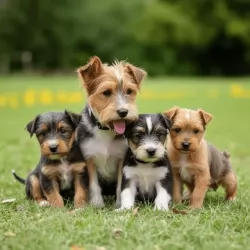 The Gully Terrier is a loyal, energetic, and intelligent breed with a strong, muscular build. Known for their protective nature, they make excellent guard dogs, staying alert and watchful of their surroundings.
While they are friendly and devoted to their family, they can also be independent and sometimes stubborn, requiring consistent training. Their short, dense coat is easy to groom, needing only regular brushing and ear cleaning.
Gully Terriers are active dogs that thrive on daily exercise and mental stimulation, making them great companions for those with an active lifestyle.
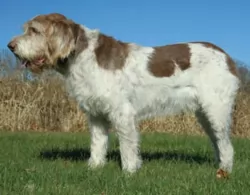 3.Adaptability – Young dogs need a lot of attention but they don’t need a lot of space. The young dogs are energetic while the adult dogs are laid-back. They need exercise every day and at least a small back yard.
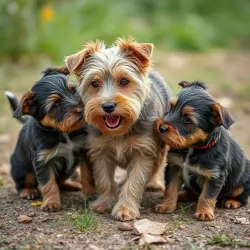 Like many medium to large-sized dogs, Gully Terriers can be prone to hip dysplasia, a condition where the hip joint doesn't develop properly, leading to arthritis and discomfort.
Due to their floppy or semi-erect ears, Gully Terriers can be more susceptible to ear infections. Regular ear cleaning and checking can help prevent this.
Their short coat can sometimes be prone to skin irritations, especially if they are exposed to harsh weather or poor hygiene. Allergies or parasite infestations (like fleas) can cause skin problems.
Gully Terriers are highly energetic, but they can be prone to obesity if they don't get enough exercise or are overfed. A balanced diet and regular activity are essential.
Some dogs in this breed may experience congenital eye issues like cataracts or progressive retinal atrophy (PRA), which can affect vision.
Regular vet check-ups to monitor joints, ears, and skin Consistent exercise to maintain a healthy weight Proper grooming to reduce risk of skin issues and ear infections
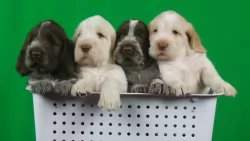 This is an ancient breed with not a lot of documented genetic issues, but it does have one deadly condition.
• Cerebellar ataxia (CA) is inherited and hits the puppies. Because it is a recessive gene both the mother and father must carry it for the puppy to inherit it. This makes it less likely than it would be otherwise. Puppies with the condition do not live more than a year. Since it is a genetic problem there is now a test for it that identifies carriers at a 95% accuracy rate.
• Like many other large breed dogs, they are susceptible to hip dysplasia. This can cause arthritis and/or lameness. There are now hip replacement surgeries available for this condition.
• Bloat is again common in large dogs and you need to watch for it with the Spinone. It can be deadly if not treated immediately. Let your dog rest quietly after eating. Do not let her exercise or play energetically after eating.
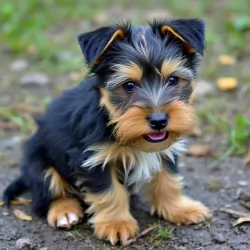 Caring for a Gully Terrier is straightforward but requires attention to their exercise, grooming, and training needs:
Gully Terriers are energetic and need daily exercise. Regular walks, runs, or play sessions will keep them happy and healthy.
They are smart and need activities that challenge their minds, like puzzle toys or training sessions.
Their short coat requires minimal care. Brush them once or twice a week and clean their ears regularly to prevent infections. Trim nails as needed.
Gully Terriers can be a bit independent, so start training early with positive reinforcement. Socialize them with people and other animals to avoid territorial behavior.
Feed them a balanced diet and control their portions to avoid weight gain. Regular vet check-ups will help keep them healthy.
 1Feeding the puppy – feed a high quality dog food for puppies of large breeds. Feed 3-4x day but don’t overfeed or let him exercise after eating even as a puppy.
2.Feeding the adult - feed a high quality dog food for large breeds. Feed 1-2X day but don’t overfeed or let him exercise after eating.
4. Games and Exercises – The Spinone is an active breed, but not a fast dog. In fact, they like to travel at a trot so it becomes a great dog for jogging or running with. They love to jump, track, hunt, hike. They do well with agility, retrieving, flyball, carting, being a therapy dog, a rescue dog and a watchdog.