 MyDogBreeds
 Gully Terrier is originated from India but Standard Schnauzer is originated from Germany. Both Gully Terrier and Standard Schnauzer are having almost same height. Gully Terrier may weigh 9 kg / 20 pounds more than Standard Schnauzer. Both Gully Terrier and Standard Schnauzer has almost same life span. Gully Terrier may have less litter size than Standard Schnauzer. Gully Terrier requires Moderate maintenance. But Standard Schnauzer requires High maintenance
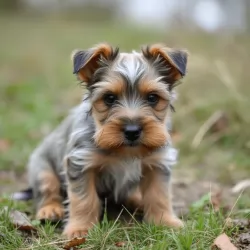 The Gully Terrier originated in India as a street dog, a mix of indigenous Indian Pariah Dogs and bully breeds like Pit Bulls and American Bulldogs.
Developed primarily for protection and hunting, they were used as guard dogs in urban and semi-urban areas. The name "Gully" refers to the narrow alleys and streets where these dogs were often found, while "Bully" highlights their muscular, strong build inherited from bully breeds.
Known for their loyalty, alertness, and protective instincts, Gully Terriers became valued companions for families in need of a strong, resilient dog that could thrive in tough environments.
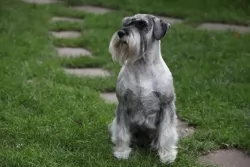 Coming out of Germany in the 14th and 15th century is the Standard Schnauzer or Mittelschnauzer. Both the Giant Schnauzer and Miniature Schnauzer are descendants of the Standard Schnauzer. The first name for this breed was the Wire-haired Pinscher until 1879. The breed is a working breed that is popular in Europe and was first in a dog show in 1879 in Hanover, Germany. In 1997 they won Best in Show at the Westminster Kennel Club in New York.
These medium size Schnauzers were bred in the Middle Ages to be versatile in working and herding in Germany. There seems to be artwork from the 14th through the 16th centuries featuring this breed of dog as a hunter. It is believed that the common ancestors of the Standard Schnauzer is the German Pinscher and the gray Wolf Spitz, along with the black German Poodle and the Bolognese.
It was 1850 when the breed gained recognition as a purebred with distinct and recognizable features. Those are not all the same features that the dogs of today show. These dogs had thick hair on their face, a double coat that is wiry, and their tails were cropped. These dogs were initially Wire-haired German Pinscher then in 1879, a dog named Schnauzer won Best in Show in Hanover. By 1900, the breed was being called Schnauzer everywhere.
The first breed standard was written under the Wire-haired German Pinscher name in the early 1880’s. This standard allowed for a lot of different colors, but the salt and pepper of today was not introduced until the late 1800’s. Then the standard was rewritten in 1907 for the Standard Schnauzer with this as the dominant color.
The first official Standard Schnauzer imported to the United States came in 1905 even though there is a claim that one competed in the 1899 Westminster Kennel Club in the Miscellaneous Class. Following the first World War, the breed became increasingly popular in the States. At that time the US club was called the Wire-haired Pinscher Club of America in 1925. Both standard and miniature sized schnauzer are included in this club.
The breeds were separated in 1933 and became the Standard Schnauzer Club of America and classified by the American Kennel Club as part of the Working Group. In 1926 they moved the Standard Schnauzer to the Terrier Group. By 1926 the Schnauzer Club of Great Britain was formed.
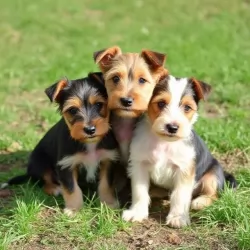 The Gully Terrier is a medium-sized, muscular dog known for its agility, loyalty, and protective nature. With a short, dense coat that comes in various colors, including black, brown, tan, and white, this breed has a distinctive appearance, often with a strong, powerful build.
The Gully Terrier is highly energetic and requires regular exercise to stay happy and healthy. Its intelligent, alert, and sometimes independent nature makes it a great guard dog and companion, although consistent training is necessary to manage its strong-willed personality.
This breed is well-suited for active families or individuals looking for a devoted and protective dog with a loving but protective demeanor.
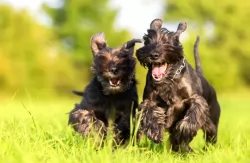
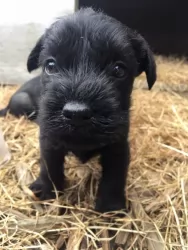 Today’s Standard Schnauzer is a square, robust, medium sized dog. The breed boasts heavy eyebrows and thick beards. They are salt and pepper or black and their coat is wiry and stiff. The breed have excellent muscle tone and a body in proportion height to length. Their build is rugged, and coat is dense.
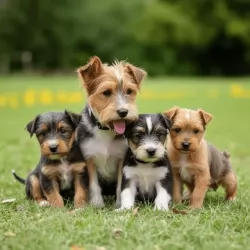 The Gully Terrier is a loyal, energetic, and intelligent breed with a strong, muscular build. Known for their protective nature, they make excellent guard dogs, staying alert and watchful of their surroundings.
While they are friendly and devoted to their family, they can also be independent and sometimes stubborn, requiring consistent training. Their short, dense coat is easy to groom, needing only regular brushing and ear cleaning.
Gully Terriers are active dogs that thrive on daily exercise and mental stimulation, making them great companions for those with an active lifestyle.
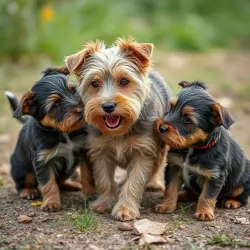 Like many medium to large-sized dogs, Gully Terriers can be prone to hip dysplasia, a condition where the hip joint doesn't develop properly, leading to arthritis and discomfort.
Due to their floppy or semi-erect ears, Gully Terriers can be more susceptible to ear infections. Regular ear cleaning and checking can help prevent this.
Their short coat can sometimes be prone to skin irritations, especially if they are exposed to harsh weather or poor hygiene. Allergies or parasite infestations (like fleas) can cause skin problems.
Gully Terriers are highly energetic, but they can be prone to obesity if they don't get enough exercise or are overfed. A balanced diet and regular activity are essential.
Some dogs in this breed may experience congenital eye issues like cataracts or progressive retinal atrophy (PRA), which can affect vision.
Regular vet check-ups to monitor joints, ears, and skin Consistent exercise to maintain a healthy weight Proper grooming to reduce risk of skin issues and ear infections
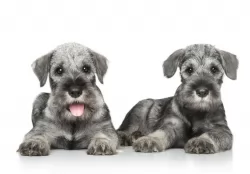 There are a couple of major hereditary health issues faced by the Standard Schnauzer.
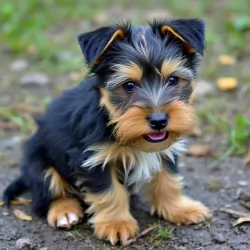 Caring for a Gully Terrier is straightforward but requires attention to their exercise, grooming, and training needs:
Gully Terriers are energetic and need daily exercise. Regular walks, runs, or play sessions will keep them happy and healthy.
They are smart and need activities that challenge their minds, like puzzle toys or training sessions.
Their short coat requires minimal care. Brush them once or twice a week and clean their ears regularly to prevent infections. Trim nails as needed.
Gully Terriers can be a bit independent, so start training early with positive reinforcement. Socialize them with people and other animals to avoid territorial behavior.
Feed them a balanced diet and control their portions to avoid weight gain. Regular vet check-ups will help keep them healthy.
 1Feeding the puppy: At 8-12 weeks feed four times a day. At 3 to 6 months feed three times a day. At 6 to 12 months feed twice a day.
4. Games and Exercises – The breed is extremely athletic and needs daily exercise. They are playful with dogs and people and they are family dogs. They want to go wherever you go. Hiking, running, jogging and organized activities.
They are great at obedience, agility, flyball, disc dog, herding and tracking. They have also been involved in search and rescue, bomb detection, and cancer detection.