 MyDogBreeds
 Gully Terrier is originated from India but Tamaskan is originated from United Kingdom. Gully Terrier may grow 15 cm / 5 inches shorter than Tamaskan. Gully Terrier may weigh 10 kg / 22 pounds lesser than Tamaskan. Both Gully Terrier and Tamaskan has same life span. Both Gully Terrier and Tamaskan has almost same litter size. Gully Terrier requires Moderate maintenance. But Tamaskan requires Low maintenance
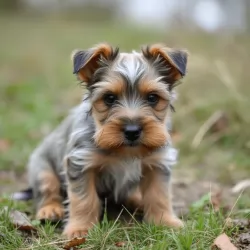 The Gully Terrier originated in India as a street dog, a mix of indigenous Indian Pariah Dogs and bully breeds like Pit Bulls and American Bulldogs.
Developed primarily for protection and hunting, they were used as guard dogs in urban and semi-urban areas. The name "Gully" refers to the narrow alleys and streets where these dogs were often found, while "Bully" highlights their muscular, strong build inherited from bully breeds.
Known for their loyalty, alertness, and protective instincts, Gully Terriers became valued companions for families in need of a strong, resilient dog that could thrive in tough environments.
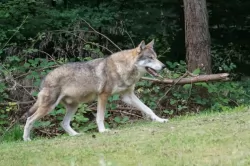 It is believed that the Tamaskan has been specifically bred to resemble a wolf, and he does too.
They aren’t recognized by the Federation Cynologique Internationale as they aren’t purebred. In fact they aren’t recognized by any kennel club, being crossbred with other dog breeds such as the German Shepherd, Siberian Husky and Alaskan Malamute.
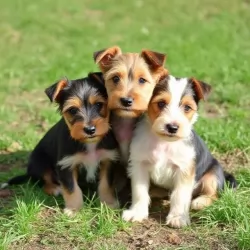 The Gully Terrier is a medium-sized, muscular dog known for its agility, loyalty, and protective nature. With a short, dense coat that comes in various colors, including black, brown, tan, and white, this breed has a distinctive appearance, often with a strong, powerful build.
The Gully Terrier is highly energetic and requires regular exercise to stay happy and healthy. Its intelligent, alert, and sometimes independent nature makes it a great guard dog and companion, although consistent training is necessary to manage its strong-willed personality.
This breed is well-suited for active families or individuals looking for a devoted and protective dog with a loving but protective demeanor.
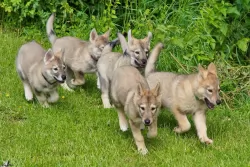 The beautiful Tamaskan dog is large, standing at between 61 and 71cm in height and weighing between 23 and 45 kg.
It is a mix between several sled dogs – Siberian Husky and Alaskan Malamute. The thick double coat is coarse and can be grey, cream, black or reddish and the tail of the Tamaskan is wolf-like too – thick and bushy.
His ears are erect and alert and he has sharp hearing. His almond shaped eyes can be yellow or brown and they are alert and bright and don’t miss a thing.
The Tamaskan is capable of becoming a good family pet, being gentle with children and accepting of other dogs. His high intelligence makes it that he can learn a lot of simple commands.
Because he has been a pack dog, he doesn’t like to be left alone. He is social and as a pet he will want to be an interactive part of his human family. Leaving him unsupervised for days on end will see him getting up to mischief.
He will die of depression, boredom and loneliness if he is put into the back yard and ignored.
They are certainly not recommended for life in the city but will need to have a large space to run and play.
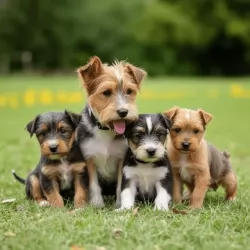 The Gully Terrier is a loyal, energetic, and intelligent breed with a strong, muscular build. Known for their protective nature, they make excellent guard dogs, staying alert and watchful of their surroundings.
While they are friendly and devoted to their family, they can also be independent and sometimes stubborn, requiring consistent training. Their short, dense coat is easy to groom, needing only regular brushing and ear cleaning.
Gully Terriers are active dogs that thrive on daily exercise and mental stimulation, making them great companions for those with an active lifestyle.
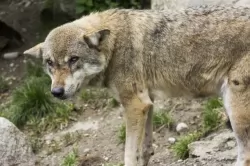 The Tamaskan may look like a wolf but he isn’t aggressive. He’s looks can be to your advantage because intruders think twice before confronting a ‘wolf’.
Little do they know that this is a loving, loyal dog that makes an excellent playmate for children. They’re social too and want to be with their family a lot of the time.
They’re dogs so devoted to their human family that they can even suffer with separation anxiety.
Give him the love and exercise he craves and you’ll find in him the most awesome canine friend.
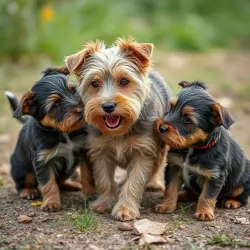 Like many medium to large-sized dogs, Gully Terriers can be prone to hip dysplasia, a condition where the hip joint doesn't develop properly, leading to arthritis and discomfort.
Due to their floppy or semi-erect ears, Gully Terriers can be more susceptible to ear infections. Regular ear cleaning and checking can help prevent this.
Their short coat can sometimes be prone to skin irritations, especially if they are exposed to harsh weather or poor hygiene. Allergies or parasite infestations (like fleas) can cause skin problems.
Gully Terriers are highly energetic, but they can be prone to obesity if they don't get enough exercise or are overfed. A balanced diet and regular activity are essential.
Some dogs in this breed may experience congenital eye issues like cataracts or progressive retinal atrophy (PRA), which can affect vision.
Regular vet check-ups to monitor joints, ears, and skin Consistent exercise to maintain a healthy weight Proper grooming to reduce risk of skin issues and ear infections
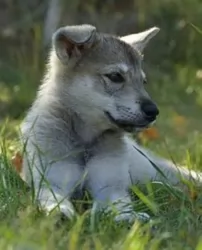 Your healthy Tamaskan, even though he isn’t prone to common genetic health problems, can get any one of the many dog illnesses there are, although this is highly unlikely.
However without good food, exercise, love and care, he can also be susceptible to parasites, rabies, parvovirus, hip dysplasia, bloat, skin infections and cancer.
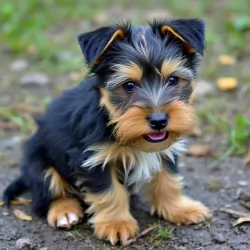 Caring for a Gully Terrier is straightforward but requires attention to their exercise, grooming, and training needs:
Gully Terriers are energetic and need daily exercise. Regular walks, runs, or play sessions will keep them happy and healthy.
They are smart and need activities that challenge their minds, like puzzle toys or training sessions.
Their short coat requires minimal care. Brush them once or twice a week and clean their ears regularly to prevent infections. Trim nails as needed.
Gully Terriers can be a bit independent, so start training early with positive reinforcement. Socialize them with people and other animals to avoid territorial behavior.
Feed them a balanced diet and control their portions to avoid weight gain. Regular vet check-ups will help keep them healthy.
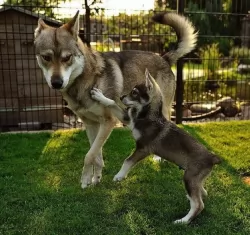 The Tamaskan Dog is very active. He just loves activity - long walks and hikes and lots of running off a leash. He’ll love ball games too – anything that keeps him mentally and physically active.
Provide your beautiful, active Tamaskan dog with top quality food that is rich in protein. You can give him one of the quality commercially manufactured foods – just check out the ingredients on the packaging and go for the dog foods with wholesome, natural ingredients in them.
Your Tamaskan is part of the family and deserves some home-made food. Nothing spicey and exotic as you’ll sit with stomach problems. Boiled chicken, brown rice or pasta and spinach, sweet potatoes and carrots are a super healthy choice and food like this won’t play havoc with your dog’s digestion.
This food can all be chopped up and small portions added into the dry kibble twice a week.
●This is a fairly low maintenance dog. He does shed so a good brush twice a week will be sufficient for him.
●When you brush him, check him over for unusual lumps. Look inside his eyes and inside his mouth as he can’t tell you about a bad tooth that could be causing him pain. Check inside his ears too for signs of redness. If you don’t want to do these things, at least send him to a professional groomer who will do it all for you.
●Have your pet neutered or spayed if you want to avoid puppies. This can be beneficial for your pet’s health too.