 MyDogBreeds
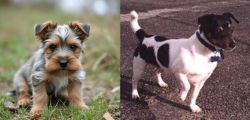 Gully Terrier is originated from India but Teddy Roosevelt Terrier is originated from United States. Gully Terrier may grow 20 cm / 8 inches higher than Teddy Roosevelt Terrier. Gully Terrier may weigh 24 kg / 53 pounds more than Teddy Roosevelt Terrier. Both Gully Terrier and Teddy Roosevelt Terrier has almost same life span. Gully Terrier may have more litter size than Teddy Roosevelt Terrier. Both Gully Terrier and Teddy Roosevelt Terrier requires Moderate maintenance.
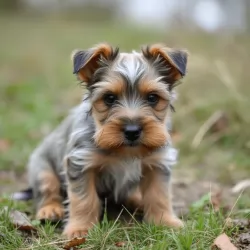 The Gully Terrier originated in India as a street dog, a mix of indigenous Indian Pariah Dogs and bully breeds like Pit Bulls and American Bulldogs.
Developed primarily for protection and hunting, they were used as guard dogs in urban and semi-urban areas. The name "Gully" refers to the narrow alleys and streets where these dogs were often found, while "Bully" highlights their muscular, strong build inherited from bully breeds.
Known for their loyalty, alertness, and protective instincts, Gully Terriers became valued companions for families in need of a strong, resilient dog that could thrive in tough environments.
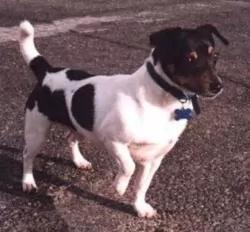 Teddy Roosevelt Terriers (Teddy, American Teddy) are American hunting terriers related to American Rat Terriers and a host of other working, farm, hunting dogs initially brought by working-class immigrants from England and Europe. Largely due to the working nature of these dogs early the cross breeding was to reinforce useful traits like a superior ability to scent prey. It also bequeathed the breed with superior intelligence. While they take a while to warm up to new people, to their human family they like to be close all the time, and are eager to be with them and please them. Teddy's share their early history with American Rat Terriers, Fox Paulistinha, Tenterfield Terrier and Beagles. They also are related to Feist (dog), and Turnspit dogs, English White Terrier and Wry-legged terrier (all now extinct), as well as Bull, Smooth Fox, Manchester Terriers with Beagles, Italian Greyhound and Whippets in the mix.
Only since 1996 have Teddy Roosevelt Terriers had standards set for the breed. The major difference between Teddys and the related American Rat Terrier is Teddys are closer to the ground (bench-legged), have greater bone density and more muscle. Teddys are medium to small sized. It was in the mid 1990's that the effort began to breed only the shorter legged phenotype into the Teddy lineage and allow the rat Terrier to be the longer legged variety. The UKC (United Kennel Club) and AKC (American Kennel Club) both recognize Teddys, the UKC since 1999.
The Rat Terrier Club of America separated the long legged and short legged varieties, the short legged ones were named in honor of President Theodore Roosevelt. It is rather interesting that President Theodore Roosevelt, while being very fond of his family dogs did not own any Rat Terriers, and did not help develop the breed that bears his name. He mentions dogs in several of his letters, Skip who rode with the president on his horse while hunting and belonged to a friend, Scamp who lived with the Roosevelt's in the White House and hunted and caught rats and their dog Jack.
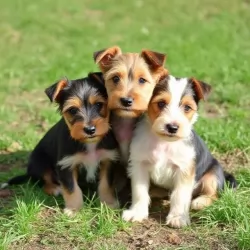 The Gully Terrier is a medium-sized, muscular dog known for its agility, loyalty, and protective nature. With a short, dense coat that comes in various colors, including black, brown, tan, and white, this breed has a distinctive appearance, often with a strong, powerful build.
The Gully Terrier is highly energetic and requires regular exercise to stay happy and healthy. Its intelligent, alert, and sometimes independent nature makes it a great guard dog and companion, although consistent training is necessary to manage its strong-willed personality.
This breed is well-suited for active families or individuals looking for a devoted and protective dog with a loving but protective demeanor.
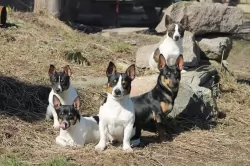
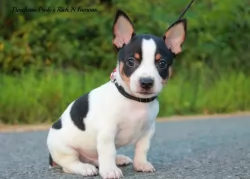 Teddy Roosevelt Terriers are hunting terriers that are short legged, well muscled and very active. They have proportionate wide, sightly rounded heads cuneus (wedge) shaped on which the V shaped ears are set on the outside edge. Their ears may be button or erect, and breed standards prefer a docked tail, but it is not necessary. Ideally Teddy's have length/height ratio is 10/7 or 10/8. The Teddy Roosevelt Terriers coats may be solid white, other colors with patches and markings. Their coats are short and rough. Because they are working dogs, what is termed as “honorable” scars from work are not deducted from the dogs points. If the dog is not proportionate to breed standards (for example long legs or square body) it may be disqualified, but exaggerations and faults are marked only is in as much as it interferes with the ability to work. They are very pleasant looking and have a lively manner.
Teddy Roosevelt Terriers are happy when they are the constant companion of their owner(s) and will shadow their master all day. Temperamentally they love to play, do well in obedience training and are territorial and protective and are exceptional watch dogs. Of course, they were bred as hunting dogs and have hunting instincts, a greater than median prey drive and will chase anything they consider prey such as rabbits, squirrels, birds, stray cats, (and if not trained poultry), as a working dog training is really important. With a heightened sense of smell and superior prey drive, Teddy's have been observed to follow and dig along mole trails (adding further damage to what the moles may have already inflicted), as well as ferret out edible mushrooms.
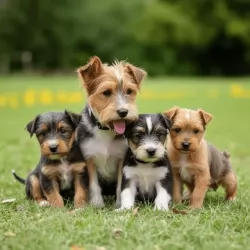 The Gully Terrier is a loyal, energetic, and intelligent breed with a strong, muscular build. Known for their protective nature, they make excellent guard dogs, staying alert and watchful of their surroundings.
While they are friendly and devoted to their family, they can also be independent and sometimes stubborn, requiring consistent training. Their short, dense coat is easy to groom, needing only regular brushing and ear cleaning.
Gully Terriers are active dogs that thrive on daily exercise and mental stimulation, making them great companions for those with an active lifestyle.
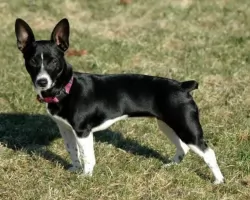 1.Children friendliness yes Teddy's love to play and enjoy children. Enjoys spending time with family and interacting with their human family taking part in the everyday routines.
2.Special talents The breed has high prey drive and an very intense sense of smell One of their talents is to be trained to find, by scent, Black Truffles (a type of edible mushroom) found close to the roots of some trees in the Western half of North America.
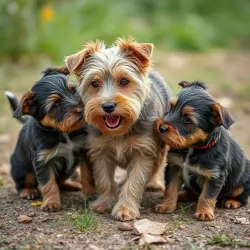 Like many medium to large-sized dogs, Gully Terriers can be prone to hip dysplasia, a condition where the hip joint doesn't develop properly, leading to arthritis and discomfort.
Due to their floppy or semi-erect ears, Gully Terriers can be more susceptible to ear infections. Regular ear cleaning and checking can help prevent this.
Their short coat can sometimes be prone to skin irritations, especially if they are exposed to harsh weather or poor hygiene. Allergies or parasite infestations (like fleas) can cause skin problems.
Gully Terriers are highly energetic, but they can be prone to obesity if they don't get enough exercise or are overfed. A balanced diet and regular activity are essential.
Some dogs in this breed may experience congenital eye issues like cataracts or progressive retinal atrophy (PRA), which can affect vision.
Regular vet check-ups to monitor joints, ears, and skin Consistent exercise to maintain a healthy weight Proper grooming to reduce risk of skin issues and ear infections
 • Ectopia lentis a congenital problem where the lens of the eye is displaced. Eye disease
• bite problems (malocclusions -teeth that are incorrectly aligned when jaw is closed.),
• Hip dysplasia, elbow dysplasia, (hip or elbow socket that does not fully cover the ball which increases the risk of displacement.
 Caring for a Gully Terrier is straightforward but requires attention to their exercise, grooming, and training needs:
Gully Terriers are energetic and need daily exercise. Regular walks, runs, or play sessions will keep them happy and healthy.
They are smart and need activities that challenge their minds, like puzzle toys or training sessions.
Their short coat requires minimal care. Brush them once or twice a week and clean their ears regularly to prevent infections. Trim nails as needed.
Gully Terriers can be a bit independent, so start training early with positive reinforcement. Socialize them with people and other animals to avoid territorial behavior.
Feed them a balanced diet and control their portions to avoid weight gain. Regular vet check-ups will help keep them healthy.
 1 Feeding the puppy Puppies should eat a minimum of a cup and max of a cup and three quarters each day. 1-13/4
2.Feeding the adult Adult Teddy Roosevelt Terriers should eat three-fourth to one-and-a-half cups per day.
3.Points for Good Health - fairly healthy The Teddy Roosevelt Terriers displays some common joint issues that are shared by Rat Terriers.
4. Games and Exercises Having descended from hunting/working dogs Teddy Roosevelt's are able to learn and work conformation rings, and agility trials. They like to play and take part in swims, hikes and playing fetch or Frisbee. They take well to obedience training.