 MyDogBreeds
 Gully Terrier is originated from India but Tenterfield Terrier is originated from Australia. Gully Terrier may grow 25 cm / 10 inches higher than Tenterfield Terrier. Both Gully Terrier and Tenterfield Terrier are having almost same weight. Both Gully Terrier and Tenterfield Terrier has almost same life span. Both Gully Terrier and Tenterfield Terrier has almost same litter size. Gully Terrier requires Moderate maintenance. But Tenterfield Terrier requires Low maintenance
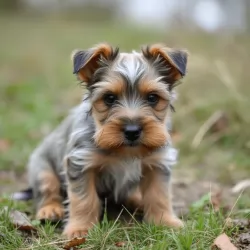 The Gully Terrier originated in India as a street dog, a mix of indigenous Indian Pariah Dogs and bully breeds like Pit Bulls and American Bulldogs.
Developed primarily for protection and hunting, they were used as guard dogs in urban and semi-urban areas. The name "Gully" refers to the narrow alleys and streets where these dogs were often found, while "Bully" highlights their muscular, strong build inherited from bully breeds.
Known for their loyalty, alertness, and protective instincts, Gully Terriers became valued companions for families in need of a strong, resilient dog that could thrive in tough environments.
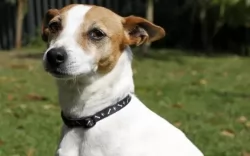 The ancestors of the Tenterfield Terrier came to Australia with the British and from them came this Australian breed. The English terriers were bred to be ratters on the ships to Australia. Today’s breed is a hardy, strong, athletic and agile dog. These first dogs were miniature Fox Terriers, bred for ratting. The miniature Fox Terrier was an established breed in the late 19th century in Australia with families and was know as a Mini Foxie. The breed became a steady presence in homes by the 1920’s.
The breed might not have been named after the area of Tenterfield as many have guessed. Instead they may have been named after a breeder. The owner of the Tenterfield saddlery was called Tenterfield Saddler and he owned several of the breed. In 1990, Don Burke, a television personality suggested the breed be named the Tenterfield Terrier.
The Miniature Fox Terrier Club of South Australia. Now there were several clubs in Australia and a lot of disagreement about exactly what type of dog a miniature fox terrier was. Some did not think the name was legitimate, but they wanted recognition from the Australian National Kennel Club (ANKC). So, they became the Tenterfield Terrier Club of Australia in 1993. They were recognized by 2002.
Today the breed standard for the Tenterfield Terrier is different from the one for the Miniature Fox Terrier. They are now entirely separate breeds. In addition to the ANKC, the breed is recognized by the New Zealand Kennel Club but not by the AKC. It is also recognized by the American Pet Registry, Inc, the American Canine Registry and the Dog Registry of America, Inc.
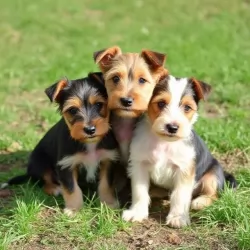 The Gully Terrier is a medium-sized, muscular dog known for its agility, loyalty, and protective nature. With a short, dense coat that comes in various colors, including black, brown, tan, and white, this breed has a distinctive appearance, often with a strong, powerful build.
The Gully Terrier is highly energetic and requires regular exercise to stay happy and healthy. Its intelligent, alert, and sometimes independent nature makes it a great guard dog and companion, although consistent training is necessary to manage its strong-willed personality.
This breed is well-suited for active families or individuals looking for a devoted and protective dog with a loving but protective demeanor.
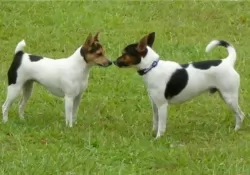
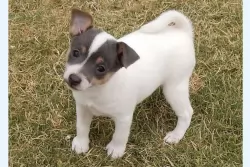 The Tenterfield Terrier is square and compact. He has a head shaped like a wedge and unusual in the terrier group. They have pricked ears and are predominantly white mixed with tan or black. They could also be tri-colored in black/tan and white or tan/liver and white. They have naturally occurring bob tails or docked tails. The nose is usually black unless the dog is liver colored, they have liver noses. The jaws are strong, and lips are tight with a strong neck.
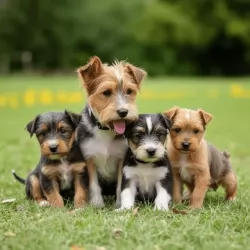 The Gully Terrier is a loyal, energetic, and intelligent breed with a strong, muscular build. Known for their protective nature, they make excellent guard dogs, staying alert and watchful of their surroundings.
While they are friendly and devoted to their family, they can also be independent and sometimes stubborn, requiring consistent training. Their short, dense coat is easy to groom, needing only regular brushing and ear cleaning.
Gully Terriers are active dogs that thrive on daily exercise and mental stimulation, making them great companions for those with an active lifestyle.
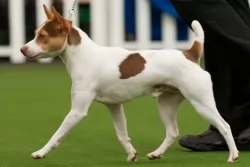 3.Adaptability – they need space even though they are small. They need a lot of exercise. They can adapt if they get another exercise. They can live in apartments and can play indoors as well as out.
4.Learning ability – They are extremely intelligent, but they can be stubborn like all terriers.
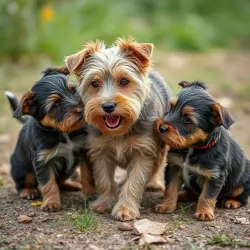 Like many medium to large-sized dogs, Gully Terriers can be prone to hip dysplasia, a condition where the hip joint doesn't develop properly, leading to arthritis and discomfort.
Due to their floppy or semi-erect ears, Gully Terriers can be more susceptible to ear infections. Regular ear cleaning and checking can help prevent this.
Their short coat can sometimes be prone to skin irritations, especially if they are exposed to harsh weather or poor hygiene. Allergies or parasite infestations (like fleas) can cause skin problems.
Gully Terriers are highly energetic, but they can be prone to obesity if they don't get enough exercise or are overfed. A balanced diet and regular activity are essential.
Some dogs in this breed may experience congenital eye issues like cataracts or progressive retinal atrophy (PRA), which can affect vision.
Regular vet check-ups to monitor joints, ears, and skin Consistent exercise to maintain a healthy weight Proper grooming to reduce risk of skin issues and ear infections
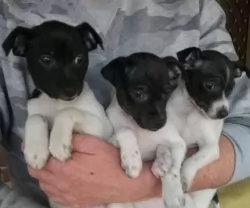 They are small in stature and because of their face they seem to have dental issues. The breed does not have a lot of health issues but deals with the same issues as many small terriers. Not all members of the breed are susceptible to these, but some are just like the Australian Terrier.
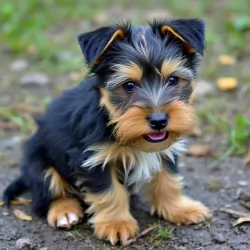 Caring for a Gully Terrier is straightforward but requires attention to their exercise, grooming, and training needs:
Gully Terriers are energetic and need daily exercise. Regular walks, runs, or play sessions will keep them happy and healthy.
They are smart and need activities that challenge their minds, like puzzle toys or training sessions.
Their short coat requires minimal care. Brush them once or twice a week and clean their ears regularly to prevent infections. Trim nails as needed.
Gully Terriers can be a bit independent, so start training early with positive reinforcement. Socialize them with people and other animals to avoid territorial behavior.
Feed them a balanced diet and control their portions to avoid weight gain. Regular vet check-ups will help keep them healthy.
 1.Feeding the puppy – Don’t overfeed but do feed high quality puppy food for small breeds and terriers.
2.Feeding the adult – This is an active breed but don’t overfeed. Feed a high quality adult dog food for terriers or small breeds. Feed 2 times a day.
4. Games and Exercises – The breed has a high energy level and needs a lot of exercise. He is a terrier and loves to “go to ground”. Play activities that allow him to do that are best. He plays barn hunt, lure coursing and terrier specific competitions.