 MyDogBreeds
 Akita Inu is originated from Japan but Brittany is originated from France. Akita Inu may grow 19 cm / 8 inches higher than Brittany. Akita Inu may weigh 19 kg / 42 pounds more than Brittany. Both Akita Inu and Brittany has almost same life span. Both Akita Inu and Brittany has almost same litter size. Akita Inu requires Moderate maintenance. But Brittany requires Low maintenance
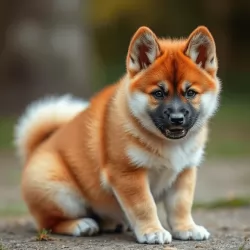 The Akita Inu, originating from Japan's snowy Akita Prefecture, has a long-standing legacy as a powerful hunting dog and loyal companion. Bred in the 1600s to track large game like boar and bear, the Akita quickly earned its place among Japanese nobility as a guardian and symbol of courage.
Its dignified nature and unwavering loyalty were immortalized in the true story of Hachikō, an Akita who waited nearly a decade for his deceased owner at a Tokyo train station. This devotion captured national and global admiration, leading to the breed’s recognition as a national treasure in Japan.
After World War II, American soldiers introduced Akitas to the West, giving rise to a larger, more robust variation known as the American Akita. Today, the Akita Inu remains a cherished breed worldwide for its strength, loyalty, and quiet dignity.
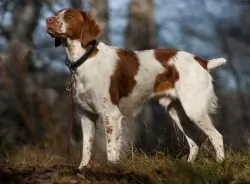 One of the most intense bird dog breeds in existence is the Brittany, bred for hunt. The breed used to be called the Brittany Spaniel, but since the breed is closer to a setter or pointer, that moniker has been dropped. The Brittany is named for the French Province in which they were originally developed. Sometime from the 17th to the 19th centuries, the breed was developed. Images of a very similar dog can be found on 17th century paintings and tapestries. However, the first written description comes from 1850 by a Reverend Davies, describing a hunting episode. The breed was recognized officially in the early part of the 20th century and made a splash at the 1900 Paris Dog Show.
The first official standards were written in about 1907 and the breed was recognized by the American Kennel Club (AKC) in 1934.The Brittany is expected to point to and then retrieve birds and other small ground game. Because the Brittany both points and retrieves they are known in the U.K. as a Hunt, Point and Retrieve breed or an HPR, and they have more Dual Champions than the rest of the AKC Sporting group.
There are actually two types of Brittanys in the minds of many breeders. There is the “French” Brittany and the “American” Brittany. When the breed arrived in the United States in 1931 they became immensely popular in a short period of time. In 1942 American Breeders began the American Brittany Club, rewriting the French standard to fit the dog they knew. Today there are definitely difference between the two sub-sets that can easily be seen. The French dog is smaller than the American dog. The American dog is a runner pacing ahead of the hunter while the French dog works more closely with their human companions. Another visible difference is that the French accept black spotted Brittanys, while in the United States a black spotted coat is considered a fault. Both sub-sets are known for their willingness to follow human directions, their eagerness for the hunt, and their agility and speed.
Unfortunately, the European wars took their toll on this breed as they did on many others. Following the second World War, their numbers in Europe were drastically reduced. The French had stop breeding them altogether during the war. It was in this depleted gene pool that the French agreed to accept the black spotted Brittany. Along with the U.S., Canada also does not recognize the black spotted Brittany.
 The Akita Inu is a large, powerful, and dignified dog breed known for its striking appearance, quiet nature, and unwavering loyalty.
Originating from Japan, it has a broad head, erect triangular ears, and a plush double coat that comes in red, white, brindle, or sesame, with characteristic urajiro (whitish markings). The Akita carries itself with pride and confidence, often aloof with strangers but deeply affectionate and protective toward its family.
Calm, intelligent, and strong-willed, the breed requires early socialization and firm, consistent training. Though not ideal for first-time owners, the Akita Inu is a loyal guardian and devoted companion for those who understand and respect its independent spirit.
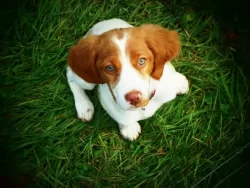 The Brittany is much like other hunting dogs – pointers and retrievers – in size and stature. He is solid and strong but not heavy. He is compact with an average size head and floppy ears, docked tails or short natural tails, and expressively intelligent looking eyes. He is athletic, energetic, and alert. He has a long, elastic and free gait. The French dog is smaller and the dog with black spots is accepted. The American Brittany is larger and only a tri-color of orange, liver and white is acceptable.
 The Akita Inu is a large, noble, and powerful breed known for its dignified presence, strong loyalty, and quiet confidence. Originally bred for hunting and guarding, Akitas are naturally protective, courageous, and independent thinkers.
They form deep bonds with their family but are often aloof with strangers. Calm and clean by nature, they rarely bark without reason and carry themselves with elegance and strength.
Their double coat is thick and weather-resistant, requiring regular grooming, and they shed heavily, especially seasonally.
While intelligent, Akitas can be stubborn, so they thrive best with experienced owners who can offer consistent training and leadership. With proper care and socialization, the Akita Inu is a devoted, majestic companion.
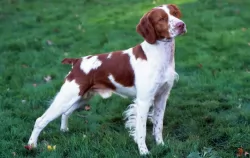 The Brittany is particularly trainable and friendly. They love to play and are sweet-natured. They don’t due well with harsh correction though and a stern look will cause them to wither. Socialize them young or they can become shy around strangers. They are loyal and family oriented. They can easily become attached to their humans.
 The Akita Inu is generally a strong and resilient breed, but it is prone to several genetic and breed-specific health issues.
Common concerns include hip and elbow dysplasia, progressive retinal atrophy (PRA), and hypothyroidism, all of which can affect mobility, vision, and metabolism.
The breed is also susceptible to autoimmune disorders like VKH-like syndrome and sebaceous adenitis, a skin condition causing hair loss and irritation. Additionally, Akitas may experience bloat (gastric torsion), a life-threatening emergency common in deep-chested dogs.
Regular veterinary care, proper diet, and responsible breeding practices are essential to help minimize health risks and ensure a long, healthy life.
 The breed is a hardy one and Brittanys are mostly healthy dogs. In Europe 1 in 5 dogs dies of old age and that age is usually 14 or 15 years. They do have a few issues that they may be susceptible to. These would include:
 Caring for an Akita Inu involves commitment, consistency, and understanding of the breed's unique needs. They require regular grooming, especially during seasonal shedding, with brushing at least 2–3 times a week and daily during coat blow periods.
Akitas thrive on routine exercise, such as long walks or playtime in a secure area, but they aren’t overly energetic. Training and socialization should start early, using positive reinforcement and calm, firm leadership to manage their independent and protective nature.
They are best suited to homes where they are the only pet or properly introduced to others. Akitas are clean, quiet, and typically bond closely with their family, so providing mental stimulation, affection, and clear boundaries is key.
Regular vet checkups, a balanced diet, and proper social interaction help keep your Akita healthy, happy, and well-adjusted.
 Don’t overfeed your Brittany. Keep him at hunting weight by feeding a half a cup up to 2 cups per day depending on the size of your dog and activity levels. Serve this in two meals not one.
Ears – prone to infections – make sure that you check them and wipe them out routinely to prevent infections.
Hip Dysplasia – bones don’t fit well into joints – this can be genetic or otherwise, causing lameness and arthritis. If severe it can require surgery to correct.
Epilepsy – mild or serious seizures are possible. This can be genetic/hereditary but is set off by an infectious disease of the brain, head injury, poison, tumor, or metabolic disorder. There is no cure, but medication can be very effective.
Hypothyroidism – Low levels of thyroid hormone – can cause drooping eyelids, obesity, lethargy, mental difficulties or irregular heat cycles or all of this. Medication is available as it is for humans but must be taken daily for the rest of the dog’s life
Canine Discoid Lupus Erythematosus – autoimmune disease that is rare in dogs. Cats and humans can also have it. It is a skin disease and does not become the more serious and deadly Systemic Lupus. The Discoid version of this disease causes loss of pigmentation and a scaling on the nose which can then progress to the skin around the ears, eyes and genitals. There could be ulcerated lesions and tissue death in more severe cases. Sun exposure can make the condition worse.
The Brittany is a hunting dog that acts like a pointer but will retrieve fowl and birds in the water or on land. If you don’t hunt, the Brittany can still be your family dog. They need lots of exercise and mental stimulation. They need a job if they are not going to hunt and expect them to be distracted by every bird they see. Try flyball, agility, FAST CAT, field trials and dock diving. They are very task oriented and have boundless energy. They excel at obedience and confirmation as well.