 MyDogBreeds
 Akita Inu is originated from Japan but Chinese Crested Dog is originated from Mexico. Akita Inu may grow 41 cm / 17 inches higher than Chinese Crested Dog. Akita Inu may weigh 34 kg / 75 pounds more than Chinese Crested Dog. Both Akita Inu and Chinese Crested Dog has almost same life span. Akita Inu may have more litter size than Chinese Crested Dog. Akita Inu requires Moderate maintenance. But Chinese Crested Dog requires Low maintenance
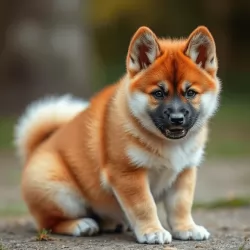 The Akita Inu, originating from Japan's snowy Akita Prefecture, has a long-standing legacy as a powerful hunting dog and loyal companion. Bred in the 1600s to track large game like boar and bear, the Akita quickly earned its place among Japanese nobility as a guardian and symbol of courage.
Its dignified nature and unwavering loyalty were immortalized in the true story of Hachikō, an Akita who waited nearly a decade for his deceased owner at a Tokyo train station. This devotion captured national and global admiration, leading to the breed’s recognition as a national treasure in Japan.
After World War II, American soldiers introduced Akitas to the West, giving rise to a larger, more robust variation known as the American Akita. Today, the Akita Inu remains a cherished breed worldwide for its strength, loyalty, and quiet dignity.
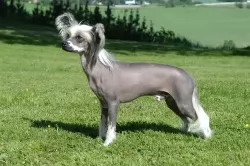 The Chinese Crested Dog is believed to have its origins in Africa and there are many texts from the 19th Century that feature an Africa Hairless Terrier that resembles the Chinese Crested. However, the scientific and genetic evidence leads to an origin that is shared with the Mexican Hairless Dog. Any way you look at it the dog did not originate in China. The Chinese were very fond of this breed and used them on their ships to control the rat populations. This is probably how they got their name.
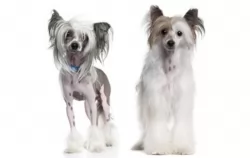
There are two types of Chinese Crested Dogs – the well known Hairless, and the lesser known Powderpuff. The Hairless type is better known because they carry the dominant trait and the Powderpuff is recessive. However, this recessive gene is carried by every Chinese Crested Dog so the Powderpuff can show up in all litters even those of two Hairless Crested. Two Powderpuffs will not result in any Hairless in their litters as the Powderpuff does not have the gene for the Hairless.
The “Crest Haven” Kennel was opened by Debora Wood in the 1950’s to breed the Chines Crested Dog. At the same time Gypsy Rose Lee, of the famous burlesque shows, was also breeding Chinese Crested Dogs. The two lines of Crested bred by Americans came together following the death of Rose Lee. Every Chinese Crested that lives today can trace their heritage directly to these two breeding lines. In 1959, Debra Wood founded the American Hairless Dog Club which became a part of the American Chinese Crested Club or the ACCC in 1978. This organization then became the breed’s parent club after AKC (American Kennel Club) recognized the breed in 1991. Prior to this the Federation Cynologique Internationale, recognized the breed in 1987, the United Kingdom (UK)the Kennel Club recognized them in 1981 and the Australian National Kennel Council recognized the Crested in 1995.
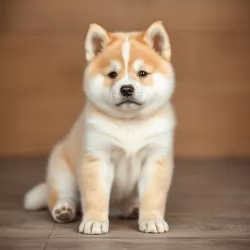 The Akita Inu is a large, powerful, and dignified dog breed known for its striking appearance, quiet nature, and unwavering loyalty.
Originating from Japan, it has a broad head, erect triangular ears, and a plush double coat that comes in red, white, brindle, or sesame, with characteristic urajiro (whitish markings). The Akita carries itself with pride and confidence, often aloof with strangers but deeply affectionate and protective toward its family.
Calm, intelligent, and strong-willed, the breed requires early socialization and firm, consistent training. Though not ideal for first-time owners, the Akita Inu is a loyal guardian and devoted companion for those who understand and respect its independent spirit.
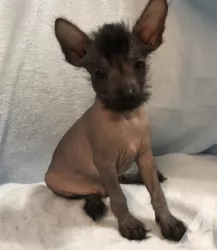 This is a toy breed and very small. The Hairless and the Powderpuff are two types of the same breed, although they do not look like it. The Hairless type can have fur anywhere on its body, but it will not have much. It will have hair on its paws, tail and head. The Powderpuff on the other hand will have a thick double coat. When discussing the color of the hairless, one is referring to the color of its skin. It can range from flesh to black.
The Powderpuff has a soft, thick, straight double coat. It can have very long hair. The Hairless must have its skin taken care of and protected. Both types of Chines Crested are small in stature with well proportioned, athletic bodies.
 The Akita Inu is a large, noble, and powerful breed known for its dignified presence, strong loyalty, and quiet confidence. Originally bred for hunting and guarding, Akitas are naturally protective, courageous, and independent thinkers.
They form deep bonds with their family but are often aloof with strangers. Calm and clean by nature, they rarely bark without reason and carry themselves with elegance and strength.
Their double coat is thick and weather-resistant, requiring regular grooming, and they shed heavily, especially seasonally.
While intelligent, Akitas can be stubborn, so they thrive best with experienced owners who can offer consistent training and leadership. With proper care and socialization, the Akita Inu is a devoted, majestic companion.
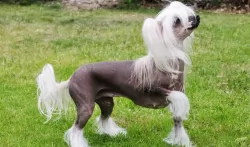 The Chines Crested Dog is very intelligent and love to perform for audiences. They do well with obedience courses and they are very affectionate lap dogs. They want to be with you and on you or in your arms all the time. They are loyal and playful.
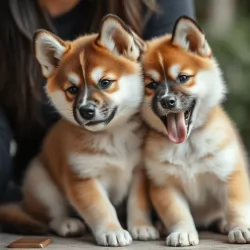 The Akita Inu is generally a strong and resilient breed, but it is prone to several genetic and breed-specific health issues.
Common concerns include hip and elbow dysplasia, progressive retinal atrophy (PRA), and hypothyroidism, all of which can affect mobility, vision, and metabolism.
The breed is also susceptible to autoimmune disorders like VKH-like syndrome and sebaceous adenitis, a skin condition causing hair loss and irritation. Additionally, Akitas may experience bloat (gastric torsion), a life-threatening emergency common in deep-chested dogs.
Regular veterinary care, proper diet, and responsible breeding practices are essential to help minimize health risks and ensure a long, healthy life.
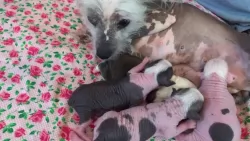 The Chinese Crested Hairless version must have its skin take care of much in the same way we take care of our own. It will burn if exposed to too much sun without protection. They can suffer from dry skin, acne, need moisturizing cremes. They get skin allergies as well and it is important to take care of the skin instead of the brushing you don’t have to do.
The Chinese Crested does not suffer from most of the diseases other toy breeds do. They can have ye issues. The Hairless have a “primitive mouth” . They have pointy teeth and poor dentition. This is not true of the Powderpuffs however. Their eye issues include:
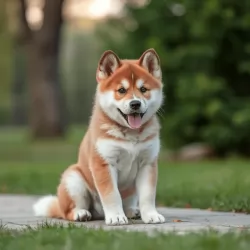 Caring for an Akita Inu involves commitment, consistency, and understanding of the breed's unique needs. They require regular grooming, especially during seasonal shedding, with brushing at least 2–3 times a week and daily during coat blow periods.
Akitas thrive on routine exercise, such as long walks or playtime in a secure area, but they aren’t overly energetic. Training and socialization should start early, using positive reinforcement and calm, firm leadership to manage their independent and protective nature.
They are best suited to homes where they are the only pet or properly introduced to others. Akitas are clean, quiet, and typically bond closely with their family, so providing mental stimulation, affection, and clear boundaries is key.
Regular vet checkups, a balanced diet, and proper social interaction help keep your Akita healthy, happy, and well-adjusted.
 Like several other toy breeds, it is easy to overfeed the Chinese Crested because it has such a small stature. Feed once or twice a day but never more than one fourth of a cup total for the day.
Luxating Patellas – kneecaps move out of place and cause lameness and arthritis
Legg-Perthes Disease – a hip disorder where blood does not reach the head of the femur. The bone dies, and growth stops.
Canine Multiple System Degeneration (CMSD) – a progressive movement disorder can call falls
This Breed does not need an excessive amount of exercise, but they do enjoy running. They are competitive and athletic, so they can excel at flyball, lure coursing, agility and obedience. They are sensitive and trainable enough to become a therapy dog.