 MyDogBreeds
 Akita Inu is originated from Japan but Franzuskaya Bolonka is originated from France. Akita Inu may grow 44 cm / 18 inches higher than Franzuskaya Bolonka. Akita Inu may weigh 34 kg / 75 pounds more than Franzuskaya Bolonka. Both Akita Inu and Franzuskaya Bolonka has almost same life span. Akita Inu may have more litter size than Franzuskaya Bolonka. Akita Inu requires Moderate maintenance. But Franzuskaya Bolonka requires Low maintenance
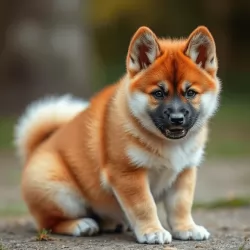 The Akita Inu, originating from Japan's snowy Akita Prefecture, has a long-standing legacy as a powerful hunting dog and loyal companion. Bred in the 1600s to track large game like boar and bear, the Akita quickly earned its place among Japanese nobility as a guardian and symbol of courage.
Its dignified nature and unwavering loyalty were immortalized in the true story of Hachikō, an Akita who waited nearly a decade for his deceased owner at a Tokyo train station. This devotion captured national and global admiration, leading to the breed’s recognition as a national treasure in Japan.
After World War II, American soldiers introduced Akitas to the West, giving rise to a larger, more robust variation known as the American Akita. Today, the Akita Inu remains a cherished breed worldwide for its strength, loyalty, and quiet dignity.
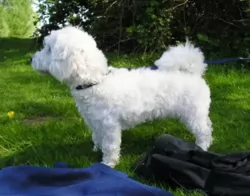 The Franzuskaya Bolonka in France is known as the Tsvetnaya Bolonka in Russia and in Germany as the Bolonka Zwetna. All of these translate to Colored Bolognese. It is known as the “Pride of Russia” and was rediscovered by the Russians following the thaw of the Cold War. It is also sometimes translated as a colored lapdog.
The Bolonka is a rare breed in the toy category with ancestors in the Bichon Friese line. This little dog looks very much like the national dog of Cuba – the Havanese. In addition to the Bichon other small dogs in this ancestral line include the Shih Tzu, Toy Poodle, and Pekingese as well as the French, Italian and German Bolonka. They are often confused with the Bolognese as both breeds appear in various countries and have many similarities.
In all countries the common name for this dog is the Bolonka. They have a variety of names and nick names depending on the country. In addition to being the “Pride of Russia” he is called a Russian colored Bichon, Czechs call it the Bareyny Bolonsky, the Germans since 1980 have called it the Bolonka Zwetna but the Nordic Kennel Union does not recognize the Zwenta only the Russian Twetnaya.
The French version is seen to be the original with its ancestry dating back to the 18th century when Russian nobles were presented with a Bolonka by Louis XIV of France, and others migrated with the army of Napoleon to Russia. They were still known as the Bolonka of France. Small dogs were not popular in Russia due to the need for dogs that could work on farms and/or hunt. Particularly during the Soviet years, they were considered unnecessary. No Bolonkas were imported to Russia during the Soviet regime, so only localized breeding took place. The goal of breeders in the Soviet Union was to develop a toy dog, lap sized with an apartment living temperament.
During the cold war the Russians sent a pair of breeding Franzuskaya Bolonka to East Germany and they began to develop the breed there as well. At the same time the colored versions of the Bolonka were being bred. The Franzuskaya Bolonka is recognized by the Verband Dur Das Deutsche Hundewesen (VDF) while the other colored breeds are not. The white Bolonka is not recognized by the Federation Cynoloqique Internationale as a breed separate from the Bolognese but as simply another version. Individual clubs throughout the world recognized one or more versions of the Bolonka. They are thought to be the rarest within the Bichon family.
Today’s Bolonka is owed by Prince William and Princess Kate, giving the breed more publicity than it has had in many years.
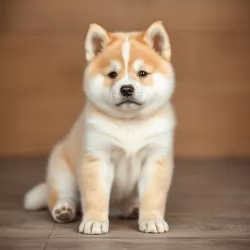 The Akita Inu is a large, powerful, and dignified dog breed known for its striking appearance, quiet nature, and unwavering loyalty.
Originating from Japan, it has a broad head, erect triangular ears, and a plush double coat that comes in red, white, brindle, or sesame, with characteristic urajiro (whitish markings). The Akita carries itself with pride and confidence, often aloof with strangers but deeply affectionate and protective toward its family.
Calm, intelligent, and strong-willed, the breed requires early socialization and firm, consistent training. Though not ideal for first-time owners, the Akita Inu is a loyal guardian and devoted companion for those who understand and respect its independent spirit.
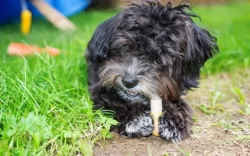 The Franzuskaya Bolonka is neither heavy boned nor fine boned. They are a toy breed with a moderate bone structure. The ears are neither long nor short and they have tails that touch the back at the tip. Like others in the Bichon family the Franzuskaya Bolonka does not shed. He is a sturdy little dog and the male has a distinct beard and moustache that the females of the breed do not. They have long coats that are wavy and curly. The Franzuskaya Bolonka is of course only white. The Russian version might be brown, red, black, wolf-gray, gray and of course white.
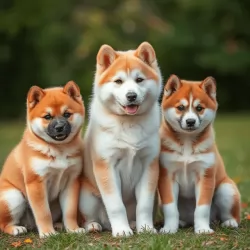 The Akita Inu is a large, noble, and powerful breed known for its dignified presence, strong loyalty, and quiet confidence. Originally bred for hunting and guarding, Akitas are naturally protective, courageous, and independent thinkers.
They form deep bonds with their family but are often aloof with strangers. Calm and clean by nature, they rarely bark without reason and carry themselves with elegance and strength.
Their double coat is thick and weather-resistant, requiring regular grooming, and they shed heavily, especially seasonally.
While intelligent, Akitas can be stubborn, so they thrive best with experienced owners who can offer consistent training and leadership. With proper care and socialization, the Akita Inu is a devoted, majestic companion.
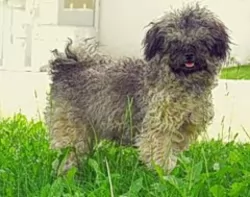 The Bolonka is great with kids, just avoid too intense play.
The Bolonka is a playful, lap dog with a lot of love to offer
Good adaptability great in the city in apartments and great in the country as well
They are very smart and love to learn. Being firm but beyond firm is also kind.
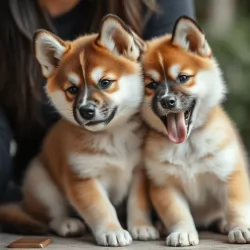 The Akita Inu is generally a strong and resilient breed, but it is prone to several genetic and breed-specific health issues.
Common concerns include hip and elbow dysplasia, progressive retinal atrophy (PRA), and hypothyroidism, all of which can affect mobility, vision, and metabolism.
The breed is also susceptible to autoimmune disorders like VKH-like syndrome and sebaceous adenitis, a skin condition causing hair loss and irritation. Additionally, Akitas may experience bloat (gastric torsion), a life-threatening emergency common in deep-chested dogs.
Regular veterinary care, proper diet, and responsible breeding practices are essential to help minimize health risks and ensure a long, healthy life.
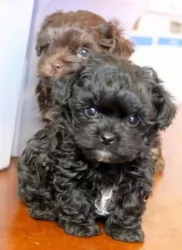 Medical issues are not fully documented because of the rarity of the breed and the years of isolation in the Soviet Union.
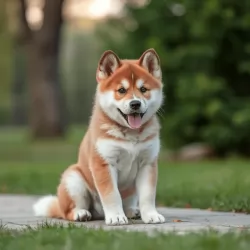 Caring for an Akita Inu involves commitment, consistency, and understanding of the breed's unique needs. They require regular grooming, especially during seasonal shedding, with brushing at least 2–3 times a week and daily during coat blow periods.
Akitas thrive on routine exercise, such as long walks or playtime in a secure area, but they aren’t overly energetic. Training and socialization should start early, using positive reinforcement and calm, firm leadership to manage their independent and protective nature.
They are best suited to homes where they are the only pet or properly introduced to others. Akitas are clean, quiet, and typically bond closely with their family, so providing mental stimulation, affection, and clear boundaries is key.
Regular vet checkups, a balanced diet, and proper social interaction help keep your Akita healthy, happy, and well-adjusted.
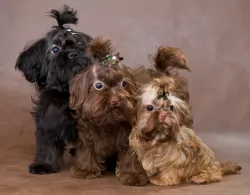 Feed at least 3 meals a day. Feed one fourth of a cup daily split into three meals of a high quality puppy food.
Feed at least 2 meals per day. Feed one half of a cup daily split into two meals of a high quality dry food.
Fairly healthy breed due to isolation during cold war
The Franzuskaya Bolonka is developed as a lap dog but that does not mean he doesn’t need daily exercise. He loves to play but play gently and not for any length of time. They like to chase balls, play hide and seek and any tricks you want to teach them.