 MyDogBreeds
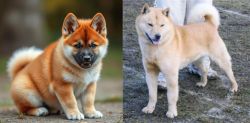 Both Akita Inu and Hokkaido are originated from Japan. Akita Inu may grow 20 cm / 8 inches higher than Hokkaido. Akita Inu may weigh 10 kg / 22 pounds lesser than Hokkaido. Both Akita Inu and Hokkaido has same life span. Akita Inu may have more litter size than Hokkaido. Both Akita Inu and Hokkaido requires Moderate maintenance.
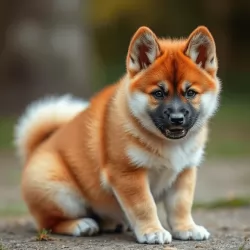 The Akita Inu, originating from Japan's snowy Akita Prefecture, has a long-standing legacy as a powerful hunting dog and loyal companion. Bred in the 1600s to track large game like boar and bear, the Akita quickly earned its place among Japanese nobility as a guardian and symbol of courage.
Its dignified nature and unwavering loyalty were immortalized in the true story of Hachikō, an Akita who waited nearly a decade for his deceased owner at a Tokyo train station. This devotion captured national and global admiration, leading to the breed’s recognition as a national treasure in Japan.
After World War II, American soldiers introduced Akitas to the West, giving rise to a larger, more robust variation known as the American Akita. Today, the Akita Inu remains a cherished breed worldwide for its strength, loyalty, and quiet dignity.
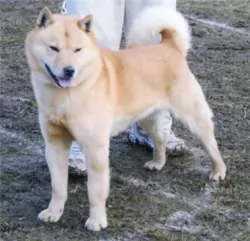 The Hokkaido breed originates in Japan and is also called Ainu-ken, Ainu dog, Seta or Do-ken. The last being its common name in Japan. It is believed that the Hokkaido is descendent from the Japanese Matagi-ken, meaning hunting dog, deer hunting dog or bear hunting dog. It was the Ainu peoples that brought the breed to Tohoku. Many years later the Yayoi people brought in another breed of hunting dogs. These breeds were in isolation for most of their existence and therefore they had little influence on the further development of other breeds.
The Ainu dog was used in searches as well as hunting and became in 1937 “a rare species in Japan that is protected by law”. At that time the Official Name of the breed was set in place as Hokkaido-Inu. But they are still called Hokkaid0-Ken by most Japanese people.
This is a very rare breed of dog. It is hardly known outside of Japan and in country there are about ten to twelve thousand remaining. Of those about nine hundred to one thousand are registered in Japan every year. It is guessed that less than thirty exist outside Japan.
The Hokkaido breed is the oldest Japanese breed of dogs. Today they are great indoor companions, loyal and friendly. Most people in Japan still call them the Ainu dog.
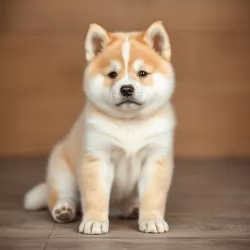 The Akita Inu is a large, powerful, and dignified dog breed known for its striking appearance, quiet nature, and unwavering loyalty.
Originating from Japan, it has a broad head, erect triangular ears, and a plush double coat that comes in red, white, brindle, or sesame, with characteristic urajiro (whitish markings). The Akita carries itself with pride and confidence, often aloof with strangers but deeply affectionate and protective toward its family.
Calm, intelligent, and strong-willed, the breed requires early socialization and firm, consistent training. Though not ideal for first-time owners, the Akita Inu is a loyal guardian and devoted companion for those who understand and respect its independent spirit.
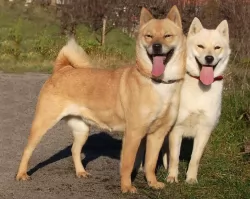
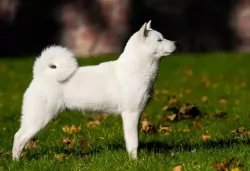
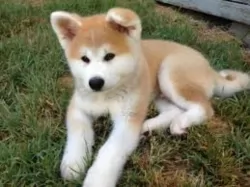 The Hokkaido breed is medium in size but very strong in build. Dogs bred outside Japan tend to be smaller. They have wide, deep chests, and long thick coats compared with Japanese dogs from other breeds. It is a double coat of long fur on top and short softer fur underneath for the second coat. Their ears are triangular and small while their eyes have a triangle outline. The double coat could be sesame, white, red, black, black and tan and wolf-gray.
They are an intelligent breed with an impulsive gait. They are alert, courageous and suspicious. They were used for guarding the city gates. Their skull is flat and broad and the tongue, like the chow chow, is blueish. black. With a black nose and a wedge shaped muzzle, the Hokkaido is a handsome dog. His lips are with black and tight. High set, thick tail over the back or slightly curved to the side.
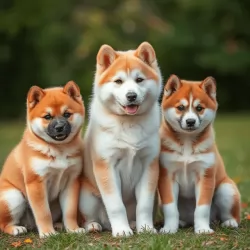 The Akita Inu is a large, noble, and powerful breed known for its dignified presence, strong loyalty, and quiet confidence. Originally bred for hunting and guarding, Akitas are naturally protective, courageous, and independent thinkers.
They form deep bonds with their family but are often aloof with strangers. Calm and clean by nature, they rarely bark without reason and carry themselves with elegance and strength.
Their double coat is thick and weather-resistant, requiring regular grooming, and they shed heavily, especially seasonally.
While intelligent, Akitas can be stubborn, so they thrive best with experienced owners who can offer consistent training and leadership. With proper care and socialization, the Akita Inu is a devoted, majestic companion.
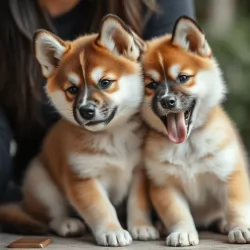 The Akita Inu is generally a strong and resilient breed, but it is prone to several genetic and breed-specific health issues.
Common concerns include hip and elbow dysplasia, progressive retinal atrophy (PRA), and hypothyroidism, all of which can affect mobility, vision, and metabolism.
The breed is also susceptible to autoimmune disorders like VKH-like syndrome and sebaceous adenitis, a skin condition causing hair loss and irritation. Additionally, Akitas may experience bloat (gastric torsion), a life-threatening emergency common in deep-chested dogs.
Regular veterinary care, proper diet, and responsible breeding practices are essential to help minimize health risks and ensure a long, healthy life.
 Often breeds that are isolated like the Hokkaido, have a pretty good health history but there are a few serious issues that they face.
1/3 of all dogs have it while 2/3 are carriers. This disease is congenital and there is no cure. It affects the sclera, retina and choroid. It can be mild or it can cause blindness.
Affecting joints and cause arthritis and lameness.
Floating kneecap – not as prevalent here as in smaller dogs.
Could be mild or serious. Could require a pacemaker.
Seizures of an unknown origin. Can be treated with medication not cured.
Excessive, uncontrollable urge to drink large amounts of fluid without a stimuli.
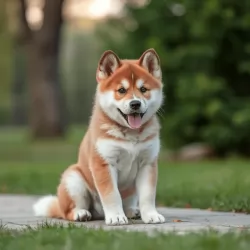 Caring for an Akita Inu involves commitment, consistency, and understanding of the breed's unique needs. They require regular grooming, especially during seasonal shedding, with brushing at least 2–3 times a week and daily during coat blow periods.
Akitas thrive on routine exercise, such as long walks or playtime in a secure area, but they aren’t overly energetic. Training and socialization should start early, using positive reinforcement and calm, firm leadership to manage their independent and protective nature.
They are best suited to homes where they are the only pet or properly introduced to others. Akitas are clean, quiet, and typically bond closely with their family, so providing mental stimulation, affection, and clear boundaries is key.
Regular vet checkups, a balanced diet, and proper social interaction help keep your Akita healthy, happy, and well-adjusted.
 The puppy needs about 300 -400 calories per day in 3-4 servings per day
The adult dog needs about 250-350 calories a day to maintain good weight and health. Feed 2-3 times per day.
Strong, stamina
These dogs love exercise and definitely need it. They will get to be anxious or bored if they don’t get enough exercise. A back yard run is fine but remember that the Hokkaido is a jumper and make sure your fence is at least six feet high. They need daily walks even if you have a fenced yard. Martindale collars or harnesses are needed when walking them.
These dogs love games and competitive activities. They are good at hunting and guarding of course. There are other activities they can excel at and enjoy jogging, biking with you, and hiking. In competition they enjoy and are good at agility, flyball, lure coursing, rally, weight pull, dock diving, and obedience. They do not participate in confirmation.
 Children friendliness very good with every member of the family and that includes children