 MyDogBreeds
 Both Bagel Hound and Black Mouth Cur are originated from United States. Bagel Hound may grow 19 cm / 8 inches higher than Black Mouth Cur. Bagel Hound may weigh 24 kg / 52 pounds lesser than Black Mouth Cur. Bagel Hound may live 3 years less than Black Mouth Cur. Bagel Hound may have less litter size than Black Mouth Cur. Both Bagel Hound and Black Mouth Cur requires Low maintenance.
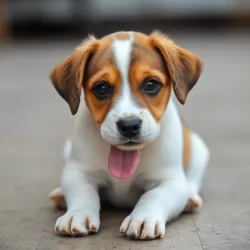 The Bagel Hound is a hybrid breed that emerged in the early 2000s by crossing the Beagle and Basset Hound. Both parent breeds have ancient origins—Beagles were bred for hunting small game with their exceptional sense of smell, while Basset Hounds, with their calm demeanor and powerful scenting ability, were also used for hunting.
The Bagel Hound was developed to combine the Beagle’s playful, energetic nature with the Basset Hound’s laid-back, affectionate temperament. Though relatively new, this hybrid quickly became popular for its friendly disposition, moderate energy, and suitability as a family companion.
 The Black Mouth Cur was developed in the southern United States but comes from a long line of Curs and Cur type dogs that date back to pre-Christian times as herding and hunting dogs, protectors and guard dogs. The breed itself is not officially recognized by the AKC (American Kennel Club). No dog with the word Cur in its name is recognized by the AKLC. However, the Black Mouth Cur is absolutely considered a purebred dog expected to be a working dog and protect its family. The Cur is recognized by the United Kennel Club as a scent hound. The spelling of the Cur line might include Curre, Cu, and Kurre. All these dogs were hardworking herders, guard dogs, and hunters. Most of European herding dogs have their roots in the Cur lines. This is true as well for the Australian and American herders as well. Although all these herding dogs have common roots in the Cur, they do not necessarily have common ways of herding. Some harass individuals and others circle the herd and bark, still others like the Border Collie, control the herd with their eyes. The original Curs were responsible for herding a non-docile flock of tough, resilient animals three thousand years ago in Asia and Europe. The Cur would be responsible for rounding up any stray animal and brining it back to the herd.
The ancient Cur line developed into the many different herding breeds we know today, as well as into several different kinds of hunters and guard dogs in different areas of the world, and in different climates. Many different countries and cultures aided in the development of the Curs. Probably the group with the most influence into this breed were the Celts. Just as they were with breeds of livestock, cattle and horses, they were instrumental in the breeding the best dogs to the best dogs to get the best dogs. Needing a dog that would be gentle enough to be around their children and family, yet aggressive and tough enough to dominate semi-feral livestock and assist in hunting, the Celts mix a variety of dogs together to get the earliest Cur. They particularly crossed their dogs with the herding dogs of the Greeks and the Molosssi barbarians. Since the Celts were spread out across Europe each community had their own version of a Cur based on what functions they needed the dog to do. They would breed their best dogs with the best dogs of visitors or during raids. These dogs would then be treated better than the other and the best workers had the best food, the best resting places and more. Their lines were continued and expanded. Eventually the Celtic people and their dogs were confined to Great Britain, Wales and Ireland.
Finally, the Industrial Age began, and the Curs’ numbers diminished. They noticed the success of the dog shows such as Crufts. They set out to save the European Curs and increase their usefulness. Director Prof. Adolphe Reul, Clinical Director of the Club du Chien de Berger Belge developed the Belgium standard for the Cur in the late 1800’s. There were three types of coats allowed in the standard – long, short and rough. They started out with bob tails but soon developed the more protective full, long tail. When the Anglo-Saxons took over England and pushed the Celts into Cornwall and Wales, the Curs were crossed with Spizts and creating a less aggressive, long haired dog that worked well in that climate and controlling sheep with their eyes. These were the Shepard’s Cur. This led to a variety of Irish breeds by 800AD. There were guard dogs known as Archu. The hunting dogs were called Milchu and there were three types of herding dogs, depending upon who they herded. The Irish also had a pet dog that might catch vermin. Thus, the Cur became divided not by ancestry or breeding but by function – hunting, herding and guarding. Pets often fell into the guard dog group.
Cattle dogs were developed into their own special breeds. They had to obey people yet dominate an animal much larger than themselves without injuring the animals. They developed into Herders and Heelers. Heelers had to work alone and drive the herd out of the grain fields, while the Herders clumped the herd into a group and moved it as the shepherd wanted. Heelers were known to nip the heels of the herd without getting hurt themselves because of size. From these groups came dogs like the Welsh Corgis. Next came the Norman influence on the Cur dogs when they conquered England. The Normans had hounds used for hunts. These hounds bayed and howled while hunting while the Curs were silent hunters. The Cur dog did not chase the prey and therefore they really were not “sporting” dogs. The Normans killed off any guard dogs and derided the non-attacking Curs. They began to call all mixed breed dog “Cur”. Thus, the name came to mean a mutt instead of the noble purebred dog the Cur had been. During this time there were additional curs coming in from Ireland that were more aggressive than the short haired English Curs. “Warners” were Curs that would only bark when there was a stranger or intruder. They would not attack. Then there were the toyish curd who were named dancers and were more or less pets that did tricks for money.
With all this mixture of the different kinds and lines of Curs the British Cur declined. By 959 they were being replaced by the Scotch Colley or Border Collie and breeding Curs to Collies became the rage. Soon the British Curs were extinct in the British Isles. Laws were passed that eventually led to thousands of workers and their Curs to leave Britain. Selective breeding also produced more docile breeds of cattle and sheep. Smaller dogs like the Corgi were efficient at herding these animals,. So, in Britain the Curs died out but they continued to live in America. This is where the Black Mouth Cur came into being. Within the American Curs there are a variety of line dependent upon location and function. There were the n Black Mouth Cur, the Foundation Black Mouth Cur, The Lander Yellow Mouth Cur and the Florida Black Mouth Cur. In 1964 the American Kennel Club (AKC) accepted the Black Mouth Cur. They were classified as herders. The Black Mountain Cur got its start in Alabama.
 The Bagel Hound is a medium-sized, affectionate hybrid breed resulting from the cross between the Beagle and the Basset Hound. With a sturdy, muscular body and a short, dense coat, this breed combines the best features of its parents.
Typically, a Bagel Hound has a short to medium-length coat that can come in a variety of colors, including tri-color (black, white, and tan), bi-color, or combinations of tan, white, and black. Their face is expressive with long, floppy ears and a soft, gentle gaze, a trait inherited from both parent breeds.
This breed is known for being friendly, affectionate, and playful, making it an excellent companion for families, including those with children or other pets. While generally calm, they do have a stubborn streak due to their strong scenting instincts, so consistent training is important. Despite their playful nature, they are not overly energetic and are typically content with moderate exercise, such as daily walks and playtime.
The Bagel Hound has a balanced temperament—loyal, loving, and a little mischievous—which makes them a popular choice for families and first-time dog owners who are willing to invest in training and care.
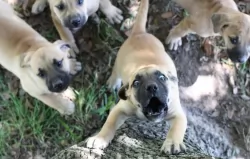
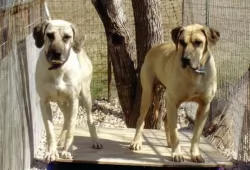
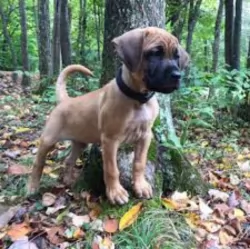 This is a typical larger working dog of the herding and hunting type. The Black Mouth Cur is a rugged, well-muscled dog that has a coat of various colors and mostly fawn or mahogany. According to the UKC (United Kennel Club) standard piebald or white is not accepted. The AKC does not recognize the Black Mouth Cur so they do not have a standard. Any dog with “Cur” in their name should fit the description of a general, drop-eared, short-coated, ranch or farm working dog – herding dog. The Black Mouth Cur fits this description and is a family dog as well. The coat can be fine or coarse, less than 10% of the coat is white and it cannot be spotted, merle, mottled or albino. There eyes can be yellow, green or brown and the they should have black mask. They have a square muzzle with black around the lips and the mouth including inside the mouth, cheeks and gum. Unlike the chow however, they do not have a black tongue. The have medium sized ears, that hang down and can either match the muzzle or the coat in color. Their tail can be docked, bobbed, medium or long. Their feet are compact and the pads tough, large and well-cushioned. They might have webbed toes though not all do.
 The Bagel Hound is a friendly, affectionate, and playful breed, combining the best traits of its Beagle and Basset Hound parents. They are medium-sized with a sturdy, muscular build, and a short, dense coat. Bagel Hounds are social and enjoy being around people, often following their owners around and seeking attention. They have a gentle, patient nature, making them great with children and other pets.
While they are generally calm, they are also curious and scent-driven, which can make them a bit stubborn and prone to distractions. Their affectionate personality and loyal nature make them great companions, though they benefit from consistent training and exercise.
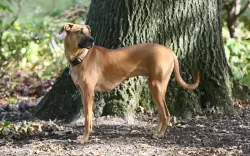 The Black Mouth Curs are very social and very good family dogs. They are very smart but need to bond with their owner before you can begin training them. They are sensitive and don’t respond well to negative training techniques or even being yelled at. They need humans to spend their time with. They get depressed and anxious if they do not get enough exercise. They are protective of their family and their home, as they are territorial. For hunters this is the dog – there is none better. They can hunt squirrel and deer, or they can hunt bears, racoons and boar. If they catch the prey, they will instantly kill it if it isn’t too large. With very large prey they will corner or tree it and bay at it. They are fearless and loyal and good with children. Training is vital though they will train themselves if you do not. They need a strong person to take charge and they will do anything to please them. The Cur needs to be convinced that the human is the pack leader and is above him in rank. Never allow them to walk ahead of you on a leash. They are very predictable if you understand them, intelligent and even tempered. Do not leave them alone with pets other than dogs. Be careful with young children as these guys play rough.
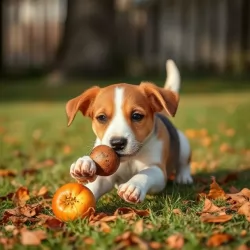 A common genetic condition where the hip joint doesn't fit properly, causing pain and potential arthritis. It can lead to limping or difficulty moving, especially as the dog ages.
The Bagel Hound’s long, floppy ears trap moisture and debris, making them more susceptible to infections. Regular ear cleaning and keeping ears dry can help prevent this issue.
Bagel Hounds love food, and without proper portion control and exercise, they can easily gain weight. Obesity can lead to other health problems like heart disease, joint issues, and reduced life expectancy. Regular exercise and a balanced diet are essential to keep them at a healthy weight.
 Once again, this is an ancient breed with an extremely good health record. They are prone to ear infections and should be watched and cleaned especially when wet. They might be affected by other issues such as mange, cataracts, epilepsy and hip dysplasia. Though these conditions are possible they are unlikely. Puppies can be tested for hip dysplasia and eye issues.
 Daily walks help keep them fit, while interactive play sessions like fetch offer mental and physical stimulation. Avoid overexerting them, especially in hot weather, to prevent exhaustion.
Provide a balanced diet with portion control to maintain a healthy weight. Brush their coat weekly to manage shedding, and clean their ears regularly to avoid infections.
Use positive reinforcement during training for best results. Regular vet check-ups ensure they stay healthy, and keeping an eye on their weight helps prevent obesity.
 This is a working dog, so they will need nutritious meals with plenty of good calories. On the other hand, do not overfeed or free feed them Puppies should eat 3 times a day, 6-month olds should eat twice a day and adults once a day. Some adults will prefer to eat twice a day, smaller amounts as well.
The biggest concern has to be the ears. If they get wet the Black Mouth Cur can get ear infections very easily. They are open to but not especially prone to hip dysplasia, mange, epilepsy and cataracts.
These are very energetic and athletic dogs. They are good at every possible athletic event and activity. They obviously like to herd but they also excel at things like weight pulls, coursing events, tracking, agility and Search and Rescue. At the very least they must have long energetic walks once or twice a day and a yard to run in would be best. They are smart and need physical exercise to keep them occupied. They love to run with you if you jog.