 MyDogBreeds
 Bagel Hound is originated from United States but Chippiparai is originated from India. Bagel Hound may grow 20 cm / 7 inches shorter than Chippiparai. Bagel Hound may weigh 7 kg / 16 pounds more than Chippiparai. Both Bagel Hound and Chippiparai has same life span. Both Bagel Hound and Chippiparai has almost same litter size. Both Bagel Hound and Chippiparai requires Low maintenance.
 The Bagel Hound is a hybrid breed that emerged in the early 2000s by crossing the Beagle and Basset Hound. Both parent breeds have ancient origins—Beagles were bred for hunting small game with their exceptional sense of smell, while Basset Hounds, with their calm demeanor and powerful scenting ability, were also used for hunting.
The Bagel Hound was developed to combine the Beagle’s playful, energetic nature with the Basset Hound’s laid-back, affectionate temperament. Though relatively new, this hybrid quickly became popular for its friendly disposition, moderate energy, and suitability as a family companion.
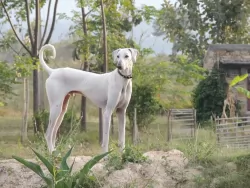 The Chippiparai is a working dog found in India and until recently there has been little interest in the purity of any breed, but rather only an emphasis on the abilities of the dog. They are only beginning to research the origin and history of their native dogs such as the Chippiparai. Not much is known about the origin of the breed except that it is found almost exclusively in Tamil Nadu and Keraia in the southern part of the subcontinent of India. Other than this there is much speculation about the breed’s origin but very little-known facts. It is indeed an ancient breed; however, its origin could be thousands of years ago or simply hundreds of years ago.
• Perhaps it is a descendant of the Saluki as it resembles this breed quite a bit. It has been believed for some time that the Saluki is the original sighthound and the source of all sighthound breeds. The Saluki was very popular in the Middle East, especially in Persia and Arabia from which it could easily have spread to India. It would then have been shared from Northern India to Southern India where the Chippiparai is found.
• Perhaps the Chippiparai is a descendent of sighthounds from Central Asia and Afghanistan – the Tazi, Taigan, Hortaya Borsaya or the Afghan Hound. This part of Central Asia had more trade, influence and contact with the Indian subcontinent early in their history than with any other region. The Chippiparai is considered by some to be more like these sighthounds than like the Saluki and the interaction between these regions has a much longer history than the Middle East and India.
• It is also speculated that the Chippiparai might have been developed completely and uniquely from the local street and working dogs. With the civilization of India being one of the oldest in the world, it is considered a possibility that the Chippiparai is the descendent of the Harappan hunting dogs that probably were developed by the Indus Valley or Harappa roiling class.
Wherever the Chippiparai came from, they were the exclusive property of the wealthy and ruling castes. These upper castes were the only ones that could legally hunt with dogs or afford to feed one. The royal classes of Tiruneivell, Thanjavur, and Madurai all fed the popularity of the breed among the upper castes. They were coursing dogs used to chase down the prey once it was sighted. The Chippiparai are incredibly fast runners and would catch almost any prey and either hold it or kill it for their hunter. The Chippiparai, when not hunting, had to be chained so they would not chase any small animal that they saw. This confinement also added to the purity of the breed as random breeding was prevented.
The southern part of the Indian subcontinent is extremely hot with routine temperatures over 100’. The Chippiparai was developed to withstand these extreme temperatures and is more heat tolerant than most any other breed. They also need very little food and are resistant to the many parasites and diseases found in southern India.
Harboring the belief that Indian dogs were not as good as European ones, the occupying countries of Portugal, France, and Britain, had no interest in the Chippiparai, again leaving the breed to develop naturally on their own with little or no interbreeding. They also received no formal recognition because Indian culture only valued the dog for its working abilities. There was no Indian Kennel Club until 1956.
The Chippiparai is now very rarely and only found in the area of its birth. Many believe the breed is in danger of becoming extinct and even though it is now registered with Indian Kennel Clubs it is not often shown in their dog shows. Lovers of the breed are now attempting to get Indians to recognize that the Chippiparai is a great companion animal and attempting to save the breed.
 The Bagel Hound is a medium-sized, affectionate hybrid breed resulting from the cross between the Beagle and the Basset Hound. With a sturdy, muscular body and a short, dense coat, this breed combines the best features of its parents.
Typically, a Bagel Hound has a short to medium-length coat that can come in a variety of colors, including tri-color (black, white, and tan), bi-color, or combinations of tan, white, and black. Their face is expressive with long, floppy ears and a soft, gentle gaze, a trait inherited from both parent breeds.
This breed is known for being friendly, affectionate, and playful, making it an excellent companion for families, including those with children or other pets. While generally calm, they do have a stubborn streak due to their strong scenting instincts, so consistent training is important. Despite their playful nature, they are not overly energetic and are typically content with moderate exercise, such as daily walks and playtime.
The Bagel Hound has a balanced temperament—loyal, loving, and a little mischievous—which makes them a popular choice for families and first-time dog owners who are willing to invest in training and care.
 The Chippiparai is a typical sighthound although their size and appearance will vary more than that of registered purebred sighthounds. Typically, they will have a long, domed head with small erect ears and dark eyes. Their muzzle will be as deep and wide as the skull but longer. Their legs are straight and long, their chest is roached back and deep, giving them, an appearance very similar to a greyhound or other sighthound.
They have a long curly tail, and their coat can vary greatly in color. They are medium sized, and their coat is short, shiny and close. He is very slender and sleek, which along with his long legs gives him that incredible speed. They are thin with visible ribs.
 The Bagel Hound is a friendly, affectionate, and playful breed, combining the best traits of its Beagle and Basset Hound parents. They are medium-sized with a sturdy, muscular build, and a short, dense coat. Bagel Hounds are social and enjoy being around people, often following their owners around and seeking attention. They have a gentle, patient nature, making them great with children and other pets.
While they are generally calm, they are also curious and scent-driven, which can make them a bit stubborn and prone to distractions. Their affectionate personality and loyal nature make them great companions, though they benefit from consistent training and exercise.
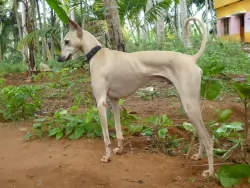 The Chippiparai is a loving, gentle family dog if well socialized, well trained and well exercised. They are very intelligent and need human companionship. Once they are living with a human family, they are very protective of that family. They are for the most part peaceful and quiet dogs. They are loyal and loving but they are not overly affectionate. Cuddlers they are not, and they do not like to play rough with children.
Accepting and loving within the family, the Chippiparai are equally hesitant and shy around strangers. They can be suspicious, but they are not aggressive. They are just very aloof with strangers, yet they hardly ever bark.
 A common genetic condition where the hip joint doesn't fit properly, causing pain and potential arthritis. It can lead to limping or difficulty moving, especially as the dog ages.
The Bagel Hound’s long, floppy ears trap moisture and debris, making them more susceptible to infections. Regular ear cleaning and keeping ears dry can help prevent this issue.
Bagel Hounds love food, and without proper portion control and exercise, they can easily gain weight. Obesity can lead to other health problems like heart disease, joint issues, and reduced life expectancy. Regular exercise and a balanced diet are essential to keep them at a healthy weight.
 There are no clinical studies regarding the health and health history of the Chippiparai, so little is known about their long-term health. However, most who know the breed, believe it is an incredibly healthy one. They seem to have a lot less genetically transmitted health issues than other purebreds. Because of their isolation for centuries in India, they have developed immunities and resistance to most parasites and diseases other dog suffer from.
Because of this you should look for the types of issues that occur in dogs of this size and build. Have them tested by the Canine Eye Registration Foundation and the Orthopedic Foundation for Animals.
 Daily walks help keep them fit, while interactive play sessions like fetch offer mental and physical stimulation. Avoid overexerting them, especially in hot weather, to prevent exhaustion.
Provide a balanced diet with portion control to maintain a healthy weight. Brush their coat weekly to manage shedding, and clean their ears regularly to avoid infections.
Use positive reinforcement during training for best results. Regular vet check-ups ensure they stay healthy, and keeping an eye on their weight helps prevent obesity.
 Do not overfeed your Chippiparai. Feed twice a day and no more than a total of 2.5 cups of high quality dry food.
As mentioned previously the Chippiparai seems to have no genetic diseases or issues and very few acquired ones. However, he is sensitive to anesthesia and some foods. He is intolerant to cold weather and has a hard time with his pads on hard surfaces. Some Chippiparai might experience some of the ailments other breeds like them experience.
Both Elbow and hip are possible. This can cause arthritis and lameness. This occurs when the bone does not fit well into the joint.
This can cause lameness as well. The kneecaps slide over the knee instead of staying in place.
This is a hunting dog and he will want to hunt. They are incredibly fast and need the opportunity to run. Brisk walks will not be enough for this dog. He is very energetic. They will chase any small animals. It is not recommended that you have small pets even small dogs or cats with a Chippiparai. Having been bred for centuries to hunt, they are not likely to respond to any commands if they are off lease and chasing prey. Do not allow them to be off leash unless in a fenced area, and that fence needs to be 8 feet tall as they can easily jump a seven-foot fence. Try they at coursing, agility, fly ball and frisbee competitions.