 MyDogBreeds
 Bagel Hound is originated from United States but Blue Healer is originated from Australia. Bagel Hound may grow 8 cm / 3 inches shorter than Blue Healer. Both Bagel Hound and Blue Healer are having almost same weight. Both Bagel Hound and Blue Healer has same life span. Both Bagel Hound and Blue Healer has almost same litter size. Both Bagel Hound and Blue Healer requires Low maintenance.
 The Bagel Hound is a hybrid breed that emerged in the early 2000s by crossing the Beagle and Basset Hound. Both parent breeds have ancient origins—Beagles were bred for hunting small game with their exceptional sense of smell, while Basset Hounds, with their calm demeanor and powerful scenting ability, were also used for hunting.
The Bagel Hound was developed to combine the Beagle’s playful, energetic nature with the Basset Hound’s laid-back, affectionate temperament. Though relatively new, this hybrid quickly became popular for its friendly disposition, moderate energy, and suitability as a family companion.
 It was in 1802 that George Hall arrived in New South Wales, establishing 2 cattle stations. He had a problem – getting his thousands of cattle to the Sydney markets. He began looking at the prospect of a droving dog and imported a number of dogs of which a blue mottled dog emerged.
The dogs were crossed with dingoes and by 1840 the Halls Heelers were used by the Halls. However with the death of one of the Halls, their cattle stations went to action and the dogs, the Halls Heelers became available.
The dogs attracted attention, and the term ‘Australian Cattle Dog’ was adopted. The name referred to those dogs coming from Thomas Hall's ‘Heelers’. There have been many arguments about the origin of the breed, but the red or blue offspring known as Hall's Heelers were proven cattle drovers, and with further breeding experiments which included the Australian Kelpie, dingoes and the Dalmation, by 1893, the tough, robust working breed known as the Blue Heeler or the Australian Cattle Dog came about.
 The Bagel Hound is a medium-sized, affectionate hybrid breed resulting from the cross between the Beagle and the Basset Hound. With a sturdy, muscular body and a short, dense coat, this breed combines the best features of its parents.
Typically, a Bagel Hound has a short to medium-length coat that can come in a variety of colors, including tri-color (black, white, and tan), bi-color, or combinations of tan, white, and black. Their face is expressive with long, floppy ears and a soft, gentle gaze, a trait inherited from both parent breeds.
This breed is known for being friendly, affectionate, and playful, making it an excellent companion for families, including those with children or other pets. While generally calm, they do have a stubborn streak due to their strong scenting instincts, so consistent training is important. Despite their playful nature, they are not overly energetic and are typically content with moderate exercise, such as daily walks and playtime.
The Bagel Hound has a balanced temperament—loyal, loving, and a little mischievous—which makes them a popular choice for families and first-time dog owners who are willing to invest in training and care.
 Blue Heelers are medium-sized, sturdy, compact dogs who are somewhat longer than tall. The female Blue Heeler measures roughly 43–48cm at the withers, while the male measures about 46–51cm. If your Blue Heeler is in tip top condition, he’ll weigh about 15 to 22 kilograms. They are muscular with pointed, erect ears, dark eyes and long tails which are mostly hanging downwards. Their dense coats are blue- or red speckled and sometimes with tan markings.
The Blue Heeler is a ball of energy and he is clever too. You won’t find him sitting around for too long, and if there is sign of a walk or a ball game, he’s in! He is an independent dog, and although he makes a wonderful family pet, he tends to attach himself to that one special person in his life. He is a natural watchdog and protector of his human family.
 The Bagel Hound is a friendly, affectionate, and playful breed, combining the best traits of its Beagle and Basset Hound parents. They are medium-sized with a sturdy, muscular build, and a short, dense coat. Bagel Hounds are social and enjoy being around people, often following their owners around and seeking attention. They have a gentle, patient nature, making them great with children and other pets.
While they are generally calm, they are also curious and scent-driven, which can make them a bit stubborn and prone to distractions. Their affectionate personality and loyal nature make them great companions, though they benefit from consistent training and exercise.
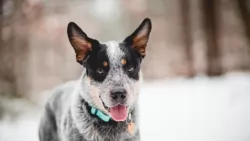 Training and socializing of your Blue Heeler will ensure that your dog does what you want him to. The Blue Heeler is an intelligent, responsive dog and training can benefit him, turning him into an outstanding family pet, good with children and other pets in the home.
He is a playful, affectionate pet who doesn’t take easily to strangers, and this is what makes him such an excellent guard dog.
Your Blue Heeler is not an apartment dog as he requires a lot of exercise, and cooping him indoors for too long with nothing to do can lead to destructive behavior.
Head-strong, independent and robust, your Blue Heeler will need a firm owner who is boss. Add to the firm owner a lot of love and care, and you’ll have a devoted friend.
 A common genetic condition where the hip joint doesn't fit properly, causing pain and potential arthritis. It can lead to limping or difficulty moving, especially as the dog ages.
The Bagel Hound’s long, floppy ears trap moisture and debris, making them more susceptible to infections. Regular ear cleaning and keeping ears dry can help prevent this issue.
Bagel Hounds love food, and without proper portion control and exercise, they can easily gain weight. Obesity can lead to other health problems like heart disease, joint issues, and reduced life expectancy. Regular exercise and a balanced diet are essential to keep them at a healthy weight.
 Australian cattle dogs are healthy and can live up to 15 years of age, but even so there are some genetic conditions that you will need to be aware of following
Eye issues which includes progressive retinal atrophy – this disease is an inherited disease of the retina of the eye where the rod cells are destined to die. Fortunately it is not painful for the dog. There are different types of inherited retinal degenerative diseases in dogs but going into detail with them is beyond the scope of this article. For more information you can chat to your vet.
Recessive piebald elleles - the Blue Heeler has recessive piebald alleles which can produce white in the skin and coat and which is linked to congenital hereditary deafness.
 Daily walks help keep them fit, while interactive play sessions like fetch offer mental and physical stimulation. Avoid overexerting them, especially in hot weather, to prevent exhaustion.
Provide a balanced diet with portion control to maintain a healthy weight. Brush their coat weekly to manage shedding, and clean their ears regularly to avoid infections.
Use positive reinforcement during training for best results. Regular vet check-ups ensure they stay healthy, and keeping an eye on their weight helps prevent obesity.
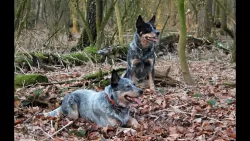 Remember that your Blue Heeler was once a full time cattle dog where he used to become totally and utterly exhausted from herding cattle. This is what he loved – the activity. If you have a Blue Heeler, you will need to provide him with plenty of exercise.
If you live on a farm, your Blue Heeler will be in his element because he can run, walk and swim to his heart’s content. If you keep your Blue Heeler in your back garden, you will need to provide him with ball games, rope games, long walks, running on a leash as you cycle and other activities.
Your Blue Heeler has a short, weather-resistant double coat. He’s not a heavy shedder, but he will have his share of seasonal shedding, so it’s a good idea to get into the habit of brushing him at least twice a week. This will get rid of all those loose hairs and keep his skin healthy by getting the blood flowing and distributing his natural oils.
Giving the best dog food for your Blue Heeler will come from either your home made food or a top quality commercially manufactured dog food. He is such a high energy dog, that your veterinarian can advise you on a dog food specially designed for high energy breeds.
These foods are well balanced and are enriched with amino acids and vitamins, promoting healthy bones and joints. Remember to include some raw meat into your dog’s diet and to ensure a constant source of cool, fresh water.
Ensure your Blue Heeler’s ongoing health by paying attention to ears, nails and teeth.