 MyDogBreeds
 Bagel Hound is originated from United States but Irish Wolfhound is originated from Ireland. Bagel Hound may grow 43 cm / 16 inches shorter than Irish Wolfhound. Bagel Hound may weigh 27 kg / 59 pounds lesser than Irish Wolfhound. Bagel Hound may live 5 years more than Irish Wolfhound. Bagel Hound may have more litter size than Irish Wolfhound. Bagel Hound requires Low maintenance. But Irish Wolfhound requires Moderate maintenance
 The Bagel Hound is a hybrid breed that emerged in the early 2000s by crossing the Beagle and Basset Hound. Both parent breeds have ancient origins—Beagles were bred for hunting small game with their exceptional sense of smell, while Basset Hounds, with their calm demeanor and powerful scenting ability, were also used for hunting.
The Bagel Hound was developed to combine the Beagle’s playful, energetic nature with the Basset Hound’s laid-back, affectionate temperament. Though relatively new, this hybrid quickly became popular for its friendly disposition, moderate energy, and suitability as a family companion.
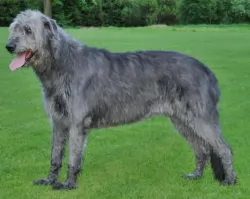 It is believed that the Irish Wolfhound is an ancient breed and that it was brought to Ireland as early as 7000 BC.
These dogs were bred as hunting dogs as well as guard dogs. There was a time when these huge canines were only allowed to be owned by the nobility. The breed died out somewhat, but Scotsman Captain George Augustus Graham made efforts to restore the breed’s numbers.
Captain Graham devoted his life to making sure the Irish Wolfhound’s numbers were built up, and the breeding program included Great Danes, Borzois, English Mastiffs and Scottish Deerhounds.
 The Bagel Hound is a medium-sized, affectionate hybrid breed resulting from the cross between the Beagle and the Basset Hound. With a sturdy, muscular body and a short, dense coat, this breed combines the best features of its parents.
Typically, a Bagel Hound has a short to medium-length coat that can come in a variety of colors, including tri-color (black, white, and tan), bi-color, or combinations of tan, white, and black. Their face is expressive with long, floppy ears and a soft, gentle gaze, a trait inherited from both parent breeds.
This breed is known for being friendly, affectionate, and playful, making it an excellent companion for families, including those with children or other pets. While generally calm, they do have a stubborn streak due to their strong scenting instincts, so consistent training is important. Despite their playful nature, they are not overly energetic and are typically content with moderate exercise, such as daily walks and playtime.
The Bagel Hound has a balanced temperament—loyal, loving, and a little mischievous—which makes them a popular choice for families and first-time dog owners who are willing to invest in training and care.
 The tallest of the sighthounds, the Irish Wolfhound looks like a large Greyhound, only he has a rough, wiry type of coat.
He is also gracefully built and known as a gentle giant. The double coat which can be fawn, red, white, grey, black or brindle is straight to wavy.
He stands at about 81 to 86cm and weighs roughly 48 to 54kg. This is one of the few dog breeds that you can’t really call social. He loves his own human family, and becomes unhappy and ‘down-in-the-dumps’ when separated from his family members for too long. He is a quiet dog who tends to be somewhat introverted and reserved, while being highly intelligent.
He will require being trained and socialized to make him obedient as he is an independent dog. He takes his role as family protector seriously and even though he is quiet, he is ready to take on anyone who threatens his property.
The Irish Wolfhound is a gentle, quiet, soft-natured, easy-going dog and even though it is such a large dog, it doesn’t throw it’s weight around but is calm and patient around the elderly and children in the home. It can tend to be aggressive with animals he isn’t familiar with.
He is an intelligent dog, but even so he may be quite resistant to training as he is strong-willed and determined to have his own way. These dogs need to be trained and socialized otherwise they just do their own thing.
 The Bagel Hound is a friendly, affectionate, and playful breed, combining the best traits of its Beagle and Basset Hound parents. They are medium-sized with a sturdy, muscular build, and a short, dense coat. Bagel Hounds are social and enjoy being around people, often following their owners around and seeking attention. They have a gentle, patient nature, making them great with children and other pets.
While they are generally calm, they are also curious and scent-driven, which can make them a bit stubborn and prone to distractions. Their affectionate personality and loyal nature make them great companions, though they benefit from consistent training and exercise.
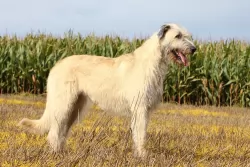 The most notable aspect of the Irish Wolfhound is his amazing height. The legs are long, the body narrow. He is gentle and easy-going but because he is a sighthound he loves to give chase after animals.
He is capable of living in the city or countryside, but your home will need to cater to his size. He isn’t particularly energetic, enjoying a quiet life but he will absolutely need to be exercised.
Provide your gentle giant with everything needed to make him content, and you’ll have a faithful, loving friend for about 10 years.
 A common genetic condition where the hip joint doesn't fit properly, causing pain and potential arthritis. It can lead to limping or difficulty moving, especially as the dog ages.
The Bagel Hound’s long, floppy ears trap moisture and debris, making them more susceptible to infections. Regular ear cleaning and keeping ears dry can help prevent this issue.
Bagel Hounds love food, and without proper portion control and exercise, they can easily gain weight. Obesity can lead to other health problems like heart disease, joint issues, and reduced life expectancy. Regular exercise and a balanced diet are essential to keep them at a healthy weight.
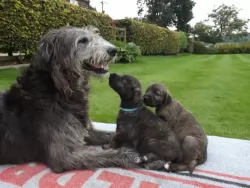 One wonders why breeders seem so bent on breeding such large dogs when they have health issues and they don't live particularly long. Not only do they cost a fortune to feed, but large dogs like this are more prone to illnesses and won’t live as long as small dog breeds. This big dog can live up to 10 years of age or so.
For starters, just because he is a deep chested dog, bloat or gastric torsion can be a threat. Other illnesses to look out for are dilated cardiomyopathy and bone cancer.
This is a disease of the heart muscle where the enlarged heart won’t function properly. The upper- and lower chambers of the heart are enlarged and the heart isn’t able to pump blood out properly. When the heart’s ventricle doesn’t pump enough blood into the lungs, fluid accumulates in the lungs and this ultimately leads to congestive heart failure.
Older dogs battle more with this heart disease and it is also more common in some dog breeds of which the Irish Wolfhound is one. Your dog will have shortness of breath, coughing and abdominal distension. He will need to get to the vet for medical tests.
Bone cancer can strike any dog, but you’ll find in more commonly with larger dog breeds. It can spread quickly and the long term prognosis isn’t good. It’s not easy to pick the disease up and it can mean joint pain for your pet and even lameness.
Your dog will be tired too. Your vet will do X-rays and other tests, but unfortunately the prognosis isn’t usually good. Big-dog breeders should take this into consideration.
 Daily walks help keep them fit, while interactive play sessions like fetch offer mental and physical stimulation. Avoid overexerting them, especially in hot weather, to prevent exhaustion.
Provide a balanced diet with portion control to maintain a healthy weight. Brush their coat weekly to manage shedding, and clean their ears regularly to avoid infections.
Use positive reinforcement during training for best results. Regular vet check-ups ensure they stay healthy, and keeping an eye on their weight helps prevent obesity.
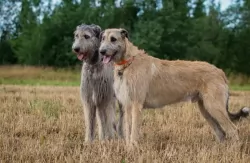 This isn’t a particularly energetic dog and he can tend to become lazy. Don’t allow this as becoming unfit and overweight can be very bad for such large dog. Being so large already puts stress on the dog’s body, and the dog is already susceptible to cardiac and skeletal problems. Allowing him to become lazy and overweight will be a death sentence for this large dog. It is imperative to make sure you take him on walks and play games with him.
The coat of your dog is thick and medium length and he will require being brushed at least twice a week. You may want to also trim the longer hair you find around his face and legs.
When it comes to his ears, you can moisten some cotton wool and wipe the inside of his ears to remove dirt and excess wax. Remember not to probe too deeply to avoid damaging the ear. If you’re uncertain how to do this, your vet can explain to you how its done.
Check his teeth regularly as dental disease can affect other areas of the body too. Don’t allow his nails to get too long as they can cause paw problems and the nails can hook onto things and cause injury.
Because this is a giant breed, the puppy will grow for a long time. Speak to your vet about how to ensure you feed your puppy in such a way that he doesn’t grow too quickly.
If you feed your dog a commercially manufactured food, make sure its one of the top quality brands. Include home-made cooked food such as chicken, rice and vegetables into his kibble from time to time, and also try to feed him some raw meat occasionally.
Fresh, cool water must be available to your Irish Wolfhound around the clock.