 MyDogBreeds
 Both Bagel Hound and Muggin are originated from United States. Bagel Hound may grow 29 cm / 12 inches higher than Muggin. Both Bagel Hound and Muggin are having almost same weight. Both Bagel Hound and Muggin has same life span. Both Bagel Hound and Muggin has same litter size. Bagel Hound requires Low maintenance. But Muggin requires High maintenance
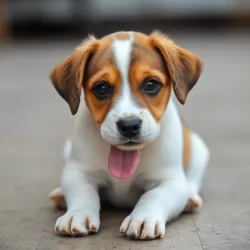 The Bagel Hound is a hybrid breed that emerged in the early 2000s by crossing the Beagle and Basset Hound. Both parent breeds have ancient origins—Beagles were bred for hunting small game with their exceptional sense of smell, while Basset Hounds, with their calm demeanor and powerful scenting ability, were also used for hunting.
The Bagel Hound was developed to combine the Beagle’s playful, energetic nature with the Basset Hound’s laid-back, affectionate temperament. Though relatively new, this hybrid quickly became popular for its friendly disposition, moderate energy, and suitability as a family companion.
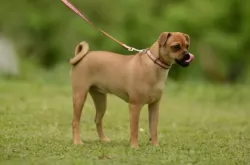 The Muggin is not a purebred dog but rather a cross breed. The hybrid dog population has exploding in the United States in the past ten to fifteen years. A lot of the success of crossbreeding can be attributed to the marketing of these dogs as “Designer Breeds”.
Designer breeds are developed because someone wants some of the characteristics of Breed X and some of the characteristics of Breed Y. Therefore, Designer breed XY is developed. In order to understand this hybrid dog, you need to understand the two purebred breeds they come from. The Muggin is the result of crossing the purebred Pug and the purebred Miniature Pinscher or Min Pin. So, we need to look at the origins of these two purebred breeds.
They are also referred to as Pin Pugs, Min Pin Pug, Pug Pin, Pugscher and were originally the Carlin Pinscher. However, these days there are other breeds besides the Pug and Min Pin making up the gene pool for the Carlin Pinscher. Because of this the Muggin has been separated from the Carlin Pinscher. The American Canine Hybrid Club has accepted the Muggin name for the Pug Min Pin cross.
Pugs are originally a Chinese breed and they were companions rather than working dogs of any kind. During the Han Dynasty they were the dogs of royalty. At the same time there were dogs very much like the pug in Japan and Tibet. The Pugs came to Europe by way of trades with the Dutch who then brought them to Europe. They were named the Mopshond and they caught the eye of the royalty in Europe as well.
Pugs were imported to the United States after the U.S. Civil War and in 1885 they were recognized by the American Kennel Club and called Pugs.
The Min Pin traces its origins to Germany a few hundred years ago. They were “ratters”, guarding the house and stables from all types of vermin. Most dog people believe that the Min Pin is much older than this, perhaps by thousands of years. Yet there is no detailed history to support that. Most believe the breed comes from the German Pinscher line. There might also be some Daschund and Greyhound in that line.
They were once called the Reh Pinscher. This was their name when they came to North America in 1919 and then the breed was renamed in 1972. The Miniature Pinscher Club of America was started in the early 1900’s while the AKC recognized the Min Pin in 1929. Today the Miniature Pinscher is a family dog, a companion.
The Muggin is a loving and loyal dog. All they want is for you to be happy and to share that happiness with them. They can also easily become a one person dog and bond intensely with that one person. They are not a hybrid that you can leave home alone while you go to work for 8 to 10 hours a day. No, the Muggin needs attention and lots of it. Despite this they are great with both kids and other dogs.
Because they are a cross breed, they are not recognized by the American Kennel Club. However, some hybrid registries do recognize the Muggin. These include the Designer Breed Registry, the International Designer Canine Registry, The Designer Dogs Kennel Club, the American Canine Hybrid Club, and the Dog Registry of America.
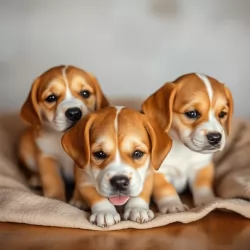 The Bagel Hound is a medium-sized, affectionate hybrid breed resulting from the cross between the Beagle and the Basset Hound. With a sturdy, muscular body and a short, dense coat, this breed combines the best features of its parents.
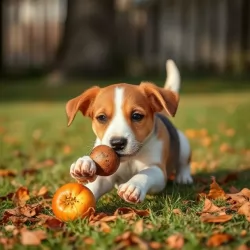
Typically, a Bagel Hound has a short to medium-length coat that can come in a variety of colors, including tri-color (black, white, and tan), bi-color, or combinations of tan, white, and black. Their face is expressive with long, floppy ears and a soft, gentle gaze, a trait inherited from both parent breeds.
This breed is known for being friendly, affectionate, and playful, making it an excellent companion for families, including those with children or other pets. While generally calm, they do have a stubborn streak due to their strong scenting instincts, so consistent training is important. Despite their playful nature, they are not overly energetic and are typically content with moderate exercise, such as daily walks and playtime.
The Bagel Hound has a balanced temperament—loyal, loving, and a little mischievous—which makes them a popular choice for families and first-time dog owners who are willing to invest in training and care.
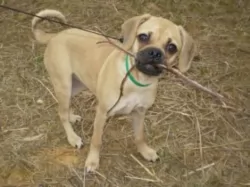
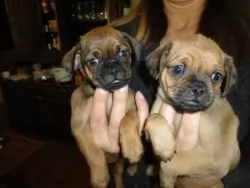
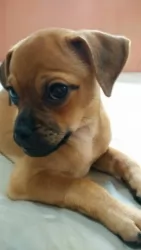 As previously mentioned, the Muggin is a cross between the Pug and the Miniature Pinscher. They are small, shave sturdy legs, floppy ears, and a wrinkled forehead for the most part. Like all hybrids however, all first generation dogs do not look the same. Some might resemble the Min Pin more and others the Pug. Some might have the stockier body of the Pug and the short tail of the Min Pin. Or one could have the Pug’s curly tail and the athletic body of the Min Pin. The snout can be short or long, the ears heavy and floppy or small and thin.
Their coats will usually be fine and short, and colors can vary a lot. They might be black and tan like a Min Pin, or more like a Pug with a solid color of cream, brown, black, white or golden. They also tend to shed quite a bit no matter which parent they take after the most. They will either have brown noses and black eyes or brown eyes and black noses or any combination of black and brown.
If Muggins are only bred to Muggins the second and third generations will resemble each other more than the first generations will. However, at this point many breeders will try to strengthen the breed by occasionally adding in to the gene pool other dog breeds.
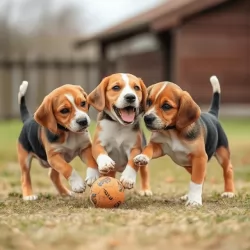 The Bagel Hound is a friendly, affectionate, and playful breed, combining the best traits of its Beagle and Basset Hound parents. They are medium-sized with a sturdy, muscular build, and a short, dense coat. Bagel Hounds are social and enjoy being around people, often following their owners around and seeking attention. They have a gentle, patient nature, making them great with children and other pets.
While they are generally calm, they are also curious and scent-driven, which can make them a bit stubborn and prone to distractions. Their affectionate personality and loyal nature make them great companions, though they benefit from consistent training and exercise.
 They are good with children but should be supervised.
Energetic and loving little dogs.
Very adaptable if taken for walks or has space in a yard. Can live anywhere under those circumstances.
Very intelligent but strong willed dog. Needs strong leadership from their person.
 A common genetic condition where the hip joint doesn't fit properly, causing pain and potential arthritis. It can lead to limping or difficulty moving, especially as the dog ages.
The Bagel Hound’s long, floppy ears trap moisture and debris, making them more susceptible to infections. Regular ear cleaning and keeping ears dry can help prevent this issue.
Bagel Hounds love food, and without proper portion control and exercise, they can easily gain weight. Obesity can lead to other health problems like heart disease, joint issues, and reduced life expectancy. Regular exercise and a balanced diet are essential to keep them at a healthy weight.
 The first generation of Muggins may face all the health issues of either or both their parents, while second and third generations tend to have less health issues, They types of issues the first generation of Muggins might face include:
Nerve Degeneration – Degenerative Myelopathy or Dm – causes paralysis and eventually fatal.
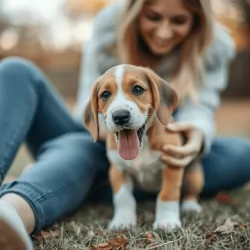 Daily walks help keep them fit, while interactive play sessions like fetch offer mental and physical stimulation. Avoid overexerting them, especially in hot weather, to prevent exhaustion.
Provide a balanced diet with portion control to maintain a healthy weight. Brush their coat weekly to manage shedding, and clean their ears regularly to avoid infections.
Use positive reinforcement during training for best results. Regular vet check-ups ensure they stay healthy, and keeping an eye on their weight helps prevent obesity.
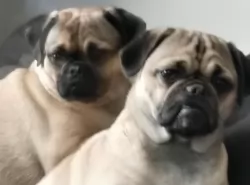 This crossbreed has a definite propensity to overeat and become obese from puppyhood. Feed the puppy a small dog dry food 3-4 times a day a total of ¾ of a cup to 1 cup.
Again don’t over feed the adult Muggin or he will become obese easily. Feed at least twice a day one to one and half cups total.
High Energy
With the athleticism of the Min Pin taking precedence over the less active Pug, the Muggin is a fairly active dog. The Muggin is also not effective by the Pug’s difficulty with heat and cold. They love to go on long walks and need exercise to keep from being bored and destructive. However, remember there is a Pug in your Muggin and if she is not into exercise don’t try to get her to do more than she can.
You do want your Muggin to get enough exercise to fend off any tendency to be overweight. They are good at agility, jogging, obedience and watchdog activities.