 MyDogBreeds
 English Cocker Spaniel is originated from United Kingdom but German Coolie is originated from Australia. English Cocker Spaniel may grow 17 cm / 6 inches shorter than German Coolie. English Cocker Spaniel may weigh 8 kg / 17 pounds lesser than German Coolie. English Cocker Spaniel may live 3 years less than German Coolie. Both English Cocker Spaniel and German Coolie has almost same litter size. English Cocker Spaniel requires Moderate maintenance. But German Coolie requires Low maintenance
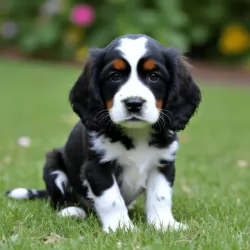 The English Cocker Spaniel has a rich history that dates back to at least the 14th century in England. Originally bred as a bird hunting dog, the breed's name "Cocker" comes from their specialization in hunting the woodcock bird.
Early spaniels, including the Cocker, were used as gun dogs to flush out and retrieve game. Over time, they were developed into a smaller, more agile hunter, distinct from other spaniels like the English Springer Spaniel.
By the 19th century, breeders in England focused on enhancing the breed's stamina, agility, and hunting instincts, while also fostering a gentle temperament. The English Cocker Spaniel became recognized as a separate breed from the American Cocker Spaniel in the early 20th century. Though originally bred for fieldwork, the breed’s affectionate nature and beautiful, silky coat led to its growing popularity as a companion dog.
Today, the English Cocker Spaniel is cherished both as a working dog and a family pet, known for its friendly, playful, and loyal personality.
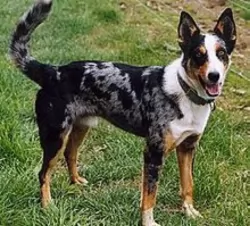 The German Coolie is misnamed as it is an Australian bred dog and often called the Australian Koolie or Coolie. This Australian breed is more often just called a Coolie. The breed is a typical herding breed and a working dog that needs a job all the time. They have been a favorite of Australians since the late 1800’s when local dogs were bred with British working dogs.
Although all Coolie’s are not the same. Within the breed there is a lot of variation. This is because the Coolie was bred individually for different regions in Australia. In a very different writing the Koolie Club of Australia does not define the Coolie breed on confirmation as all other purebred dogs are defined. Instead the Coolie is defined by ability to work. In light of this most Coolie breeders state that the Coolie is a breed and the variations you see among regions are types within the breed.
As a herding dog, the Coolie brought a lot of skill to the Australian farmers and sheep herders. The Coolie will round up the sheep and bring them back to their enclosure at the shepherd’s command. They are upright, silent, working dogs. Not only do they herd sheep they are important at sheering to “cut out” the sheep or assist in the close quarters of lambing.
In Queensland North and New South Wales, the Coolie is medium boned, tall and agile ready to herd cattle over a long stretch of miles. In the Snowy Mountains of New South Wales and the Hunter Valley Region, the Coolie is shorter and thicker in order to be able to get cattle that are lying low out from the gullies and dense bush. The Coolies found in Victoria are the smallest of all.
No matter where they live and work, the Coolie is bred to help the workers there, the farmers, the stockman, and the grazier. All Coolies are adaptable and very agile. They all have a strong willfulness to accomplish what they are asked to do. The ancestors of these various Coolie was the British Collie – a smooth coated, blue merle. This Collie was crossed with the Black and Tan Collie from the Scottish Highlands. It is believed that these are the same Collie breeds that came to Australia to create the Heeler.
The name may come from the German immigrants working in South Australia and unable to pronounce Collie incorrectly they called the dogs German Coolies. There is also a fraction of German breeders who believe that the German Tiger dog was brought to Australia in the 18th century and then when the Collies came they were bred together. Many Coolie breeders have records showing that the breed has been in Australia for at least 160 years. It is also believed that the Border Collie and Kelpie (Blue Heeler) were mixed into the breed at sometime as well.
No bench standard exists for the German Coolie even though there is the Koolie Club of Australia. The mission of the club is to protect, preserve and promote the breed. The Australian Sporting Register was recognizing the Coolies in 2004. They are eligible to participate in the Australian National Kennel Council sanctioned sporting trials. They participate in Queensland, New South Wales and Victoria through the individual states sporting register. Here they participate in herding, jumping, obedience, agility and tracking.
Several other recognitions as a herding breed soon followed. The Australian Shepherd Club of America, the American Herding Breed Association, were followed by recognition from others as well. They are not recognized by the American Kennel Club (AKC).
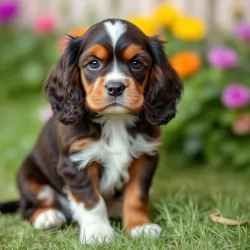
 The English Cocker Spaniel is a medium-sized, elegant, and compact dog known for its beautiful coat and gentle nature. With a graceful, athletic build, it has a slightly wavy, silky coat that is longer on the ears, legs, chest, and belly, giving the dog a refined appearance.
Their large, expressive eyes and long, floppy ears add to their charming look. Typically, they stand between 15 to 17 inches (38 to 43 cm) tall and weigh between 26 to 34 pounds (12 to 15.5 kg), with males being slightly larger than females.
This breed is known for its friendly, affectionate nature, making it a beloved family companion. The English Cocker Spaniel is also energetic, requiring regular exercise and mental stimulation, and is well-suited for active families.
Originally bred as a bird hunting dog, they have a strong instinct for retrieving and a keen sense of smell. Despite their hunting background, they are also social and adaptable, getting along well with other pets and children.
Their eager-to-please attitude makes them trainable, though they do require consistency. Overall, the English Cocker Spaniel is a loving, playful, and loyal dog that thrives in a family environment.
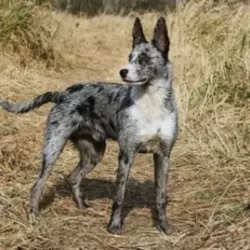
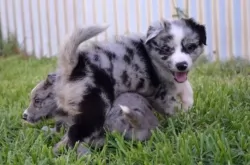
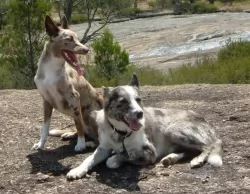
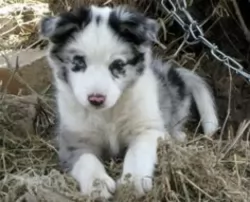 With their strong ancestry among the family of collies and herders, the German Coolie shares the look of collies and shepherds. Even though they differ from region to region and there is no actual standard, they are medium sized dogs with blue or brown eyes or even one of each. The ears are folded over on top when relaxed but they are rigid and straight when he is more alert. The nose is either chocolate or red depending on the color of their coat.
They can have either a long, medium or short coat but most owners want the short coat that is smooth as well. The coat can be one color – red/chocolate or black; Bi – red/white or black/white; Tri – solid black or red with white and brown; Tri merle -merle with white and brown; Merle – red merles and blue merles. Regardless of color, the German Coolie has the look of a collie or German Shepherd.
 The English Cocker Spaniel is a medium-sized, graceful breed known for its friendly and affectionate nature. Standing between 15 to 17 inches tall and weighing between 26 to 34 pounds, they have a silky, slightly wavy coat with longer feathering on their ears, chest, legs, and belly, giving them an elegant appearance.
Their large, expressive eyes and long, floppy ears further enhance their charm. These dogs are gentle, playful, and social, forming strong bonds with their families and getting along well with children and other pets. Energetic and active, they enjoy regular exercise like walks, playtime, and sometimes swimming.
Smart and eager to please, they are relatively easy to train, though they may show a bit of independence at times. Loyal and loving, they seek companionship and attention from their owners. While generally healthy, English Cocker Spaniels can be prone to certain health issues like ear infections, hip dysplasia, and progressive retinal atrophy. Overall, they make excellent companions for active families or individuals due to their affectionate, energetic, and loyal temperament.
 Yes, they can be very friendly with children is they are socialized and supervised.
They have enough stamina to work for 14 hours a day.
They are very adaptable. They can be calm and steady when working a mother and baby lamb and then be able to forcefully move steers, bull, rams or weathers.
The breed is highly intelligent, and their learning ability is excellent because they want to please you.
 The English Cocker Spaniel is generally healthy, but like all breeds, it can be prone to certain health issues:
Ear Infections: Their long ears can trap moisture, leading to infections. Regular cleaning is essential.
Hip Dysplasia: A hereditary condition where the hip joint doesn’t develop properly, leading to arthritis and pain.
Progressive Retinal Atrophy (PRA): A genetic condition causing progressive vision loss.
The English Cocker Spaniel is generally healthy, but like all breeds, it can be prone to certain health issues:
Ear Infections: Their long ears can trap moisture, leading to infections. Regular cleaning is essential.
Hip Dysplasia: A hereditary condition where the hip joint doesn’t develop properly, leading to arthritis and pain.
Progressive Retinal Atrophy (PRA): A genetic condition causing progressive vision loss.
Cataracts: Cloudiness in the lens of the eye, common in older dogs. Autoimmune Disorders: Conditions like immune-mediated hemolytic anemia. Heart Issues: Mitral valve disease in older dogs. Obesity: Prone to weight gain if not properly exercised or fed. Regular vet visits, proper diet, and exercise help manage these conditions.
 This is a relatively healthy breed without many genetic disorders found in purebreds due to the 160 years they have spent fairly isolated and allowing natural selection to take its course.
In Merle dogs there can be deafness and/or blindness. If you breed a solid to a merle you can eliminate that.
These are not inherited but rather acquired due to the immense amount of jumping and running.
Rare but it does occur and can be fatal if not treated
 Caring for an English Cocker Spaniel involves meeting their physical, emotional, and grooming needs. They are an active breed, so it’s important to provide daily exercise—a walk or play session for about 30 to 60 minutes will keep them happy and healthy. Mental stimulation is equally important, so be sure to provide toys, puzzles, and training sessions to keep their mind engaged.
Grooming is essential for this breed, as their long, silky coat needs to be brushed 2–3 times a week to prevent matting, especially around the ears and legs. Regular ear cleaning is also important to avoid infections, and they should be bathed every 4–6 weeks using a gentle dog shampoo.Nail trimming every 3–4 weeks and teeth brushing a few times a week will help maintain their overall health.
Their diet should consist of high-quality food tailored to their age, size, and activity level, with fresh water always available. Regular vet visits for vaccinations and health check-ups are crucial, and you should be vigilant for any signs of illness like ear infections or limping. Additionally, early socialization and positive reinforcement training will ensure they grow into well-rounded, obedient companions. By providing consistent care and attention to their physical and emotional needs, your English Cocker Spaniel will thrive as a loyal and loving member of the family.
 Break meals into 3 a day feeding a high quality dry puppy food designed for dogs of his size. 11/2 to 2 cups per day.
Break meals into 2 a day feeding a high quality dry adult food designed for dogs of his size.
Traditionally good health. Great energy, intensity and devotion to work and owner.
This is an energetic dog that loves to work and needs to work. Regular routine exercise is needed daily. He needs to be stimulated mentally and physically. Find him a job. Make sure he knows what you want him to do. They work well with a human partner in games such as agility, tracking, flyball and herding. They need a large yard and a lot of play time. They are not couch potatoes and would be unhappy if they were stuck in a house or apartment