 MyDogBreeds
 English Cocker Spaniel is originated from United Kingdom but Hortaya Borzaya is originated from Russia. English Cocker Spaniel may grow 32 cm / 12 inches shorter than Hortaya Borzaya. English Cocker Spaniel may weigh 19 kg / 41 pounds lesser than Hortaya Borzaya. Both English Cocker Spaniel and Hortaya Borzaya has same life span. Both English Cocker Spaniel and Hortaya Borzaya has almost same litter size. English Cocker Spaniel requires Moderate maintenance. But Hortaya Borzaya requires Low maintenance
 The English Cocker Spaniel has a rich history that dates back to at least the 14th century in England. Originally bred as a bird hunting dog, the breed's name "Cocker" comes from their specialization in hunting the woodcock bird.
Early spaniels, including the Cocker, were used as gun dogs to flush out and retrieve game. Over time, they were developed into a smaller, more agile hunter, distinct from other spaniels like the English Springer Spaniel.
By the 19th century, breeders in England focused on enhancing the breed's stamina, agility, and hunting instincts, while also fostering a gentle temperament. The English Cocker Spaniel became recognized as a separate breed from the American Cocker Spaniel in the early 20th century. Though originally bred for fieldwork, the breed’s affectionate nature and beautiful, silky coat led to its growing popularity as a companion dog.
Today, the English Cocker Spaniel is cherished both as a working dog and a family pet, known for its friendly, playful, and loyal personality.
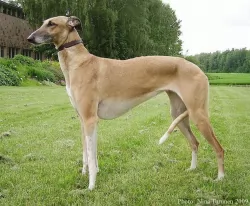 The Hortaya Borzaya is an ancient sighthound from Asia with its origins in Kievan Rus = Grand Duchy of Lithuania = Polish-Lithuanian Commonwealth and the Empire of Russia. The Hortaya is a large dog, especially a long in body dog with a muscular build suitable for running fast. He is one of the most talented of sighthounds, able to track moving prey at quite great distances. He is an intensely active when running prey and quiet and well balanced when not working.
In Asia and Russia, it is still a working hunting dog, hunting a variety of game such as Saiga antelopes, wolves, foxes, and hares. With tremendous endurance, the Hortaya can run at great speeds and great distances on the hunt. The Hortaya Borzaya is a long distance runner rather than a sprinter like the greyhound we are all so familiar with. He also needs very little rest between runs of up to 4 km. The Hortaya uses his sense of smell as well as sight in the hunt. They hunt solo, in pairs or in packs.
It was not until 2004 that the Hortaya was first exported to Europe and given full breeding papers. They went to Germany, Slovakia and the Czech Republic in 2004. They went to Switzerland and Finland in 2005 and to the United States around 2005. Prior to this the Hortaya Borzaya was bred only in its original territory for thousands of years.
Unlike Western breeding programs, the Hortaya is not bred for the purpose of improving the breed. Like Asian thoroughbred horses the breed is considered “finished”. Because of this there was no inbreeding, linebreeding or incest. This is true for about 4-6 generations of a line. This helps the breed to stay healthy.
The breed was developed centuries ago being bred by many different groups of people throughout the region, making it impossible to say exactly where and how this Central Asian/Afghanistan/ southern Russian breed developed. The Russian Kynological Federation (RKF) member of the FCI, developed a standard for the Hortaya Borzaya, which unlike most breed standards, does not tell you what the Hortaya must be like. Instead it tells you what he cannot be.
It gives boundaries that the dog must fit inside in order to be considered a Hortaya Borzaya. This is because the breeds of these dogs in their native territories want to preserve as many different types and sub-types as possible under the banner of one breed. To most people these dogs would look like very different breeds. For this reason, they have not been accepted into International Breed Groups and Associations. The breeders of these dogs do not want to be tied down to one standard. They do not want the breed to be separated into western lines and the original line or show lines and working lines. They wish to keep all the dogs within one grouping.
The breed is recognized on the national level by the originating countries and federations, including Russia’s. There are an estimated 2500-3500 dog of this breed in existence to day. Only a few dozen of the breed exist outside of the original countries. In other Eastern and European countries, the dogs may be registered with hunting associations instead of a breed association.
The breed is held mostly by hunters in remote, local areas and villages that are fairly isolated. Here the Hortaya is seen as a partner in feeding the hunters family and the dog is invaluable. In these remote areas a good hunting dog is equal in value to the good horse. Both are essential to the hunter and his family’s livelihood.
The Hortaya Borzaya is a pack dog and does well with the family as well as an athletic hunter. They hunt in packs, small groups or alone and bring their catch back to the hunter for the family meal. No hunter had to go with the dog. In fact, the hunters would send the dogs several times for food. The Hortaya might travel for miles across tough terrain to get food for the family.
 The English Cocker Spaniel is a medium-sized, elegant, and compact dog known for its beautiful coat and gentle nature. With a graceful, athletic build, it has a slightly wavy, silky coat that is longer on the ears, legs, chest, and belly, giving the dog a refined appearance.
Their large, expressive eyes and long, floppy ears add to their charming look. Typically, they stand between 15 to 17 inches (38 to 43 cm) tall and weigh between 26 to 34 pounds (12 to 15.5 kg), with males being slightly larger than females.
This breed is known for its friendly, affectionate nature, making it a beloved family companion. The English Cocker Spaniel is also energetic, requiring regular exercise and mental stimulation, and is well-suited for active families.
Originally bred as a bird hunting dog, they have a strong instinct for retrieving and a keen sense of smell. Despite their hunting background, they are also social and adaptable, getting along well with other pets and children.
Their eager-to-please attitude makes them trainable, though they do require consistency. Overall, the English Cocker Spaniel is a loving, playful, and loyal dog that thrives in a family environment.
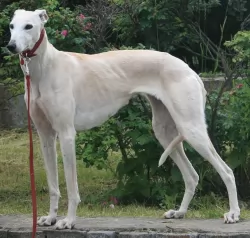
 This athletic sighthound is a handsome dog, ranging from large to giant. Remember there are many different ‘types’ of dogs within the one line/breed of Hortaya. Breed standards are exclusionary, and performance based rather than inclusionary, and appearance based. Still most of the breed lines share many of the same traits.
They are a long legged breed with a very deep chest and flexible spine. They have immensely strong lungs and a narrow but long skull. Their gait is fluid, effortless trotting when not hunting. When she is hunting, they gallop like a horse and cover a lot of ground.
There eyes are usually black but can be any color and their fur is also any color. It is thick and dense. Finally, in the 2000’s, there were some dogs in a subline exported to Europe and to North America. Here, for this subgroup, a standard was established based on appearance and the color or the coat was now set at only white, blue, black, cream, red, sable and brindle, and piebald. They might or might not have a saddle. Definition of this type is still going on and has not been entirely settled yet. This standard is only for the European and American market show dogs.
These dogs, bred for show, have the same ability to run like the wind and for a very long time with his muscled body and long legs. The breed has strength and stamina that will fool you. He also has a long neck and broad back. He has thin, short ears.
 The English Cocker Spaniel is a medium-sized, graceful breed known for its friendly and affectionate nature. Standing between 15 to 17 inches tall and weighing between 26 to 34 pounds, they have a silky, slightly wavy coat with longer feathering on their ears, chest, legs, and belly, giving them an elegant appearance.
Their large, expressive eyes and long, floppy ears further enhance their charm. These dogs are gentle, playful, and social, forming strong bonds with their families and getting along well with children and other pets. Energetic and active, they enjoy regular exercise like walks, playtime, and sometimes swimming.
Smart and eager to please, they are relatively easy to train, though they may show a bit of independence at times. Loyal and loving, they seek companionship and attention from their owners. While generally healthy, English Cocker Spaniels can be prone to certain health issues like ear infections, hip dysplasia, and progressive retinal atrophy. Overall, they make excellent companions for active families or individuals due to their affectionate, energetic, and loyal temperament.
 Children friendliness - yes, they are very good with children and will play with them for hours.
They have tremendous stamina, speed and intelligence to hunt on their own without the hunter and bring the prey back in good shape for the hunter’s family to eat.
No they are not very adaptable in terms of living arrangements. They will not do well in an apartment and probably not in the city as they need land to run.
Learning ability yes, they are intelligent and learn easily.
 The English Cocker Spaniel is generally healthy, but like all breeds, it can be prone to certain health issues:
Ear Infections: Their long ears can trap moisture, leading to infections. Regular cleaning is essential.
Hip Dysplasia: A hereditary condition where the hip joint doesn’t develop properly, leading to arthritis and pain.
Progressive Retinal Atrophy (PRA): A genetic condition causing progressive vision loss.
The English Cocker Spaniel is generally healthy, but like all breeds, it can be prone to certain health issues:
Ear Infections: Their long ears can trap moisture, leading to infections. Regular cleaning is essential.
Hip Dysplasia: A hereditary condition where the hip joint doesn’t develop properly, leading to arthritis and pain.
Progressive Retinal Atrophy (PRA): A genetic condition causing progressive vision loss.
Cataracts: Cloudiness in the lens of the eye, common in older dogs. Autoimmune Disorders: Conditions like immune-mediated hemolytic anemia. Heart Issues: Mitral valve disease in older dogs. Obesity: Prone to weight gain if not properly exercised or fed. Regular vet visits, proper diet, and exercise help manage these conditions.
 As previously mentioned, the original breed is isolated and therefore has a pretty good health track record. Most of the breed specific illnesses or conditions that usually are inherited barely exist in this breed.
They have a propensity toward obesity and diet is essential to prevent other issues.
Chronic or acute pancreatitis is possible because the breed developed eating small meals and hardly any meat. Too much meat or fat could cause this.
No tolerance for high protein dog food. Can cause puppies to have life threatening damage to bones and cartilage that is irreversible.
Bloat – because of the deep chest and the intolerance for large meals they are prone to bloat.
 Caring for an English Cocker Spaniel involves meeting their physical, emotional, and grooming needs. They are an active breed, so it’s important to provide daily exercise—a walk or play session for about 30 to 60 minutes will keep them happy and healthy. Mental stimulation is equally important, so be sure to provide toys, puzzles, and training sessions to keep their mind engaged.
Grooming is essential for this breed, as their long, silky coat needs to be brushed 2–3 times a week to prevent matting, especially around the ears and legs. Regular ear cleaning is also important to avoid infections, and they should be bathed every 4–6 weeks using a gentle dog shampoo.Nail trimming every 3–4 weeks and teeth brushing a few times a week will help maintain their overall health.
Their diet should consist of high-quality food tailored to their age, size, and activity level, with fresh water always available. Regular vet visits for vaccinations and health check-ups are crucial, and you should be vigilant for any signs of illness like ear infections or limping. Additionally, early socialization and positive reinforcement training will ensure they grow into well-rounded, obedient companions. By providing consistent care and attention to their physical and emotional needs, your English Cocker Spaniel will thrive as a loyal and loving member of the family.
 As mentioned above do not overfeed a Hortaya Borzaya puppy. There is serious risk of irreversible damage if you do. Feed small meals 3-6 times a day with lower protein.
3 cups of an average protein high quality dog food served at least 3-4 times per day. To avoid bloat do not feed large meals before or after exercise and don’t let your dog drink a lot of water at one time.
This is an extremely active dog bred to hunt 5-6 times a day over wide expanses of various and rough terrain. They need exercise. If you run, they will run with you happily and they will outlast you. They are good at and enjoy fetch, chase, agility, and field trials. They will last hours at any game they play.