 MyDogBreeds
 Gully Terrier is originated from India but American Water Spaniel is originated from United States. Gully Terrier may grow 10 cm / 4 inches higher than American Water Spaniel. Gully Terrier may weigh 15 kg / 34 pounds more than American Water Spaniel. Both Gully Terrier and American Water Spaniel has almost same life span. Both Gully Terrier and American Water Spaniel has almost same litter size. Both Gully Terrier and American Water Spaniel requires Moderate maintenance.
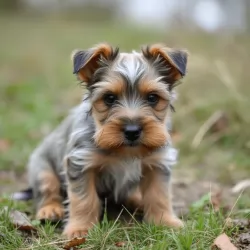 The Gully Terrier originated in India as a street dog, a mix of indigenous Indian Pariah Dogs and bully breeds like Pit Bulls and American Bulldogs.
Developed primarily for protection and hunting, they were used as guard dogs in urban and semi-urban areas. The name "Gully" refers to the narrow alleys and streets where these dogs were often found, while "Bully" highlights their muscular, strong build inherited from bully breeds.
Known for their loyalty, alertness, and protective instincts, Gully Terriers became valued companions for families in need of a strong, resilient dog that could thrive in tough environments.
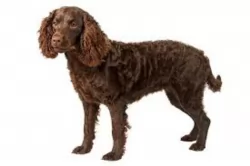 The American Water Spaniel was developed in the United States. He is the state dog of Wisconsin and was developed there in the 19th century. The bloodlines of this spaniel are varied but certainly include the English Water Spaniel and the Irish Water Spaniel. Even though they are the state dog of Wisconsin they were almost extinct when Dr. Fred J. Pfeifer rescued the breed. The numbers had fallen after World War II because hunting was now a recreational sport and not needed to provide food for the family. He then started a breed club and wrote a breed standard, both of which were recognized by the United Kennel Club and the American Kennel Club.
When first developed the American Water Spaniel was known as the American Brown Spaniel. It was bred with a curly, thick coat so that it cold be sustained in Wisconsin winters and cold water. It was bred to hunt grouse, water fowl and prairie chickens as well as furry land animals. Pfeifer advertised his dogs for sale everywhere using a mailer that read: “, "The American Brown Spaniel is distinctively an American production. Hunters have known this type for years and it was through their efforts that this dog was propagated.... For years we have bred only selective stock, breeding for gameness, stability, courage, intelligence, and beauty. They are dogs to admire and trust under all conditions whether in the home circle or in the field with the outdoor man."[2]
The American Water Spaniel was developed in the United States. He is the state dog of Wisconsin and was developed there in the 19th century. The bloodlines of this spaniel are varied but certainly include the English Water Spaniel and the Irish Water Spaniel. Even though they are the state dog of Wisconsin they were almost extinct when Dr. Fred J. Pfeifer rescued the breed. The numbers had fallen after World War II because hunting was now a recreational sport and not needed to provide food for the family. He then started a breed club and wrote a breed standard, both of which were recognized by the United Kennel Club and the American Kennel Club.
When first developed the American Water Spaniel was known as the American Brown Spaniel. It was bred with a curly, thick coat so that it cold be sustained in Wisconsin winters and cold water. It was bred to hunt grouse, water fowl and prairie chickens as well as furry land animals. Pfeifer advertised his dogs for sale everywhere using a mailer that read: “, "The American Brown Spaniel is distinctively an American production. Hunters have known this type for years and it was through their efforts that this dog was propagated.... For years we have bred only selective stock, breeding for gameness, stability, courage, intelligence, and beauty. They are dogs to admire and trust under all conditions whether in the home circle or in the field with the outdoor man."[2]
In Wisconsin, around the wolf River and the Fox River, hunters were looking for a water dog that could also hunt on land. They needed a dog that could work a variety of fowl and game but who was small enough for a skiff and strong enough for the artic water temperatures of Wisconsin in the Winter. So, in addition to the spaniels named above, other breeds such as the Curly Coated Retriever, the Poodle, Native Indian dogs and the Sussex Spaniel were intermixed. When first developed the American Water Spaniel was known as the American Brown Spaniel. It was bred with a curly, thick coat so that it cold be sustained in Wisconsin winters and cold water. It was bred to hunt grouse, water fowl and prairie chickens as well as furry land animals. The American Water Spaniel was then itself used to develop another new breed, the Boykin Spaniel. In 1985 Wisconsin declared the American Water Spaniel to be the official state dog. Even so there remain only a few thousand dogs in existence. Though recognized by the AKC, they are neither spaniels nor retrievers and remain unclassified. Because of this they cannot compete in AKC field trials, but they do compete in AKC hunt tests. Though rare, the American Water Spaniel is a great hunting dog, retriever and companion.
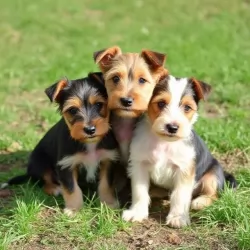 The Gully Terrier is a medium-sized, muscular dog known for its agility, loyalty, and protective nature. With a short, dense coat that comes in various colors, including black, brown, tan, and white, this breed has a distinctive appearance, often with a strong, powerful build.
The Gully Terrier is highly energetic and requires regular exercise to stay happy and healthy. Its intelligent, alert, and sometimes independent nature makes it a great guard dog and companion, although consistent training is necessary to manage its strong-willed personality.
This breed is well-suited for active families or individuals looking for a devoted and protective dog with a loving but protective demeanor.
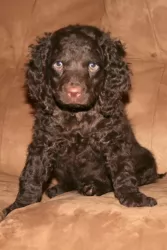 The American Water spaniel is a midsized, muscular dog. There is nothing flashy about his looks or his work performance. He is however a consistent, competent swimmer and hunter. His brown coat is wavy or tightly curled, waterproof and dense. His feet have thick pads and webbed toes. The AWS is intelligent, happy, and easy going. He is a very versatile hunting dog on land and in water. The breed has not changed much since it originated in the 19th century. They can be liver, chocolate or brown. The eyes should be the same as the color of the coat. They have broad skulls with wide, long ears and an undocked tail.
They have a square, medium sized muzzle and wide nose. They have a bite that is level or scissors. The legs of the muscular American Water Spaniel are medium in length and the tail is full, with a medium length, curved and feathered. The dewclaws might or might not be removed.
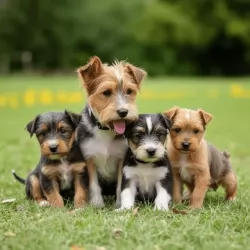 The Gully Terrier is a loyal, energetic, and intelligent breed with a strong, muscular build. Known for their protective nature, they make excellent guard dogs, staying alert and watchful of their surroundings.
While they are friendly and devoted to their family, they can also be independent and sometimes stubborn, requiring consistent training. Their short, dense coat is easy to groom, needing only regular brushing and ear cleaning.
Gully Terriers are active dogs that thrive on daily exercise and mental stimulation, making them great companions for those with an active lifestyle.
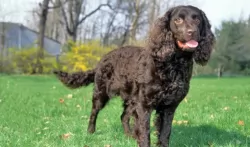 Bred to work the American Water Spaniels are loyal to their people, want to please them, but are not so great with strangers. They are stubborn and love to be the center of attention. They are often one person or one family dogs. They need an owner who is the pack leader and willing to put in the time to train them. However, they are a versatile breed and need variety in training and activities rather than repetitive activities. They are prone to resource guarding, slow maturation and dominance. These negative traits are dissipated with a strong leader, good training and a lot of daily activity. They are sensitive as well as stubborn. Do not use a punishment-oriented training with them. They will respond out of love and loyalty or not at all. This is a breed that wants to be the alpha over the people and will do so if you let him. Keep them fenced as being hunters they love to wander and will leave home whenever they can.
 Like many medium to large-sized dogs, Gully Terriers can be prone to hip dysplasia, a condition where the hip joint doesn't develop properly, leading to arthritis and discomfort.
Due to their floppy or semi-erect ears, Gully Terriers can be more susceptible to ear infections. Regular ear cleaning and checking can help prevent this.
Their short coat can sometimes be prone to skin irritations, especially if they are exposed to harsh weather or poor hygiene. Allergies or parasite infestations (like fleas) can cause skin problems.
Gully Terriers are highly energetic, but they can be prone to obesity if they don't get enough exercise or are overfed. A balanced diet and regular activity are essential.
Some dogs in this breed may experience congenital eye issues like cataracts or progressive retinal atrophy (PRA), which can affect vision.
Regular vet check-ups to monitor joints, ears, and skin Consistent exercise to maintain a healthy weight Proper grooming to reduce risk of skin issues and ear infections
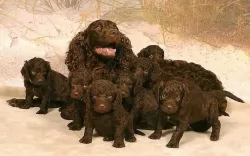 The American Water Spaniel is a hardy, healthy breed without a lot of the genetic concerns of other breeds. Some of the concerns of this breed include vision, cardiac, hip dysplasia and degenerative myelopathy. They might also have skin issues and metabolic disorders.
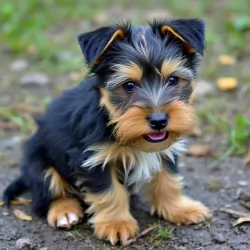 Caring for a Gully Terrier is straightforward but requires attention to their exercise, grooming, and training needs:
Gully Terriers are energetic and need daily exercise. Regular walks, runs, or play sessions will keep them happy and healthy.
They are smart and need activities that challenge their minds, like puzzle toys or training sessions.
Their short coat requires minimal care. Brush them once or twice a week and clean their ears regularly to prevent infections. Trim nails as needed.
Gully Terriers can be a bit independent, so start training early with positive reinforcement. Socialize them with people and other animals to avoid territorial behavior.
Feed them a balanced diet and control their portions to avoid weight gain. Regular vet check-ups will help keep them healthy.
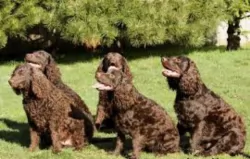 Feeding the American Water Spaniel is no mystery. They need a high quality dry dog food with an eye toward calorie consumption. Some AWS have a tendency to become obese. Treats are important to the AWS in training but can add to the obesity concerns.
Like other isolated breeds that were bred true, the genetic issues we see in many other popular breeds are not seen as much in the American Water Spaniel. They do however have a few issues to contend with.
Eyes: These issues appear to be inherited with progressive retinal atrophy and cataracts. Many AWS that develop cataracts do so at a very young age, usually under a year. Metabolic: Diabetes, hypothyroidism, glandular disorders and epilepsy. Baldness and Cardiac Issues. Orthopedic: Hip dysplasia. There is no evidence to suggest any elbow dysplasia. Additional concerns are hypothyroidism, allergies, epilepsy, diabetes and glandular disorders which Of course, the American Water Spaniel is an athlete who loves to be outdoors. He loves to swim, run and hunt. He needs daily exercise, or he can become loud and destructive. They thrive on having a job and they are not happy if they don’t have one. They are good at agility, obedience, dock diving and field trials. They also enjoy flyball and barn hunt.