 MyDogBreeds
 Gully Terrier is originated from India but Braque Francais is originated from France. Gully Terrier may grow 13 cm / 5 inches shorter than Braque Francais. Gully Terrier may weigh 20 kg / 44 pounds lesser than Braque Francais. Both Gully Terrier and Braque Francais has same life span. Both Gully Terrier and Braque Francais has almost same litter size. Gully Terrier requires Moderate maintenance. But Braque Francais requires Low maintenance
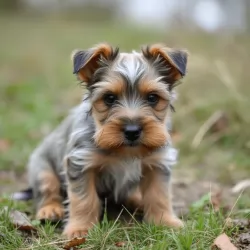 The Gully Terrier originated in India as a street dog, a mix of indigenous Indian Pariah Dogs and bully breeds like Pit Bulls and American Bulldogs.
Developed primarily for protection and hunting, they were used as guard dogs in urban and semi-urban areas. The name "Gully" refers to the narrow alleys and streets where these dogs were often found, while "Bully" highlights their muscular, strong build inherited from bully breeds.
Known for their loyalty, alertness, and protective instincts, Gully Terriers became valued companions for families in need of a strong, resilient dog that could thrive in tough environments.
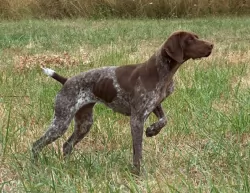 Braque Francais was at first one general breed of hounds in the Gascognes and Pyrenees Mountains areas of France. The one breed became two. Known as the Braque Francais Gascognes and the Braque Francais Pyrenees - two separate breeds of very alike dogs. The Gascognes is a lot less common than his smaller brother. Not very much is known about the beginnings of these two strains of Braque Francais as the breed has been around since at least the 15th century. Because the Braque Francais was exported or taken to so many different countries in the 15th-18th centuries, a lot of the origins of the breeds were lost. A major bloodline search was The conducted in the 19th century and found that these were two very distinct breeds of dog.
It is known that France was the birthplace of this breed and it was developed because of a need for a tracker that could point, flush and retrieve. The Braque Francais Gascogne probably came from the south of France. It is related to the German Shorthair Pointer and the English Pointer as well. Having existed since the 15th century, he was the father of all pointing dogs in France. By the 17th century the breed had grown enough to be called the “old style Braque Francais”,
Though the origin of the breed is not known there are of course several theories about it. The most prevalent belief is that the Braque Francais Gascogne is a descendent of the Chien d’Oysel, a spaniel breed of medium size and white or brown with brown markings. The Chien d’Oysel is an ancient breed used for hunting prior to the 13th century. Hunters crossed the Chien with local dogs on a routine basis.
Braque Francais came out of these breedings. It was probably French Scent hounds that created the larger size of the Gascogne. This also increased the stamina and strength of the Gascogne as opposed to the Pyrenees. There was also a mixing in of the Grand Bleu De Gasgogne and the Petit Bleu De Gasgogne.
The other prominent theory is that this breed the Gasgogne was actually developed from the Portugese, Spanish and Italian pointers rather than the French dogs. These dogs originated not with the Chien d’Oysel but with the scent hounds. From these dogs came the Spanish and English Pointers. All that is truly known is that all of these types of dogs were present in Europe by the fifteenth century and were moved among countries and cross bred regularly. However in the part of France called the Central Pyrenees region and in a small southern part of France the original, old style Braque Francais was pure bred. This aspect of the breed contributed to the development of all of the French pointers and European shorthaired dogs. By the end of the 1800’s today’s breed was developed.
In 1850 the first Braque Francais breed club was established and in the breed standards for both dogs followed in 1880. They were then registered in the French Kennel Club and the International Kennel Club (FCI). The French Kennel Club does not allow dogs with any common ancestors in Generations 1-3 into the Club in order to keep out the practice of inbreeding. In Canada only the Gascogne is recognized and the United States’ United Kennel Club (UKC) recognizes both. The American Kennel Club (AKC) does not recognize either.
With most local regions and countries choosing their local dogs over other breeds, the Braque Francais Gascogne has become fairly rare outside of France where the breed was the most popular gun dog throughout the 1700’s. The Gascogne was mostly a dog of the hunting nobility because of its size and food needs. Following the French Revolution, the breed fell off dramatically, while the smaller Pyrenees continued to thrive. This was because in the Pyrenees Mountains and the Southwestern region of Gascony, the English Pointer never supplanted the Braque Francais.
The Second World War was brutal to the Braque Francais Gascognes and as it recovered it became much less common than its sister breed. Today it is found almost exclusively in France.
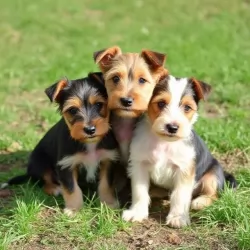 The Gully Terrier is a medium-sized, muscular dog known for its agility, loyalty, and protective nature. With a short, dense coat that comes in various colors, including black, brown, tan, and white, this breed has a distinctive appearance, often with a strong, powerful build.
The Gully Terrier is highly energetic and requires regular exercise to stay happy and healthy. Its intelligent, alert, and sometimes independent nature makes it a great guard dog and companion, although consistent training is necessary to manage its strong-willed personality.
This breed is well-suited for active families or individuals looking for a devoted and protective dog with a loving but protective demeanor.
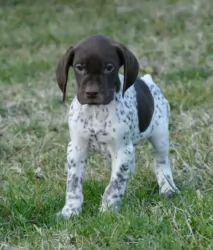 The Braque Francais Gascogne is a larger dog than the Pyrenees breed and is a very handsome dog. Both have a deep chest, a solid bodies, strong and slender legs and are well-proportioned. They have padded, round paws and a large brown head with floppy ears. The muzzle is a pointed block and he has a scissors bite, with a black nose and dark or amber eyes. The eyes are very expressive and round. The tail can be straight and long, or it can be docked. They are tall and athletic.
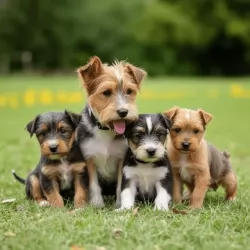 The Gully Terrier is a loyal, energetic, and intelligent breed with a strong, muscular build. Known for their protective nature, they make excellent guard dogs, staying alert and watchful of their surroundings.
While they are friendly and devoted to their family, they can also be independent and sometimes stubborn, requiring consistent training. Their short, dense coat is easy to groom, needing only regular brushing and ear cleaning.
Gully Terriers are active dogs that thrive on daily exercise and mental stimulation, making them great companions for those with an active lifestyle.
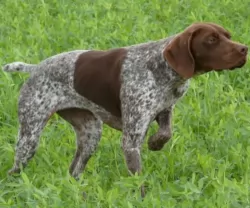 This is a working breed, but they are nevertheless friendly and loyal to their families. They want to please their people and are usually docile. They love kids and are good as a first ever dog. They are friendly and even-tempered. They tolerate people they do not know but can be shy and are not guard dogs. instead they are loving, affectionate and people oriented. They need to be with their families and never left outside alone. They can develop separation anxiety.
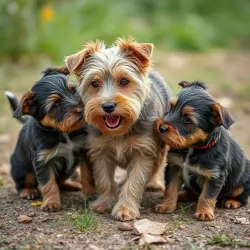 Like many medium to large-sized dogs, Gully Terriers can be prone to hip dysplasia, a condition where the hip joint doesn't develop properly, leading to arthritis and discomfort.
Due to their floppy or semi-erect ears, Gully Terriers can be more susceptible to ear infections. Regular ear cleaning and checking can help prevent this.
Their short coat can sometimes be prone to skin irritations, especially if they are exposed to harsh weather or poor hygiene. Allergies or parasite infestations (like fleas) can cause skin problems.
Gully Terriers are highly energetic, but they can be prone to obesity if they don't get enough exercise or are overfed. A balanced diet and regular activity are essential.
Some dogs in this breed may experience congenital eye issues like cataracts or progressive retinal atrophy (PRA), which can affect vision.
Regular vet check-ups to monitor joints, ears, and skin Consistent exercise to maintain a healthy weight Proper grooming to reduce risk of skin issues and ear infections
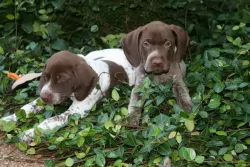 The Braque Francais is a fairly healthy breed. They are susceptible to certain health conditions that most dogs of their size and working history are susceptible to. These include Patellar luxation which seems to be one of the most common problems for them. They also can have hip and/or elbow dysplasia, aortic stenosis which is a narrowing of the aorta, and some eye issues such as ectropion, entropion, and PRA (Progressive Retinal Atrophy as well as cataracts.
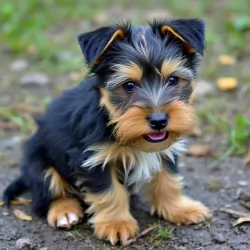 Caring for a Gully Terrier is straightforward but requires attention to their exercise, grooming, and training needs:
Gully Terriers are energetic and need daily exercise. Regular walks, runs, or play sessions will keep them happy and healthy.
They are smart and need activities that challenge their minds, like puzzle toys or training sessions.
Their short coat requires minimal care. Brush them once or twice a week and clean their ears regularly to prevent infections. Trim nails as needed.
Gully Terriers can be a bit independent, so start training early with positive reinforcement. Socialize them with people and other animals to avoid territorial behavior.
Feed them a balanced diet and control their portions to avoid weight gain. Regular vet check-ups will help keep them healthy.
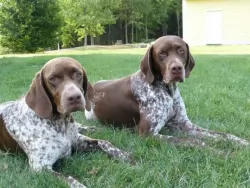 This is a high energy, working dog with a need for a high-quality energy food or raw food that you make up yourself. Be sure to include chicken, beef and fish. Feed him about 3 cups once a day or 1.5 cups twice a day.
In addition to the conditions listed above, his long floppy ears can lead to ear infections if not cared for. Wash them out daily. He is also susceptible to bloat so don’t feed him large meals and don’t let him exercise or work right before or right after exercise.
These dogs have a variety of hunting skills. They are not only pointers but can flush, trail and retrieve. The Gascogne is not as quick as the Pyrenees. They need a lot of exercise daily or they need a hunting job. They would do well with barn hunt, lure coursing and free play in an off leash fenced in area. If they don’t get rid of their energy, they can be destructive. They were bred to hunt and cannot resist the chase,