 MyDogBreeds
 Gully Terrier is originated from India but Franzuskaya Bolonka is originated from France. Gully Terrier may grow 29 cm / 12 inches higher than Franzuskaya Bolonka. Gully Terrier may weigh 30 kg / 67 pounds more than Franzuskaya Bolonka. Both Gully Terrier and Franzuskaya Bolonka has almost same life span. Gully Terrier may have more litter size than Franzuskaya Bolonka. Gully Terrier requires Moderate maintenance. But Franzuskaya Bolonka requires Low maintenance
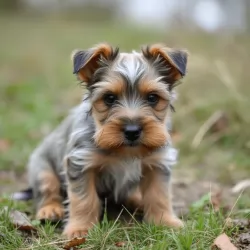 The Gully Terrier originated in India as a street dog, a mix of indigenous Indian Pariah Dogs and bully breeds like Pit Bulls and American Bulldogs.
Developed primarily for protection and hunting, they were used as guard dogs in urban and semi-urban areas. The name "Gully" refers to the narrow alleys and streets where these dogs were often found, while "Bully" highlights their muscular, strong build inherited from bully breeds.
Known for their loyalty, alertness, and protective instincts, Gully Terriers became valued companions for families in need of a strong, resilient dog that could thrive in tough environments.
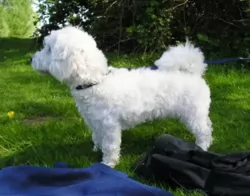 The Franzuskaya Bolonka in France is known as the Tsvetnaya Bolonka in Russia and in Germany as the Bolonka Zwetna. All of these translate to Colored Bolognese. It is known as the “Pride of Russia” and was rediscovered by the Russians following the thaw of the Cold War. It is also sometimes translated as a colored lapdog.
The Bolonka is a rare breed in the toy category with ancestors in the Bichon Friese line. This little dog looks very much like the national dog of Cuba – the Havanese. In addition to the Bichon other small dogs in this ancestral line include the Shih Tzu, Toy Poodle, and Pekingese as well as the French, Italian and German Bolonka. They are often confused with the Bolognese as both breeds appear in various countries and have many similarities.
In all countries the common name for this dog is the Bolonka. They have a variety of names and nick names depending on the country. In addition to being the “Pride of Russia” he is called a Russian colored Bichon, Czechs call it the Bareyny Bolonsky, the Germans since 1980 have called it the Bolonka Zwetna but the Nordic Kennel Union does not recognize the Zwenta only the Russian Twetnaya.
The French version is seen to be the original with its ancestry dating back to the 18th century when Russian nobles were presented with a Bolonka by Louis XIV of France, and others migrated with the army of Napoleon to Russia. They were still known as the Bolonka of France. Small dogs were not popular in Russia due to the need for dogs that could work on farms and/or hunt. Particularly during the Soviet years, they were considered unnecessary. No Bolonkas were imported to Russia during the Soviet regime, so only localized breeding took place. The goal of breeders in the Soviet Union was to develop a toy dog, lap sized with an apartment living temperament.
During the cold war the Russians sent a pair of breeding Franzuskaya Bolonka to East Germany and they began to develop the breed there as well. At the same time the colored versions of the Bolonka were being bred. The Franzuskaya Bolonka is recognized by the Verband Dur Das Deutsche Hundewesen (VDF) while the other colored breeds are not. The white Bolonka is not recognized by the Federation Cynoloqique Internationale as a breed separate from the Bolognese but as simply another version. Individual clubs throughout the world recognized one or more versions of the Bolonka. They are thought to be the rarest within the Bichon family.
Today’s Bolonka is owed by Prince William and Princess Kate, giving the breed more publicity than it has had in many years.
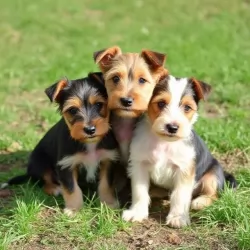 The Gully Terrier is a medium-sized, muscular dog known for its agility, loyalty, and protective nature. With a short, dense coat that comes in various colors, including black, brown, tan, and white, this breed has a distinctive appearance, often with a strong, powerful build.
The Gully Terrier is highly energetic and requires regular exercise to stay happy and healthy. Its intelligent, alert, and sometimes independent nature makes it a great guard dog and companion, although consistent training is necessary to manage its strong-willed personality.
This breed is well-suited for active families or individuals looking for a devoted and protective dog with a loving but protective demeanor.
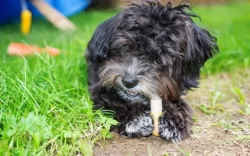 The Franzuskaya Bolonka is neither heavy boned nor fine boned. They are a toy breed with a moderate bone structure. The ears are neither long nor short and they have tails that touch the back at the tip. Like others in the Bichon family the Franzuskaya Bolonka does not shed. He is a sturdy little dog and the male has a distinct beard and moustache that the females of the breed do not. They have long coats that are wavy and curly. The Franzuskaya Bolonka is of course only white. The Russian version might be brown, red, black, wolf-gray, gray and of course white.
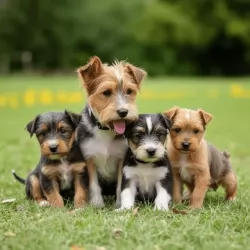 The Gully Terrier is a loyal, energetic, and intelligent breed with a strong, muscular build. Known for their protective nature, they make excellent guard dogs, staying alert and watchful of their surroundings.
While they are friendly and devoted to their family, they can also be independent and sometimes stubborn, requiring consistent training. Their short, dense coat is easy to groom, needing only regular brushing and ear cleaning.
Gully Terriers are active dogs that thrive on daily exercise and mental stimulation, making them great companions for those with an active lifestyle.
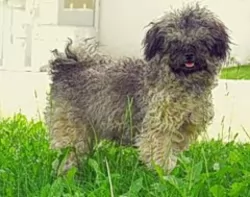 The Bolonka is great with kids, just avoid too intense play.
The Bolonka is a playful, lap dog with a lot of love to offer
Good adaptability great in the city in apartments and great in the country as well
They are very smart and love to learn. Being firm but beyond firm is also kind.
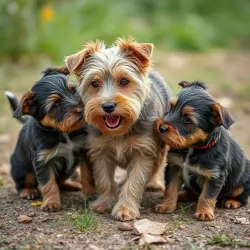 Like many medium to large-sized dogs, Gully Terriers can be prone to hip dysplasia, a condition where the hip joint doesn't develop properly, leading to arthritis and discomfort.
Due to their floppy or semi-erect ears, Gully Terriers can be more susceptible to ear infections. Regular ear cleaning and checking can help prevent this.
Their short coat can sometimes be prone to skin irritations, especially if they are exposed to harsh weather or poor hygiene. Allergies or parasite infestations (like fleas) can cause skin problems.
Gully Terriers are highly energetic, but they can be prone to obesity if they don't get enough exercise or are overfed. A balanced diet and regular activity are essential.
Some dogs in this breed may experience congenital eye issues like cataracts or progressive retinal atrophy (PRA), which can affect vision.
Regular vet check-ups to monitor joints, ears, and skin Consistent exercise to maintain a healthy weight Proper grooming to reduce risk of skin issues and ear infections
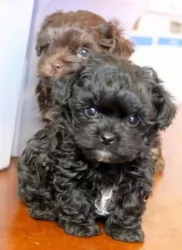 Medical issues are not fully documented because of the rarity of the breed and the years of isolation in the Soviet Union.
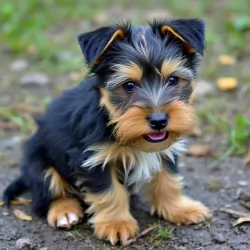 Caring for a Gully Terrier is straightforward but requires attention to their exercise, grooming, and training needs:
Gully Terriers are energetic and need daily exercise. Regular walks, runs, or play sessions will keep them happy and healthy.
They are smart and need activities that challenge their minds, like puzzle toys or training sessions.
Their short coat requires minimal care. Brush them once or twice a week and clean their ears regularly to prevent infections. Trim nails as needed.
Gully Terriers can be a bit independent, so start training early with positive reinforcement. Socialize them with people and other animals to avoid territorial behavior.
Feed them a balanced diet and control their portions to avoid weight gain. Regular vet check-ups will help keep them healthy.
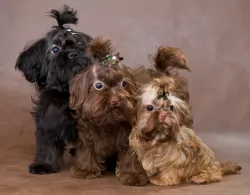 Feed at least 3 meals a day. Feed one fourth of a cup daily split into three meals of a high quality puppy food.
Feed at least 2 meals per day. Feed one half of a cup daily split into two meals of a high quality dry food.
Fairly healthy breed due to isolation during cold war
The Franzuskaya Bolonka is developed as a lap dog but that does not mean he doesn’t need daily exercise. He loves to play but play gently and not for any length of time. They like to chase balls, play hide and seek and any tricks you want to teach them.