 MyDogBreeds
 Gully Terrier is originated from India but Hokkaido is originated from Japan. Both Gully Terrier and Hokkaido are having almost same height. Gully Terrier may weigh 14 kg / 30 pounds lesser than Hokkaido. Both Gully Terrier and Hokkaido has same life span. Both Gully Terrier and Hokkaido has almost same litter size. Both Gully Terrier and Hokkaido requires Moderate maintenance.
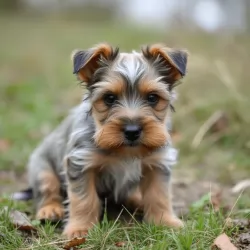 The Gully Terrier originated in India as a street dog, a mix of indigenous Indian Pariah Dogs and bully breeds like Pit Bulls and American Bulldogs.
Developed primarily for protection and hunting, they were used as guard dogs in urban and semi-urban areas. The name "Gully" refers to the narrow alleys and streets where these dogs were often found, while "Bully" highlights their muscular, strong build inherited from bully breeds.
Known for their loyalty, alertness, and protective instincts, Gully Terriers became valued companions for families in need of a strong, resilient dog that could thrive in tough environments.
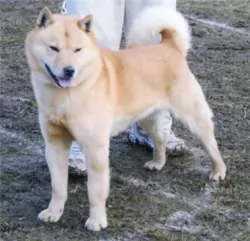 The Hokkaido breed originates in Japan and is also called Ainu-ken, Ainu dog, Seta or Do-ken. The last being its common name in Japan. It is believed that the Hokkaido is descendent from the Japanese Matagi-ken, meaning hunting dog, deer hunting dog or bear hunting dog. It was the Ainu peoples that brought the breed to Tohoku. Many years later the Yayoi people brought in another breed of hunting dogs. These breeds were in isolation for most of their existence and therefore they had little influence on the further development of other breeds.
The Ainu dog was used in searches as well as hunting and became in 1937 “a rare species in Japan that is protected by law”. At that time the Official Name of the breed was set in place as Hokkaido-Inu. But they are still called Hokkaid0-Ken by most Japanese people.
This is a very rare breed of dog. It is hardly known outside of Japan and in country there are about ten to twelve thousand remaining. Of those about nine hundred to one thousand are registered in Japan every year. It is guessed that less than thirty exist outside Japan.
The Hokkaido breed is the oldest Japanese breed of dogs. Today they are great indoor companions, loyal and friendly. Most people in Japan still call them the Ainu dog.
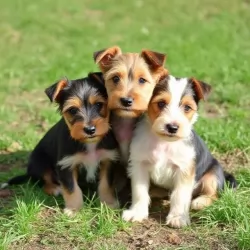 The Gully Terrier is a medium-sized, muscular dog known for its agility, loyalty, and protective nature. With a short, dense coat that comes in various colors, including black, brown, tan, and white, this breed has a distinctive appearance, often with a strong, powerful build.
The Gully Terrier is highly energetic and requires regular exercise to stay happy and healthy. Its intelligent, alert, and sometimes independent nature makes it a great guard dog and companion, although consistent training is necessary to manage its strong-willed personality.
This breed is well-suited for active families or individuals looking for a devoted and protective dog with a loving but protective demeanor.
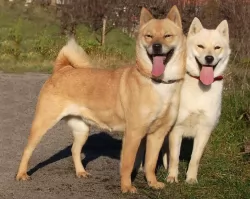
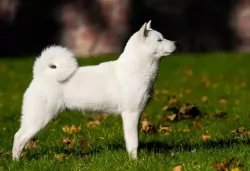
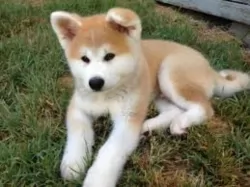 The Hokkaido breed is medium in size but very strong in build. Dogs bred outside Japan tend to be smaller. They have wide, deep chests, and long thick coats compared with Japanese dogs from other breeds. It is a double coat of long fur on top and short softer fur underneath for the second coat. Their ears are triangular and small while their eyes have a triangle outline. The double coat could be sesame, white, red, black, black and tan and wolf-gray.
They are an intelligent breed with an impulsive gait. They are alert, courageous and suspicious. They were used for guarding the city gates. Their skull is flat and broad and the tongue, like the chow chow, is blueish. black. With a black nose and a wedge shaped muzzle, the Hokkaido is a handsome dog. His lips are with black and tight. High set, thick tail over the back or slightly curved to the side.
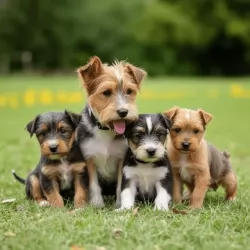 The Gully Terrier is a loyal, energetic, and intelligent breed with a strong, muscular build. Known for their protective nature, they make excellent guard dogs, staying alert and watchful of their surroundings.
While they are friendly and devoted to their family, they can also be independent and sometimes stubborn, requiring consistent training. Their short, dense coat is easy to groom, needing only regular brushing and ear cleaning.
Gully Terriers are active dogs that thrive on daily exercise and mental stimulation, making them great companions for those with an active lifestyle.
 Like many medium to large-sized dogs, Gully Terriers can be prone to hip dysplasia, a condition where the hip joint doesn't develop properly, leading to arthritis and discomfort.
Due to their floppy or semi-erect ears, Gully Terriers can be more susceptible to ear infections. Regular ear cleaning and checking can help prevent this.
Their short coat can sometimes be prone to skin irritations, especially if they are exposed to harsh weather or poor hygiene. Allergies or parasite infestations (like fleas) can cause skin problems.
Gully Terriers are highly energetic, but they can be prone to obesity if they don't get enough exercise or are overfed. A balanced diet and regular activity are essential.
Some dogs in this breed may experience congenital eye issues like cataracts or progressive retinal atrophy (PRA), which can affect vision.
Regular vet check-ups to monitor joints, ears, and skin Consistent exercise to maintain a healthy weight Proper grooming to reduce risk of skin issues and ear infections
 Often breeds that are isolated like the Hokkaido, have a pretty good health history but there are a few serious issues that they face.
1/3 of all dogs have it while 2/3 are carriers. This disease is congenital and there is no cure. It affects the sclera, retina and choroid. It can be mild or it can cause blindness.
Affecting joints and cause arthritis and lameness.
Floating kneecap – not as prevalent here as in smaller dogs.
Could be mild or serious. Could require a pacemaker.
Seizures of an unknown origin. Can be treated with medication not cured.
Excessive, uncontrollable urge to drink large amounts of fluid without a stimuli.
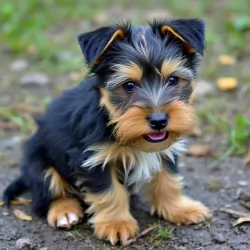 Caring for a Gully Terrier is straightforward but requires attention to their exercise, grooming, and training needs:
Gully Terriers are energetic and need daily exercise. Regular walks, runs, or play sessions will keep them happy and healthy.
They are smart and need activities that challenge their minds, like puzzle toys or training sessions.
Their short coat requires minimal care. Brush them once or twice a week and clean their ears regularly to prevent infections. Trim nails as needed.
Gully Terriers can be a bit independent, so start training early with positive reinforcement. Socialize them with people and other animals to avoid territorial behavior.
Feed them a balanced diet and control their portions to avoid weight gain. Regular vet check-ups will help keep them healthy.
 The puppy needs about 300 -400 calories per day in 3-4 servings per day
The adult dog needs about 250-350 calories a day to maintain good weight and health. Feed 2-3 times per day.
Strong, stamina
These dogs love exercise and definitely need it. They will get to be anxious or bored if they don’t get enough exercise. A back yard run is fine but remember that the Hokkaido is a jumper and make sure your fence is at least six feet high. They need daily walks even if you have a fenced yard. Martindale collars or harnesses are needed when walking them.
These dogs love games and competitive activities. They are good at hunting and guarding of course. There are other activities they can excel at and enjoy jogging, biking with you, and hiking. In competition they enjoy and are good at agility, flyball, lure coursing, rally, weight pull, dock diving, and obedience. They do not participate in confirmation.
 Children friendliness very good with every member of the family and that includes children