 MyDogBreeds
 Gully Terrier is originated from India but Ibizan Hound is originated from Spain. Gully Terrier may grow 18 cm / 7 inches shorter than Ibizan Hound. Gully Terrier may weigh 6 kg / 14 pounds more than Ibizan Hound. Gully Terrier may live 3 years more than Ibizan Hound. Gully Terrier may have less litter size than Ibizan Hound. Gully Terrier requires Moderate maintenance. But Ibizan Hound requires Low maintenance
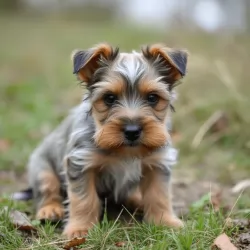 The Gully Terrier originated in India as a street dog, a mix of indigenous Indian Pariah Dogs and bully breeds like Pit Bulls and American Bulldogs.
Developed primarily for protection and hunting, they were used as guard dogs in urban and semi-urban areas. The name "Gully" refers to the narrow alleys and streets where these dogs were often found, while "Bully" highlights their muscular, strong build inherited from bully breeds.
Known for their loyalty, alertness, and protective instincts, Gully Terriers became valued companions for families in need of a strong, resilient dog that could thrive in tough environments.
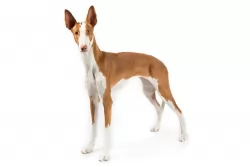 This lean, speedy and agile hound dog looks and acts very much like a Pharaoh Hound except the Ibizan Hound is larger and a different color. The image of dogs that look like the Ibizan have been seen since 3400 BC in Egypt. The dogs were probably brought by sailors to Ibiza and surrounding islands. They came about 700-900 BC. It is believed that they actually came for the island of Elvissa and Spain, where they speak Catalan. It was also known in France as the le chanigue. There job was the same. To hunt rabbits.
They were fast hunting greyhound type dogs. They hunted for rabbit for the Ibizaners and themselves. These dogs hunt by day and by night. They are not just sight hounds, they also hunt by smell and hearing, in packs or by themselves. They use their sight to find and corner the prey. Then they act like retrievers and bring it back to the hunter. Their function and look is very similar to several other dogs such as the Pharaoh Hound, the Greyhound, the Portuguese Podengo, the Cimeco dellEtna and the Podence Canario. The Ibizan is larger than any of these, but all these breeds are considered to be “primitive”.
Within the breed itself there are smooth, wire and longhaired Ibizan Hounds. The Smooth is by far the most common. A great jumper, nimble runner built for stamina, the Ibizan Hound was just what the island people needed. The breed lived in isolation on the island for many centuries, under a variety of rulers including the Romans, Egyptians, Vandals, Carthaginians, Chaldeans, Arabs and Spanish. Because of the harsh island conditions, the farmers only allowed the best hunters among the Ibizan Hounds to procreate thus assuring a breed that is unchanged from ancient stock.
By 1950 the Ibizan Hound was brought to America. Because this dog is not a pet but a working machine, it took awhile for the breed to become popular enough to be recognized by the American Kennel Club (AKC) in 1979. Still the Ibizan Hound is a rare breed with the female being a better hunter than the male. One of the most common activities of this breed in the U.S. is lure coursing. These events are sponsored by AKC and ASFA as well as racing events in the NOTRA and LGRA.
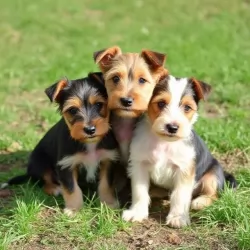 The Gully Terrier is a medium-sized, muscular dog known for its agility, loyalty, and protective nature. With a short, dense coat that comes in various colors, including black, brown, tan, and white, this breed has a distinctive appearance, often with a strong, powerful build.
The Gully Terrier is highly energetic and requires regular exercise to stay happy and healthy. Its intelligent, alert, and sometimes independent nature makes it a great guard dog and companion, although consistent training is necessary to manage its strong-willed personality.
This breed is well-suited for active families or individuals looking for a devoted and protective dog with a loving but protective demeanor.
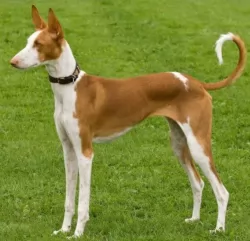
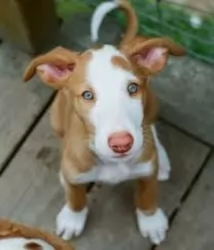 The breed is agile, elegant, athletic and graceful. At the same time the Ibizan Hound is a fierce hunter travelling at unreal speeds to catch his rabbit prey. They are a hardy breed with a lean and long neck, and a lean, muscled body with laid back shoulders. The ears are specific to the breed, with a broad base leading to long, beautiful ears. They have tan eye rims, nose, foot pads, and ears. The eyes themselves are an amber with an intelligent and alert expression.
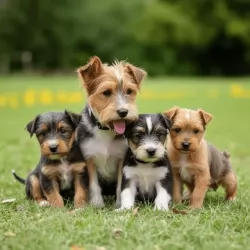 The Gully Terrier is a loyal, energetic, and intelligent breed with a strong, muscular build. Known for their protective nature, they make excellent guard dogs, staying alert and watchful of their surroundings.
While they are friendly and devoted to their family, they can also be independent and sometimes stubborn, requiring consistent training. Their short, dense coat is easy to groom, needing only regular brushing and ear cleaning.
Gully Terriers are active dogs that thrive on daily exercise and mental stimulation, making them great companions for those with an active lifestyle.
 They love children but be careful they do not knock them over and don’t let the children play to rough.
Exceptional jumping ability, speed and stamina.
Must have a large fenced yard and a place to run full out.
Very intelligent with excellent learning ability.
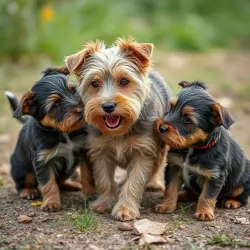 Like many medium to large-sized dogs, Gully Terriers can be prone to hip dysplasia, a condition where the hip joint doesn't develop properly, leading to arthritis and discomfort.
Due to their floppy or semi-erect ears, Gully Terriers can be more susceptible to ear infections. Regular ear cleaning and checking can help prevent this.
Their short coat can sometimes be prone to skin irritations, especially if they are exposed to harsh weather or poor hygiene. Allergies or parasite infestations (like fleas) can cause skin problems.
Gully Terriers are highly energetic, but they can be prone to obesity if they don't get enough exercise or are overfed. A balanced diet and regular activity are essential.
Some dogs in this breed may experience congenital eye issues like cataracts or progressive retinal atrophy (PRA), which can affect vision.
Regular vet check-ups to monitor joints, ears, and skin Consistent exercise to maintain a healthy weight Proper grooming to reduce risk of skin issues and ear infections
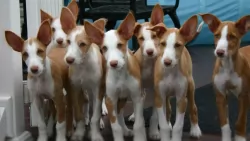 Despite being isolated on the islands for all those years, the Ibizan Hound has several tendencies toward medical issues:
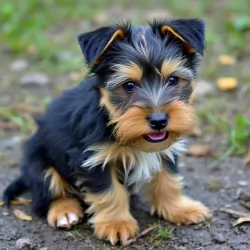 Caring for a Gully Terrier is straightforward but requires attention to their exercise, grooming, and training needs:
Gully Terriers are energetic and need daily exercise. Regular walks, runs, or play sessions will keep them happy and healthy.
They are smart and need activities that challenge their minds, like puzzle toys or training sessions.
Their short coat requires minimal care. Brush them once or twice a week and clean their ears regularly to prevent infections. Trim nails as needed.
Gully Terriers can be a bit independent, so start training early with positive reinforcement. Socialize them with people and other animals to avoid territorial behavior.
Feed them a balanced diet and control their portions to avoid weight gain. Regular vet check-ups will help keep them healthy.
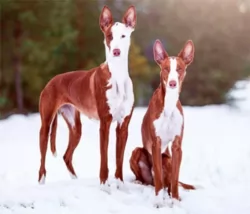 Your Ibizan Hound is an athlete and needs to be fed like one. As a puppy he needs high quality breed or group (hound) specific food. Feed her 3-4 times a day based on calories. A puppy needs about 866 calories each day.
If your dog participates in sports as adults, they need between 1450 and 2900 calories each day. The exact amount depends on how much activity the dog is engaged in. Feed at least 2 times a day.
Great speed and stamina
Your Ibizan Hound is a working athlete. He needs a lot of exercise and he needs a chance to run full out so access to land is essential. It can be a large back yard, or it can be a dog park. No matter what it is, it is essential for the Ibizan Hound. She will also require long walks at least a couple times a day. However, do not over exercise your puppy. They are great jumpers as well as runners.
The sport of lure coursing was made for the Ibizan in the same way that it was made for the Greyhound. They are good at Flyball and agility as well.